
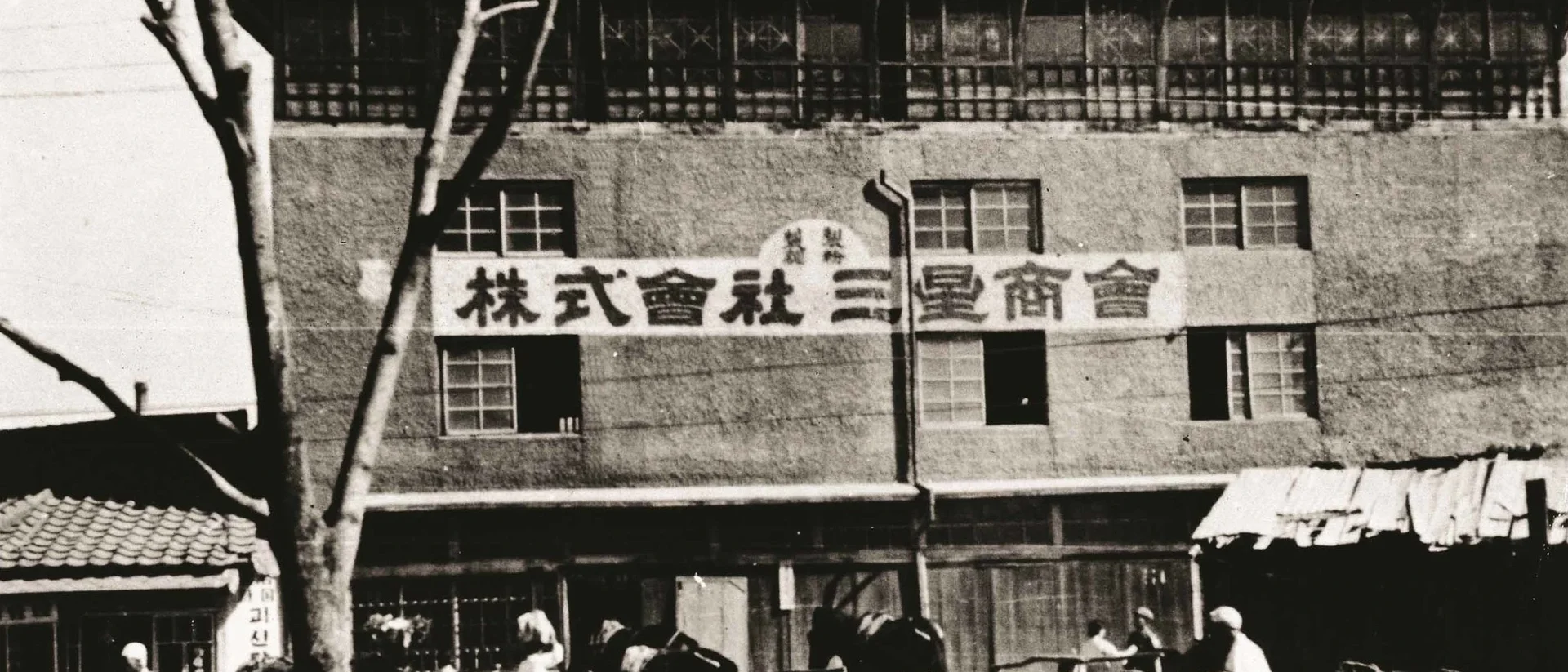
In 1938, Lee Byung-chul started Samsung in Daegu, South Korea as a small trading company selling dried fish, vegetables, and noodles. The name Samsung means "three stars" in Korean — chosen to symbolize something big, numerous, and powerful. Today Samsung's annual revenue equals roughly 20%% of South Korea's entire GDP. From noodles to semiconductors. The stars delivered.
Samsung Started as a Dried Fish and Noodle Shop
The company behind your phone, your TV, and possibly your refrigerator started with a man selling dried fish from a truck.
The Noodle Shop
On March 1, 1938, 28-year-old Lee Byung-chul used savings from his family's land wealth to open Samsung Sanghoe, a small trading company in Daegu, South Korea. His inventory: dried Korean fish, vegetables, and noodles, exported primarily to Beijing and Manchuria. He had about 40 employees.
The name Samsung translates to "three stars" - chosen to represent something big, numerous, and powerful. An ambitious name for a noodle business.
War, Rebuilding, and Reinvention
By 1947, Lee had moved Samsung's headquarters to Seoul. When the Korean War erupted in 1950, North Korean forces captured the city and Lee was forced to relocate to Busan. The massive influx of American troops and military equipment into Busan during the war proved surprisingly profitable for his trading operation.
After the war, Lee pivoted aggressively. Samsung moved into sugar refining in 1953, then textiles. By the early 1960s, the company had expanded into insurance, securities, and retail. Each venture was larger and more ambitious than the last.
The Electronics Pivot
In 1969, Samsung entered the electronics industry with a single black-and-white television model and 45 employees. It was a modest start, but Lee had seen the future. By the 1980s, Samsung was manufacturing semiconductors. By the 1990s, it was competing globally in memory chips. By the 2000s, smartphones.
The entire arc from noodle exporter to semiconductor giant compressed into a single human lifetime. Lee Byung-chul was alive for nearly all of it, dying in 1987 just as Samsung Electronics was establishing itself as a serious global force.
The Empire
Today Samsung is the largest South Korean chaebol (conglomerate). It manufactures smartphones, semiconductors, displays, appliances, and ships. It runs hospitals, theme parks, and life insurance companies. Samsung accounts for approximately 20% of South Korea's entire GDP - a single company responsible for one-fifth of a nation's economic output.
All because a 28-year-old thought selling dried fish deserved a name that meant "three stars."
Frequently Asked Questions
What did Samsung originally sell?
What does Samsung mean?
How much of South Korea's GDP does Samsung represent?
Verified Fact
This fact has been reviewed and verified against original sources.
Source: View sourceShow verification details
Samsung founding confirmed via Samsung corporate history, multiple business histories. GDP figure widely cited (15-20% range).