📝Updated for accuracy
Some details in this fact have been corrected based on our review of primary sources.
The Sprout pencil is a plantable pencil that contains a seed inside. When it's too short to use, you can plant it and watch it grow herbs and vegetables.
The Sprout Pencil Grows Into Plants After You Use It
Ever stare at a pencil stub that's too small to sharpen, too awkward to hold, and wonder why it can't just do something useful? Well, someone finally solved that problem - by turning it into a garden.
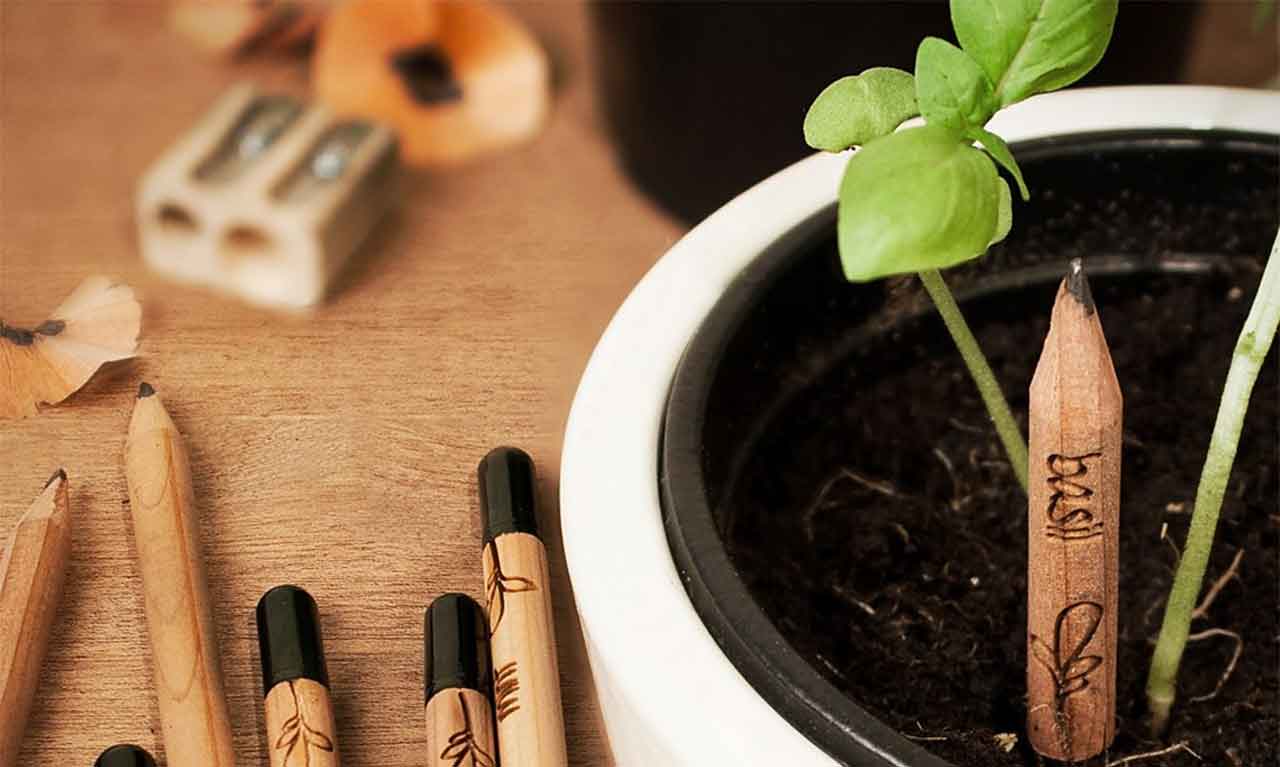
The Sprout pencil isn't your typical office supply. Inside its wooden body sits a water-soluble seed capsule where the eraser usually goes. When the pencil becomes unusable, you plant it upside down in soil, water it, and within a few weeks, you've got fresh basil, cherry tomatoes, or whatever herb the capsule contains sprouting from your former writing tool.
How a Pencil Becomes a Plant
The capsule replaces the traditional eraser and metal ferrule. It's made from biodegradable materials that dissolve when wet, releasing the seed into the surrounding soil. The wooden pencil body decomposes naturally, acting as a protective shell while the seed germinates.
Sprout offers over a dozen varieties, including:
- Herbs: basil, cilantro, mint, thyme, sage
- Flowers: forget-me-nots
- Vegetables: cherry tomatoes, green peppers
Each pencil is labeled so you know exactly what you're growing. No surprise Brussels sprouts when you were expecting daisies.
Why This Exists (Besides Being Cool)
Americans alone use 2 billion pencils annually. Most end up in landfills when they're still 2-3 inches long - perfectly good wood that could decompose productively instead of taking up space. Sprout pencils turn waste into something functional, giving those stubby leftovers a second life.
The concept originated from three MIT students in 2012 who wanted to make everyday objects sustainable without sacrificing functionality. They launched a Kickstarter campaign that raised more than 150% of its $25,000 goal from over 2,000 backers, proving people were ready for office supplies that didn't feel guilty about throwing away. Danish entrepreneur Michael Stausholm later acquired the rights and launched the pencil commercially as Sprout World in 2013.
Does It Actually Work?
Yes, but you need to follow basic planting rules. Stick the pencil stub in moist soil with the capsule end down, leaving about an inch exposed. Water regularly (but don't drown it), give it sunlight, and wait a few weeks. Germination takes patience, and success depends on soil, water and light conditions, the same as with any seed.
The pencil itself? Writes like any wooden pencil. The graphite core is standard #2 lead, so it works for everything from sketching to standardized tests. You're not sacrificing quality for sustainability.
The Bigger Picture
Sprout pencils won't solve deforestation or climate change, but they represent a shift in how we think about disposable objects. Instead of asking "how do we make this cheaper?" the question becomes "what happens to this when we're done with it?"
Other companies have since adopted similar ideas - plantable greeting cards, biodegradable phone cases embedded with wildflower seeds, even seed paper confetti for weddings. The concept scales beyond pencils, proving that "waste" is often just a design flaw waiting to be fixed.
So next time you're down to a pencil nub, don't toss it. Plant it. In a month, you might be seasoning your dinner with something that used to correct your spelling mistakes.
Frequently Asked Questions
What is a Sprout pencil?
How does the Sprout pencil work?
What types of seeds are in Sprout pencils?
Is Sprout pencil a real product?
Where can you buy Sprout pencils?
Related Topics
More from Technology & Innovation
View all Technology & Innovation →