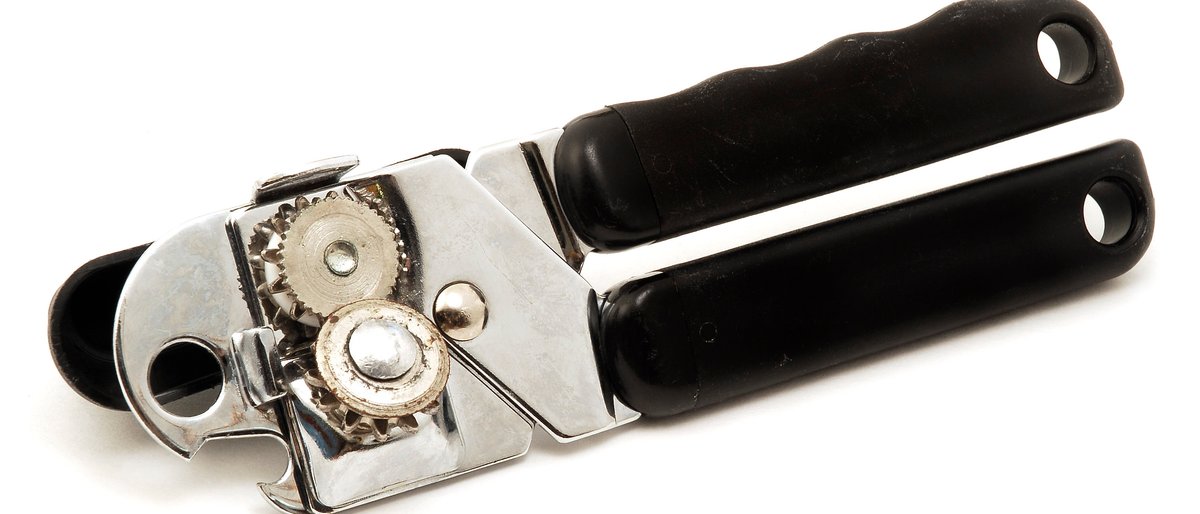
The can opener was invented 48 years after the can.
The Can Opener Was Invented 48 Years After the Can
Imagine buying canned food at the grocery store and being told to use a hammer and chisel to open it. That was reality for nearly 50 years, because the can opener wasn't invented until 1858—a staggering 48 years after the can itself.
The can came first in 1810, when British merchant Peter Durand patented the tin-plated iron container. The British Navy and explorers quickly adopted these heavy-duty cans for preserving food on long voyages. There was just one problem: nobody had figured out an easy way to open them.
Instructions: Attack With Tools
Early cans were thick—sometimes 3/16 of an inch of wrought iron. Manufacturers didn't see this as a design flaw. Their official instructions? Use a hammer and chisel. Some soldiers used bayonets. The truly desperate smashed cans against rocks.
One early can even came with helpful text stamped on top: "Cut round the top near the outer edge with a chisel and hammer." It was less of a kitchen task and more of a carpentry project.
Why Did It Take So Long?
The delay wasn't due to laziness. Several factors created this 48-year gap:
- Production was tiny: Skilled workers could only make about 6 cans per hour, so canned goods weren't widespread
- Military mindset: Early adopters were soldiers and sailors who already carried knives and tools
- The cans were insanely durable: You needed serious force to get into them, making specialized tools seem unnecessary
- Technology hadn't caught up: Thinner steel cans didn't emerge until the mid-1800s
For decades, being strong enough to open a can was just part of the deal. Instructions from 1824 recommended using a hammer and chisel, and even suggested that the can's contents might leak a bit during opening. Bon appétit!
The Can Opener Finally Arrives
On January 5, 1858, Ezra Warner of Connecticut patented the first U.S. can opener. His design looked like a medieval weapon—a combination of a bayonet (to pierce the lid) and a sickle blade (to saw around the edge). It was awkward, dangerous, and required two hands, but it beat the hammer-and-chisel method.
Warner's invention never caught on for home use because it was genuinely hazardous. Instead, it found its niche in grocery stores, where clerks would open cans for customers, and in the U.S. Army during the Civil War.
The modern rotating wheel can opener didn't arrive until 1870, when William Lyman invented the version we'd recognize today. Even then, it took decades before most households owned one.
A Testament to Human Determination
This 48-year gap perfectly captures human ingenuity—and stubbornness. We invented a revolutionary food preservation method, then spent half a century treating cans like locked safes.
The next time you effortlessly pop open a can of soup, remember: your great-great-great-grandparents needed a chisel to do the same thing. Sometimes the most obvious inventions take the longest to arrive.
Frequently Asked Questions
When was the can opener invented?
How did people open cans before can openers?
Who invented the tin can?
Why did it take so long to invent the can opener?
What did the first can opener look like?
Verified Fact
This fact has been reviewed and verified against original sources.
Show verification details
Tin can patented August 25, 1810 by Peter Durand; first can opener patented January 5, 1858 by Ezra Warner - approximately 48 years.