
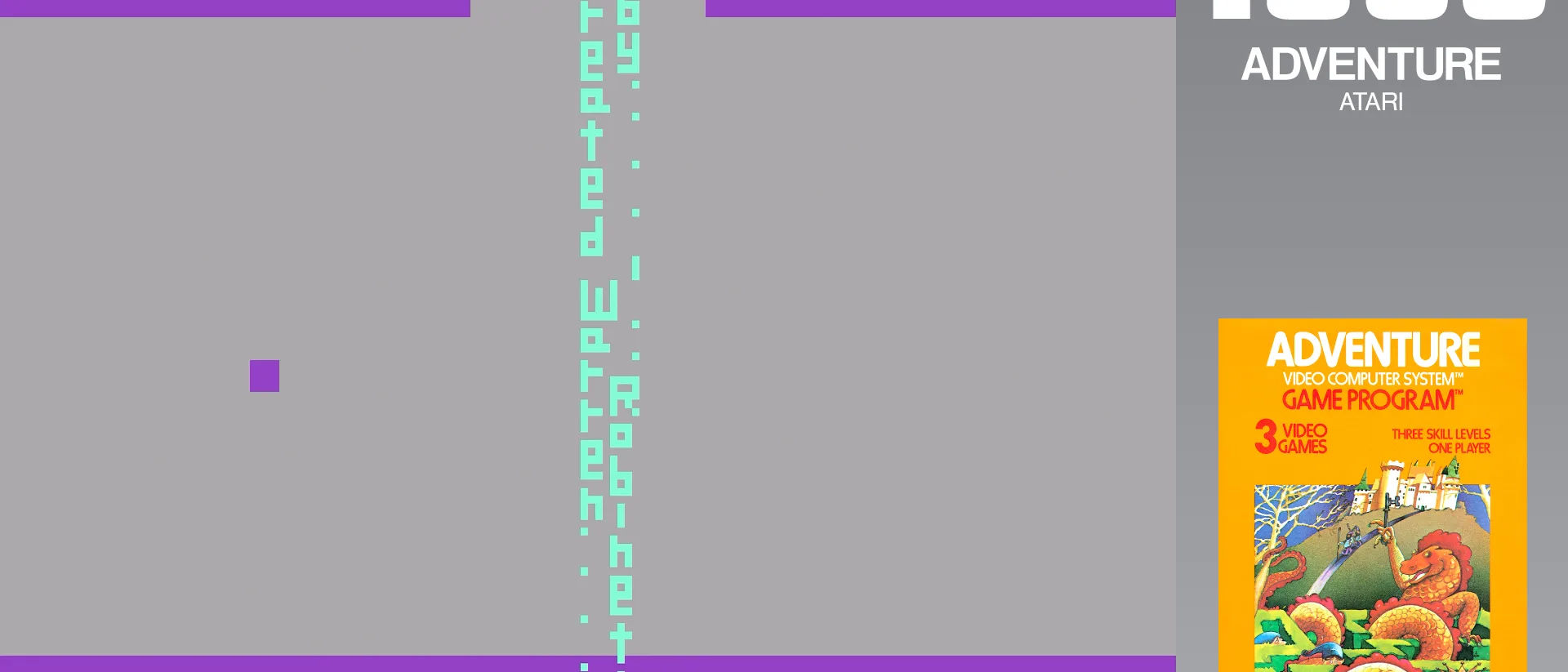
Warren Robinett made Atari millions with Adventure. His salary was $22,000 a year. No royalties. No credit. Atari refused to put developers' names on games. So he hid a secret room containing the words "Created by Warren Robinett" and left before anyone noticed. A teenager found it. Atari kept it in. They called it an "Easter egg." The term stuck.
He Made Atari Millions. They Refused to Put His Name on the Game. So He Hid It Inside.
In the late 1970s, Atari was one of the most successful companies in America. Its game developers were creating titles that generated millions in revenue. But there was a problem: Atari treated its programmers like interchangeable parts.
The No-Credit Policy
Atari had a strict policy against crediting developers on their games. The reasoning was simple - if competitors knew who made the hit games, they'd poach them. Developers were paid modest salaries with no royalties, no matter how successful their games became.
Warren Robinett was one of those developers. He spent about a year creating Adventure, an action-adventure game for the Atari 2600 that would become one of the console's most popular titles. Despite the game's commercial success, Robinett received no public credit and no share of the profits.
The Hidden Room
So Robinett did something no one had done before. He created a hidden room in the game - accessible only through a complex sequence of actions involving an invisible pixel-sized dot. Inside the room, in flashing text, were the words: "Created by Warren Robinett."
Robinett left Atari before the game shipped. No one at the company knew the secret room existed.
The Discovery
A young player discovered the hidden room and wrote a letter to Atari. When the letter reached Steve Wright, an Atari manager in charge of software development, he had a decision to make. Fixing the game would cost money - they'd have to recall and re-manufacture cartridges.
Instead, Wright made a different call. He decided to keep the hidden message and even encourage developers to hide similar secrets in future games. He called them "Easter eggs" - hidden surprises for players to find, like Easter eggs hidden in a garden.
A Term That Changed Everything
The term spread beyond video games. Software developers at Microsoft, Apple, and Google began hiding Easter eggs in their products. Movie directors hid references in their films. The concept became a fundamental part of digital culture.
Today, "Easter egg" is used billions of times to describe any hidden feature, message, or reference in technology, entertainment, and media. It all started because one developer refused to let his work go uncredited - and one manager thought that was worth celebrating rather than erasing.
Frequently Asked Questions
What was the first Easter egg in a video game?
Why did Warren Robinett hide his name in Adventure?
Who coined the term Easter egg?
Verified Fact
This fact has been reviewed and verified against original sources.
Source: Atari Official BlogShow verification details
Core facts confirmed: Atari's no-credit policy, the hidden room with "Created by Warren Robinett," Steve Wright coining the term "Easter egg." The game was developed 1978-1979 and released in 1980.