
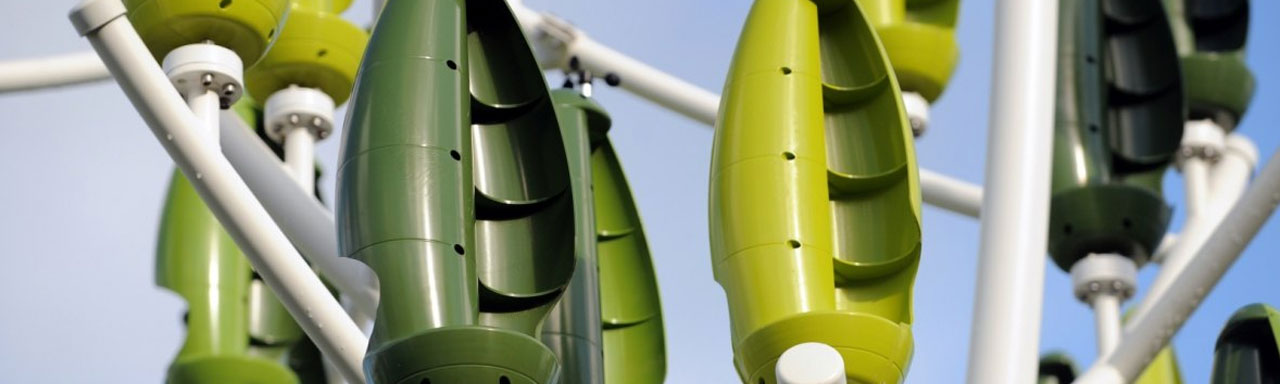
After noticing the wind rustling and turning the leaves on trees, French entrepreneur Jérôme Michaud-Larivière designed wind turbine trees that could provide clean energy for urban settings.
The Wind Tree: Urban Turbines Inspired by Rustling Leaves
Sitting in a Paris park one seemingly calm day, French entrepreneur Jérôme Michaud-Larivière noticed something most people overlook: the leaves on trees were moving when there wasn't even a noticeable breeze. That simple observation sparked an idea that would become the Arbre à Vent, or Wind Tree—a revolutionary approach to urban renewable energy.
"I saw the leaves tremble when there was not a breath of air," Michaud-Larivière recalled. "There is energy there." He founded NewWind to turn that realization into reality.
A Tree That Harvests the Wind
The Wind Tree doesn't look like your typical wind turbine. Standing about 3 meters tall with a steel trunk and branches spanning 10x8 meters, it resembles an artistic sculpture more than an energy generator. But hidden among its branches are 72 artificial leaves called "aeroleaves"—small vertical-axis micro-turbines that silently rotate in the slightest breeze.
Unlike massive commercial wind turbines that need strong, consistent winds to operate, the Wind Tree was designed specifically for the turbulent, gentle winds found in cities. Each aeroleaf can start generating power in winds as light as 4.4 to 4.5 mph—barely enough to feel on your face.
Urban Energy on Every Corner
The genius of the design lies in its adaptability to urban environments. Traditional wind turbines struggle in cities where buildings create swirling, unpredictable wind patterns. The Wind Tree thrives in these conditions.
A single Wind Tree can produce around 2,400 to 3,100 kWh annually at peak efficiency—enough to:
- Power fifteen streetlights
- Charge an electric car
- Meet the electricity needs of a small family home (excluding heating)
- Fuel lights for nearby buildings
NewWind estimated the trees could potentially generate power 280 days a year, far more than solar panels in cloudy climates.
From Prototype to Reality
The first prototypes appeared on public and private properties throughout France. A showcase installation at Paris's Place de la Concorde on the Champs-Élysées in March 2015 demonstrated the technology to the world. The silent operation made them ideal for parks, corporate campuses, and city squares where noise pollution is a concern.
The initial price tag was steep—around $27,400 to $35,000 per tree—but NewWind anticipated costs would drop with mass production. While the company faced financial challenges and entered judicial liquidation at one point, the innovative concept proved that renewable energy doesn't always have to look industrial.
Michaud-Larivière's observation about rustling leaves opened up new possibilities for urban planners and architects. His Wind Trees showed that clean energy could be both functional and beautiful, turning city streets into power-generating landscapes while maintaining aesthetic appeal. Sometimes the biggest innovations come from simply paying attention to what's already moving around us.
Frequently Asked Questions
How does the Wind Tree generate electricity?
How much power does a Wind Tree produce?
Who invented the Wind Tree?
How much does a Wind Tree cost?
Where are Wind Trees installed?
Verified Fact
This fact has been reviewed and verified against original sources.
Show verification details
Confirmed accurate. French entrepreneur Jérôme Michaud-Larivière founded NewWind and designed the 'Arbre à Vent' (Wind Tree) after observing leaves rustling in a Paris park on what seemed like a windless day.