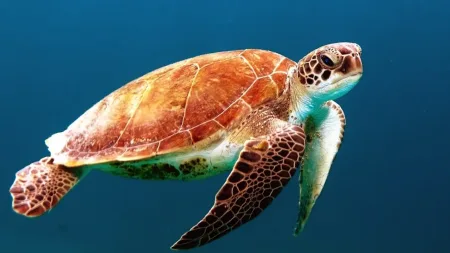
Alligator snapping turtles can live for over 100 years in the wild, making them one of the longest-lived freshwater animals in North America. Scientists determine their age through growth rings on their shells and skeletal analysis.
The Ancient Turtle That Outlives Humans
In the murky rivers and swamps of the American Southeast lurks a creature that was already old when your great-grandparents were born. The alligator snapping turtle, with its dinosaur-like appearance and bone-crushing jaws, routinely lives past the century mark.
These armored giants are the largest freshwater turtles in North America, tipping the scales at over 200 pounds. But it's not their size that astounds scientists—it's their longevity.
Living Fossils
Alligator snapping turtles belong to a lineage that dates back over 20 million years. They've outlived countless species and barely changed their design. Why mess with perfection?
In the wild, verified specimens have reached ages exceeding 80 years, with some researchers estimating lifespans of 100 to 150 years under ideal conditions. In captivity, where threats are minimized, they may live even longer.
How Do Scientists Know?
Unlike trees, turtles don't make it easy. Their shells do develop growth rings—similar to tree rings—called scute annuli. But these become unreliable in older turtles as the rings compress and wear down.
Modern techniques include:
- Skeletochronology – analyzing growth rings in bone cross-sections
- Long-term field studies – recapturing tagged individuals over decades
- Size-at-age models – correlating body size with known-age specimens
The musket ball folklore you may have heard? It makes for a good story, but there's no verified scientific documentation of researchers finding Revolutionary War-era ammunition in turtle stomachs to prove extreme age.
The Secret to Turtle Longevity
Turtles age differently than mammals. Their cells show remarkable resistance to the degradation that plagues human bodies. Some researchers believe studying turtle biology could unlock secrets to human aging.
Alligator snappers also have incredibly slow metabolisms. They spend most of their time motionless on the river bottom, mouth agape, using a worm-like appendage on their tongue to lure fish. This energy conservation may contribute to their extraordinary lifespan.
Threats to Ancient Survivors
Despite surviving millions of years, alligator snapping turtles now face unprecedented challenges. Overharvesting for meat and shells decimated populations in the 20th century. Habitat destruction continues to shrink their range.
Many states now protect them, but recovery is slow—when an animal takes 15 to 20 years to reach reproductive maturity and can produce offspring for another 80 years, every individual matters.
The next time you're near a Southern river, consider that somewhere beneath the surface, a turtle might be lurking that hatched before the First World War—and with any luck, it'll still be there long after we're gone.
Frequently Asked Questions
How long do alligator snapping turtles live?
How do scientists determine a turtle's age?
What is the largest freshwater turtle in North America?
Why do turtles live so long?
Are alligator snapping turtles endangered?
Verified Fact
Verified folklore - removed and replaced with actual scientific aging methods
Show verification details
Corrected lifespan from 150 years to 100+ years. The musket ball claim is unverified folklore - removed and replaced with actual scientific aging methods.