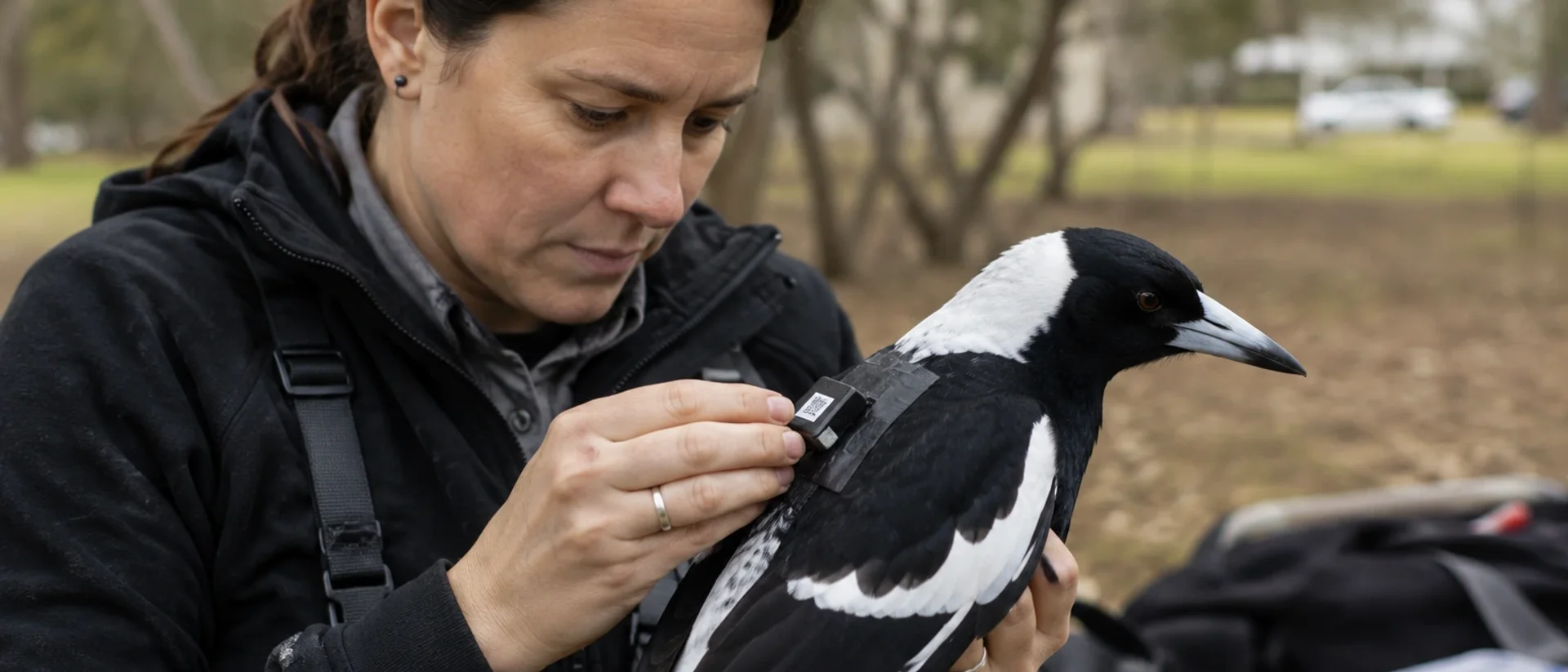
Researcher Dominique Potvin spent years designing GPS harnesses for Australian magpies - magnetic releases so only she could remove them. Within 10 minutes of fitting the fifth bird, an untracked female magpie freed a younger bird's harness. By day three, all five trackers were gone. It was the first documented case of birds helping each other remove tracking devices.
Scientists Designed Escape-Proof Trackers. Magpies Removed Them in 10 Minutes.
Dominique Potvin had a problem. The senior lecturer in animal ecology at the University of the Sunshine Coast had designed a GPS harness she thought was bird-proof. The magnetic release could only be opened with a specific tool - not a beak. She was confident the trackers would stay on her magpies until she chose to remove them.
The Ten-Minute Undoing
In February 2022, Potvin's research team fitted five Australian magpies with lightweight GPS tracking backpacks as part of a pilot study. The goal was to monitor the birds' movement patterns - how far they flew, whether social rank affected daily schedules, where each individual spent their time. It was meticulous, years-in-the-making fieldwork.
Then, within ten minutes of fitting the fifth harness, something happened that no scientist had ever recorded before. An adult female magpie not wearing a tracker walked up to a younger bird and started picking at its harness with her bill. She found the weak point and kept working until the harness fell free.
A Chain Reaction
The behavior spread quickly. Within hours, most of the trackers had come off. By day three, even the group's dominant male had his harness removed. In just 72 hours, the entire pilot study had been dismantled from the inside.
Potvin and her colleagues realized they were looking at something genuinely new. No previous study had ever recorded birds of the same species cooperating to remove tracking devices from one another. The only vaguely similar behavior in birds - helping another individual remove something from their body - had been documented once before, in Seychelles warblers. The magpies were doing it without any apparent reward. No food. No obvious advantage. Just one bird helping another out of something it didn't want to wear.
What It Means
Australian magpies are corvids - the same family as crows and ravens, consistently ranked among the most cognitively advanced birds. They live in social groups of up to 12 individuals with complex hierarchies. But helping a group-mate remove an unfamiliar human-made device, within minutes of it being fitted, suggested a level of rapid problem-solving and apparent empathy that surprised even researchers who study these birds professionally.
The incident was published in Australian Field Ornithology in February 2022. The tracking study that prompted it never got its data. But in failing so quickly and so cooperatively, the magpies had revealed something more interesting than the original study would ever have found.
Frequently Asked Questions
Why did the magpies remove each other's GPS trackers?
How were the GPS trackers attached to the magpies?
What happened to the tracking study after the magpies removed the devices?
Are Australian magpies really that intelligent?
Who is Dominique Potvin?
Verified Fact
Verified Jun 2, 2026 · 5 sources checked
Source: The ConversationShow verification details
Claims checked
- 5 magpies were fitted with GPS harnesses
- An untracked female freed a younger bird within 10 minutes
- All 5 trackers were removed by day three
- First documented case of birds helping each other remove trackers
Sources: The Conversation, Smithsonian Magazine, Good News Network, NPR, PBS NOVA