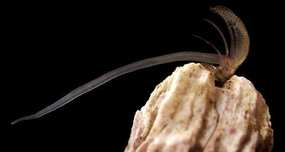
Many baby octopuses are about the size of a flea at birth, though their exact size varies by species, with some being even smaller.
Tiny Tentacles: The Flea-Sized Baby Octopuses
Tiny Titans of the Deep: The Remarkable Scale of Baby Octopuses
Imagine holding an animal that, despite its complex intelligence and eight formidable arms, began its life barely visible to the naked eye. This is often the reality for many octopus species. At birth, a baby octopus can indeed be as small as a flea. This astonishing scale highlights one of nature's most incredible transformations.
While the exact size can vary significantly depending on the species, many hatchlings are just a few millimeters long. For context, an adult flea typically measures around 3 millimeters (about 1/8 inch). This means that when these cephalopods first emerge from their eggs, they are often comparable in size to this minuscule insect, or in some cases, even tinier, approaching microscopic dimensions.
From Microscopic to Master Hunter
The journey from a flea-sized organism to an intelligent, adaptable predator is nothing short of miraculous. Octopus eggs themselves are often quite small, resembling grains of rice or tiny pearls, carefully guarded by the mother until they hatch. Once born, these mini-octopuses, sometimes called 'paralarvae,' are not helpless larvae; they are essentially miniature versions of the adults, capable of hunting and surviving on their own from day one.
- Instant Independence: Unlike many other creatures, baby octopuses are not cared for by their parents after hatching. They are immediately self-sufficient.
- Rapid Growth: Octopuses are known for their incredibly fast growth rates. They can increase their body mass exponentially in a short period, reaching adult size within months or a few years, depending on the species.
- Camouflage Experts: Even at their smallest, hatchlings possess the remarkable ability to change color and texture, blending seamlessly into their surroundings to avoid predators.
The Challenges of Tiny Beginnings
Starting life at such a diminutive size comes with immense challenges. The ocean is a vast and dangerous place, especially for creatures so small. Baby octopuses face a gauntlet of predators, from small fish to jellyfish, and must quickly adapt to their environment.
Their initial diet consists of tiny planktonic organisms, which they must expertly capture with their undeveloped but functional suckers. The survival rate for these paralarvae is understandably low, but those that do survive grow rapidly, becoming increasingly capable hunters and masters of disguise.
Diversity in Miniature
The octopus family tree is incredibly diverse, and so too are the sizes of their offspring. While species like the Common Octopus might have relatively larger hatchlings, others, such as the mimic octopus, can emerge as truly minute versions of their adult selves. The sheer variety in their embryonic development and initial size is a testament to the evolutionary adaptability of cephalopods.
Whether born the size of a pepper flake or slightly larger, each baby octopus begins its life as a marvel of biological engineering, equipped with the instincts and potential to grow into one of the ocean's most fascinating and intelligent invertebrates. The next time you think of an octopus, remember its humble, flea-sized beginnings.
Frequently Asked Questions
How small is a baby octopus at birth?
Do baby octopuses need their parents after hatching?
How fast do octopuses grow?
What do baby octopuses eat?
Are all baby octopuses the same size at birth?
Verified Fact
This fact has been reviewed and verified against original sources.
Show verification details
While accurate for some species, specified that size varies and some can be even smaller than a flea.