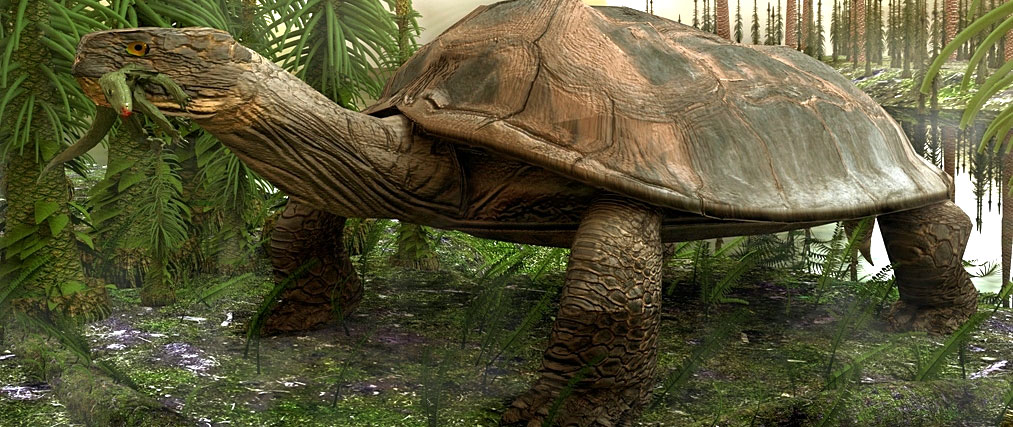
About 60 million years ago, a species of turtle called Carbonemys cofrinii was so large and had such powerful jaws that it could have devoured crocodiles.
The Ancient Turtle That Could Eat Crocodiles
Forget everything you think you know about turtles being slow, docile creatures content to munch on lettuce. Sixty million years ago, a monster roamed the swamps of what is now Colombia—and it had crocodiles on the menu.
Meet Carbonemys cofrinii, the "coal turtle." Its name might sound industrial, but this prehistoric beast was anything but boring.
The Size of a Small Car
Discovered in 2005 in Colombia's Cerrejón coal mine, Carbonemys measured about 5.7 feet long—roughly the length of a Smart car. Its skull alone was the size of a football.
But size wasn't its only weapon. Those massive jaws were built for crushing. Paleontologists believe Carbonemys was powerful enough to bite through the shells of other turtles and the armored hides of crocodilians that shared its habitat.
A Post-Apocalyptic Paradise
Carbonemys thrived in a world recovering from catastrophe. Just five million years earlier, the asteroid that killed the dinosaurs had reset Earth's ecosystems. With the giant reptiles gone, other creatures had room to grow—and grow they did.
The Cerrejón region was a tropical paradise with:
- Titanoboa—a 42-foot snake, the largest ever
- Giant crocodilians up to 20 feet long
- Massive lungfish and other oversized fauna
In this world of giants, Carbonemys wasn't prey. It was a predator.
Why Turtles Could Get So Big
The post-extinction world had several features that let creatures like Carbonemys balloon to massive sizes. Warmer global temperatures meant cold-blooded animals could grow larger and stay active year-round. Food was abundant, and competition from dinosaurs was gone.
There's also evidence that only one adult Carbonemys lived in each area. Researchers found just one specimen despite extensive excavation, suggesting these turtles were fiercely territorial—possibly eating smaller members of their own species.
Those Jaws, Though
The real story here is the bite. Carbonemys had a skull built like a vise grip, with jaw muscles that gave it crushing power unmatched by modern turtles. While today's alligator snapping turtles can bite through broom handles, Carbonemys could have crushed bone.
Crocodilians of its era would have been legitimate prey. Not hatchlings—adults. The hunter had become the hunted.
Still Not the Biggest
As terrifying as Carbonemys was, it wasn't even the largest turtle to ever exist. That honor goes to Archelon, a sea turtle from the dinosaur age that reached 15 feet long. But Archelon ate jellyfish. Carbonemys ate nightmares.
The next time you see a turtle slowly crossing the road, give it some respect. Its ancestors were apex predators that made crocodiles nervous.
Frequently Asked Questions
What prehistoric turtle could eat crocodiles?
How big was Carbonemys cofrinii?
When did giant turtles live?
Where was Carbonemys discovered?
What was the largest turtle ever?
Verified Fact
This fact has been reviewed and verified against original sources.
Show verification details
Fact refers to Carbonemys cofrinii, which lived ~60 million years ago. Verified accurate - it was car-sized with powerful jaws capable of eating crocodilians.