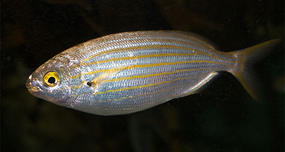
Cymothoa exigua is a type of parasite that enters through fish's gills, eats their tongue, and then replaces it.
The Parasite That Eats a Fish's Tongue and Becomes It
Imagine losing your tongue and having it replaced by a living creature that does the job just as well. That's the everyday reality for certain fish unlucky enough to encounter Cymothoa exigua, the tongue-eating louse. This parasitic isopod—a type of crustacean related to pill bugs—has earned the distinction of being the only known parasite that completely replaces a host's organ.
The nightmare begins when a juvenile parasite enters through the fish's gills, typically targeting species like snappers in the Gulf of California and Pacific waters from Mexico to Ecuador. Females latch onto the tongue while males attach to the gill arches. What happens next is straight out of a horror film.
How to Steal a Tongue in Three Easy Steps
Using specialized front claws, the female parasite severs the blood vessels in the fish's tongue. Deprived of blood flow, the tongue tissue dies and eventually falls off through necrosis. The parasite then attaches its own body to the remaining tongue stub, physically becoming the new tongue.
Here's the truly bizarre part: it works. The fish continues to use the parasite as a functional tongue, feeding normally despite having a crustacean permanently embedded in its mouth. The parasite feeds on fish mucus and blood, but doesn't kill its host—after all, a dead fish makes a terrible home.
The Only Organ-Replacing Parasite Known to Science
Parasites are common in nature, but Cymothoa exigua stands alone. No other parasite has been documented replacing an entire organ and performing its function. Recent 2024 research using CT scans has revealed the parasite in stunning 3D detail, showing how perfectly it integrates into the fish's anatomy.
Fish with a single parasite can live relatively normal lives, though they're essentially sharing every meal with an unwanted dinner guest. However, fish infested with multiple parasites typically show signs of distress:
- Significant weight loss from nutrient theft
- Reduced mobility and vigor
- Impaired feeding efficiency
Should You Worry?
Despite its horrifying lifestyle, Cymothoa exigua poses zero threat to humans. These parasites have evolved specifically for fish hosts and show no interest in mammalian flesh. Commercial fishermen occasionally discover them when processing catches, but they're harmless if handled.
The tongue-eating louse reminds us that nature's creativity knows no bounds—even when that creativity is absolutely terrifying. While most parasites are content to steal nutrients or hitch a ride, C. exigua literally becomes part of its host, blurring the line between predator and symbiote in the strangest way imaginable.
Frequently Asked Questions
Can the tongue-eating parasite infect humans?
Does the fish die after the parasite eats its tongue?
Where is the tongue-eating louse found?
Is Cymothoa exigua the only parasite that replaces organs?
How does the tongue-eating parasite get inside fish?
Verified Fact
This fact has been reviewed and verified against original sources.
Show verification details
Cymothoa exigua is scientifically documented as the only known parasite that functionally replaces an entire organ.