
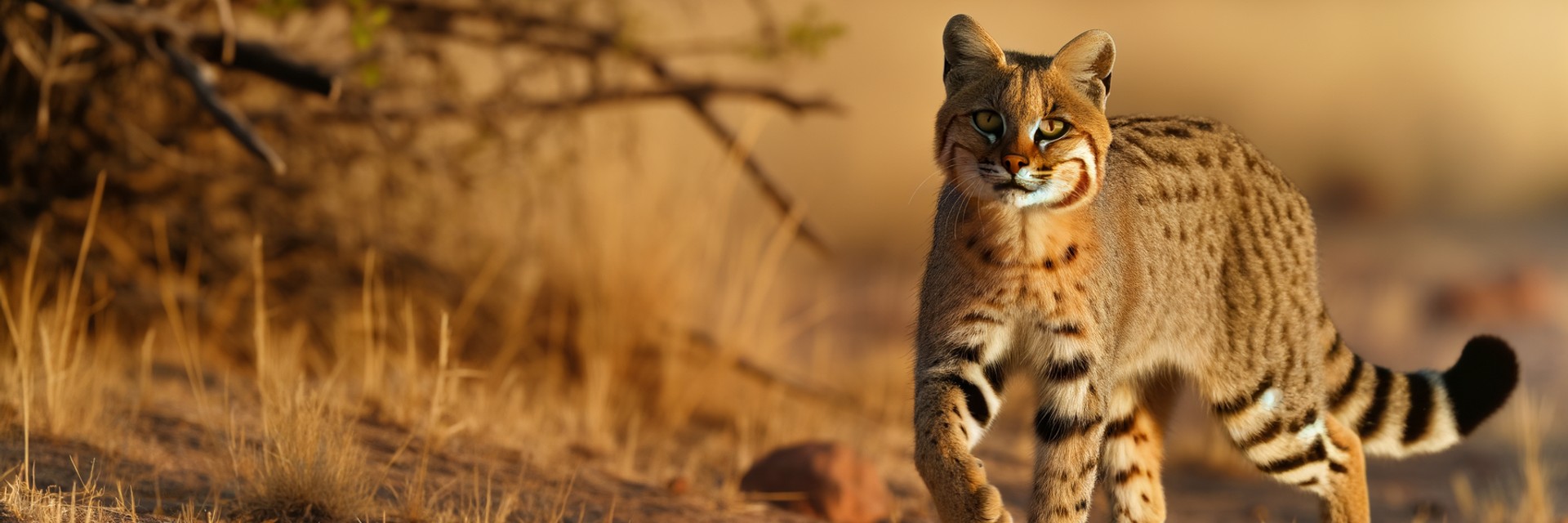
The ancestor of all domestic cats is the African wild cat, which still exists today.
From Wild Savannah to Cozy Couch: The African Wildcat's Legacy
When you gaze at your purring feline companion curled up on the sofa, it's hard to imagine them as anything but a creature of comfort and domestic bliss. Yet, beneath that soft fur and contented purr lies a wild history. The remarkable truth is that the ancestor of all domestic cats is the African Wildcat, a species that continues to thrive in the wild today.
This incredible journey from untamed hunter to beloved pet began thousands of years ago. Genetic and archaeological evidence points to the Near East, particularly the Fertile Crescent, as the cradle of cat domestication. This process started approximately 9,000 to 10,000 years ago, marking a pivotal moment in both human and feline history.
A Mutual Arrangement: The Dawn of Domestication
Unlike many other domesticated animals, which were actively hunted and then tamed, the domestication of the African Wildcat was largely a mutual arrangement. Early human settlements, with their stored grains, inadvertently attracted rodents. These rodents, in turn, became an irresistible food source for the agile wildcats.
Wildcats that were less fearful of humans and more tolerant of their presence found an abundance of prey with minimal effort. This symbiotic relationship benefited both parties: humans gained effective pest control, and the wildcats secured a steady food supply. Over generations, this natural selection favored individuals with calmer temperaments, slowly but surely paving the way for the domestic cat we know today.
The African Wildcat: A Closer Look
The African Wildcat, scientifically known as Felis lybica, is a formidable hunter. They are typically larger and more powerfully built than their domestic descendants, with longer legs and a distinctly reddish-sandy to greyish-yellow coat. Their striped markings are often fainter and more broken than those seen on many tabby domestic cats.
These wild felines are predominantly solitary and nocturnal. They are incredibly adaptable, inhabiting a wide range of environments from savannas and shrublands to semi-deserts across Africa and parts of the Middle East. Their keen senses and stealthy hunting techniques make them incredibly efficient predators, preying on small mammals, birds, reptiles, and insects.
Distinguishing Wild from Domestic
While sharing a common ancestor, there are clear distinctions between the African Wildcat and its domestic counterpart. Domestic cats (Felis catus) exhibit a much broader range of coat colors, patterns, and body types, a result of thousands of years of selective breeding by humans. More importantly, their behavior patterns differ significantly.
- Temperament: African Wildcats are inherently wary and avoid human contact. Domestic cats, conversely, often seek human companionship and display a wide array of social behaviors towards people.
- Reproduction: While interbreeding is possible, African Wildcats maintain distinct breeding seasons, whereas domestic cats can breed year-round.
- Survival Skills: Wild populations rely entirely on their hunting prowess and instinct for survival. Domestic cats often depend on humans for food and shelter, though many retain strong hunting instincts.
An Enduring Legacy
The fact that the African Wildcat still exists today is a testament to its resilience and adaptability. It serves as a living bridge to the wild origins of our cherished pets. Understanding this lineage helps us appreciate the deep evolutionary history behind every stretch, pounce, and purr of our domestic cats.
From the arid plains of Africa to the comfort of our homes, the journey of the cat is a fascinating tale of adaptation, coexistence, and the enduring bond forged between two very different species. The African Wildcat is not just an ancestor; it's a reminder of the wild heart that beats within even the most pampered housecat.
Frequently Asked Questions
What is the scientific name of the African Wildcat?
When and where did cats become domesticated?
How did wildcats become domesticated?
Do African Wildcats look like domestic cats?
Can domestic cats interbreed with African Wildcats?
Verified Fact
This fact has been reviewed and verified against original sources.