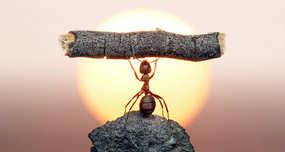
If an ant is drunk, a fellow comrade will carry him back to the nest to sleep off the alcohol.
Drunk Ants Get Carried Home by Their Sober Friends
If you've ever had a friend make sure you got home safely after one too many drinks, you're not alone—ants do the same thing. When an ant gets intoxicated, its sober nestmates will actually carry the drunk ant back to the colony to sleep it off. It's a remarkable example of social behavior in one of nature's tiniest creatures.
This isn't just folklore. The phenomenon was first documented scientifically in 1884 by Sir John Lubbock, a British naturalist who conducted what might be history's strangest insect experiment. He deliberately intoxicated ants and watched how their colony responded.
The Victorian Scientist Who Got Ants Drunk
In his book Ants, Bees and Wasps: A Record of Observations on the Habits of the Social Hymenoptera, Lubbock described placing intoxicated ants near their nests to see what would happen. Out of 41 drunk nestmates, an impressive 32 were carried back inside to recover. The remaining 9 were unceremoniously tossed into water—apparently even ant society has its limits.
But here's where it gets interesting: when Lubbock tested the ants' response to drunk strangers from other colonies, the hospitality vanished. Of 52 intoxicated outsiders, only 2 were taken in. The other 50? Straight into the water.
Not Just Kindness—It's Colony Recognition
This behavior reveals something crucial about ant social structure. The sober ants weren't just being altruistic—they were displaying sophisticated nestmate recognition. Each ant colony has a unique chemical signature, and ants can identify their own even when those nestmates are stumbling around drunk.
Modern research has confirmed Lubbock's observations. A 2023 study published in PMC examined how narrow-headed ants (Formica exsecta) respond to alcohol exposure. Researchers found that ethanol significantly affects ant behavior, impacting:
- Locomotion and coordination
- Exploratory behavior patterns
- Self-grooming routines
- Aggressive social interactions
The sober ants seemed confused when encountering their drunk friends. According to Lubbock's notes, they would "take them up and carry them about for a while in a sort of aimless way, as if they did not know what to do with their drunkards." Eventually though, instinct kicked in, and most intoxicated nestmates were transported home.
Why This Matters
This behavior isn't just a cute quirk—it's a survival strategy. In nature, ants might encounter fermented foods or plant nectars with alcohol content. A colony that abandons intoxicated workers would lose valuable members who contribute to food gathering, nest maintenance, and defense.
By rescuing drunk nestmates, the colony preserves its workforce. Once inside the nest, the intoxicated ants can recover in safety rather than becoming vulnerable to predators or environmental hazards outside.
It's also a window into the complexity of insect societies. We often think of insects as simple, instinct-driven creatures, but ant colonies demonstrate problem-solving, communication, and even what looks remarkably like compassion—at least for their own.
So the next time you see ants marching in formation, remember: they've got each other's backs, even when one of them has had too much to drink.
Frequently Asked Questions
Do ants really carry drunk ants back to the nest?
How do ants get drunk in nature?
Who first discovered that ants rescue drunk nestmates?
Why do ants save drunk colony members but not strangers?
What happens to ants when they're drunk?
Verified Fact
This fact has been reviewed and verified against original sources.
Show verification details
This fact is verified by scientific research dating back to Sir John Lubbock's 1884 experiments and confirmed by modern studies.
Related Topics
More from Animals
View all Animals →