
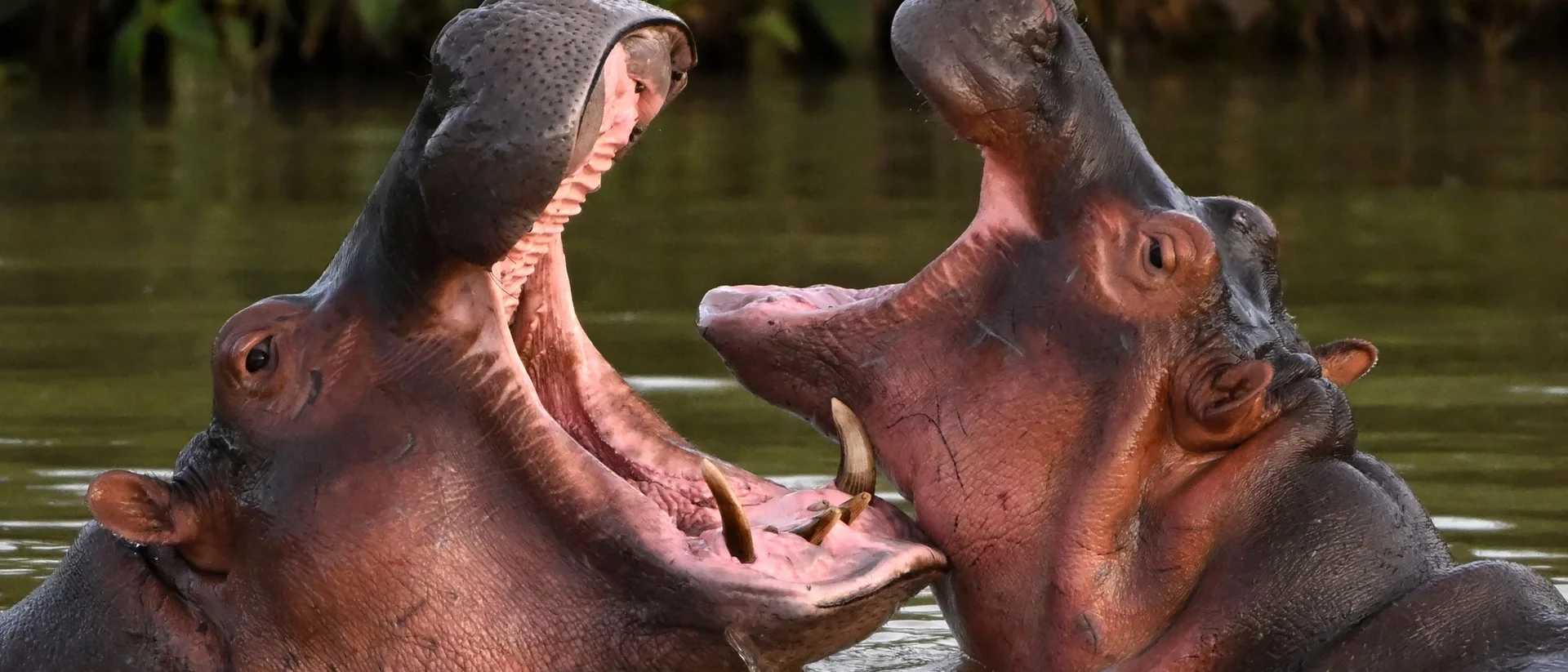
Pablo Escobar smuggled 4 hippos into Colombia for his private zoo in the 1980s. When he was shot dead in 1993, the animals were abandoned at his estate. They bred freely in the Magdalena River, with no natural predators to slow them. Colombia now has an estimated 170 to 215 feral hippos - the largest population outside Africa - and is spending $10,000 per animal to surgically sterilize them.
Pablo Escobar's 4 Hippos Are Now a 200-Strong Invasion
When Pablo Escobar was shot dead by Colombian police in December 1993, he left behind a crumbling narco-empire, a shattered family, and - at his remote Hacienda Napoles estate - four very large, very fertile hippos with nowhere to go.
Four Animals, One Estate
During the height of his power in the 1980s, Escobar illegally imported four hippos - one male and three females - from Africa to stock his private zoo at Hacienda Napoles, a sprawling 7,400-acre estate on the banks of the Magdalena River. After his death, the Colombian government seized the estate but struggled to relocate the animals. Most of the exotic zoo creatures were moved. The hippos, weighing up to three metric tons each, were not.
No Predators, No Limits
Left to roam, the hippos found near-perfect conditions: no natural predators, year-round water, and lush riverside vegetation. Hippos in Africa breed roughly every two years, slowed by drought and competition. In Colombia, scientists found they were breeding at a significantly faster rate. By the 2010s, researchers were already tracking dozens of animals spreading through the Magdalena River basin.
The Numbers Now
A government-commissioned study published in April 2023 counted between 181 and 215 hippos in Colombia. Smithsonian Magazine, citing official figures from November 2023, puts the estimate at roughly 170, reflecting ongoing survey variation. Without intervention, projections suggest the population could exceed 1,000 animals by 2035. They are already the largest feral hippo population on Earth outside their native Africa.
A $10,000-Per-Hippo Problem
Colombia has approved a three-pronged response: sterilize, relocate, and - controversially - euthanize some animals. Surgical sterilization requires a team of eight specialists, takes six to eight hours per animal, and costs around $10,000 each. The government has allocated roughly $200,000 to sterilize 20 hippos by end of 2023, scaling to 40 per year from 2024. Relocation has stalled - no country, including Mexico, the Philippines, Ecuador, and India, has agreed to accept a single hippo. Euthanasia of up to 80 animals has been approved but remains deeply unpopular with local communities, some of whom have embraced the hippos as a tourism draw.
What Scientists Say
Researchers warn the hippos are damaging Colombia's river ecosystems. Their waste alters water chemistry, they trample fragile riverbank habitats, and they compete directly with native species including capybaras. "All three strategies have to work together," Colombia's Environment Minister Susana Muhamad has said. The root cause, ecologists note, can be traced to a single man's desire for an exotic private zoo - and a 1993 government that could not figure out how to move four hippos.
Frequently Asked Questions
How many hippos did Pablo Escobar have?
How many hippos are in Colombia now?
Why are they called cocaine hippos?
What is Colombia doing about the hippos?
Are the hippos in Colombia dangerous?
Verified Fact
Verified Jun 17, 2026 · 4 sources checked
Source: Smithsonian MagazineShow verification details
Claims checked
- Escobar imported 4 hippos for his zoo in the 1980s
- Colombia has 170-215 feral hippos, largest population outside Africa
- Sterilization costs about $10,000 per animal
- Euthanasia of 80 hippos approved in 2026
Sources: Smithsonian Magazine, Scientific American, CBS News, Guinness World Records