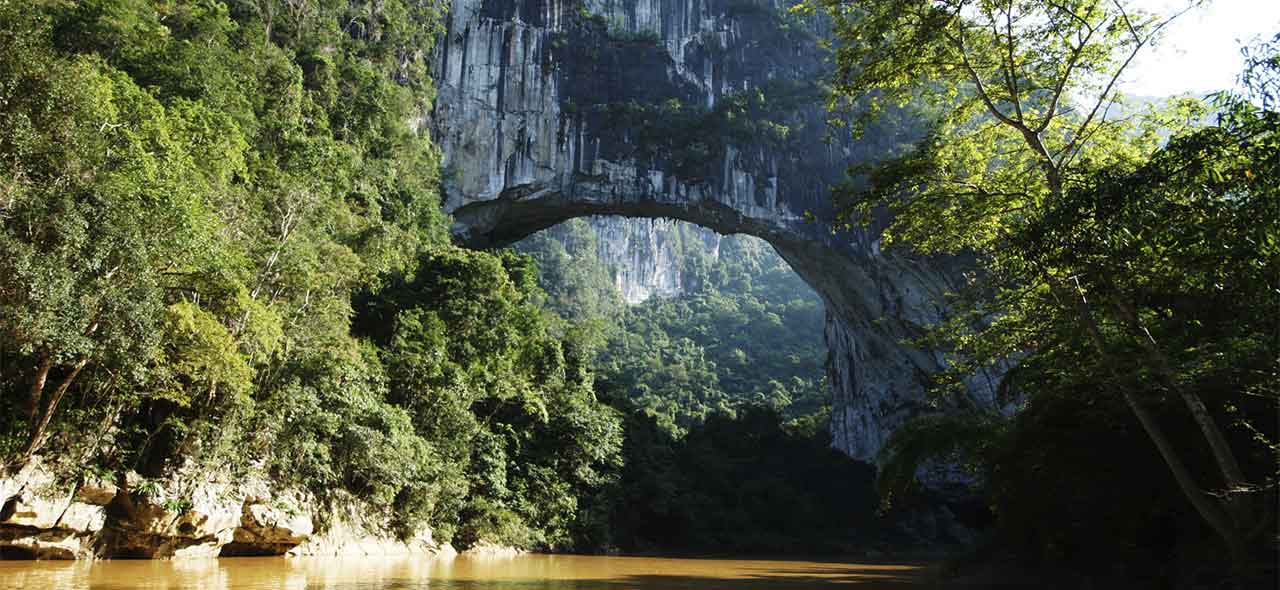
The largest natural bridge on Earth, the 'Fairy Bridge', was virtually unknown to the rest of the world until it was observed on Google Earth.
Earth's Largest Natural Bridge Found on Google Earth
Imagine discovering one of Earth's most magnificent natural wonders not by hiking through remote wilderness, but while sitting at your computer browsing satellite imagery. That's exactly what happened in 2009 when Jay Wilbur, founder of the Natural Arch and Bridge Society, was exploring Google Earth and stumbled upon something extraordinary in southern China.
Hidden in the karst mountains of Guangxi province, the Xianren Bridge—locally known as Fairy Bridge—had been known to nearby villagers for generations. But to the rest of the world? It might as well have not existed.
The Digital Discovery
Wilbur wasn't just casually browsing. He was systematically searching remote regions of China known for their dramatic limestone formations, the kind that create spectacular natural arches. When his screen revealed a massive bridge-like structure spanning a river valley, he knew he'd found something special. The question was: just how special?
The only way to know for sure was to see it in person.
Confirming a Giant
In 2010, an expedition team made the journey to measure Xianren Bridge properly. What they found was staggering: a span of 400 feet (plus or minus 15 feet)—that's 122 meters across, roughly the length of a football field plus both end zones.
This measurement crowned it as the world's largest natural arch by span, surpassing other famous formations:
- Landscape Arch in Utah: 290 feet
- Kolob Arch in Zion National Park: 287 feet
- Aloba Arch in Chad: 250 feet
The bridge rises about 280 feet above the Buliu River below, created over millions of years as water carved through the limestone karst landscape that defines this region of China.
Why Did It Take So Long?
Guangxi province is incredibly remote and mountainous. The terrain that creates these natural wonders also makes them incredibly difficult to access and document. Before satellite imagery became widely available, natural arch hunters relied on reports from locals, difficult expeditions, and quite a bit of luck.
Google Earth changed everything. Suddenly, researchers could scan thousands of square miles of terrain from their desks, identifying potential discoveries for future expeditions. Xianren Bridge was one of the technology's most impressive finds.
A Humbling Reminder
The discovery serves as a reminder that despite our advanced technology and centuries of exploration, Earth still has secrets. The world's largest natural bridge was hiding in plain sight, known to villagers who walked beneath it but invisible to science until a satellite happened to pass overhead and someone knew what to look for.
Today, Xianren Bridge remains relatively obscure compared to more accessible natural arches in places like Utah's national parks. Getting there still requires serious commitment—but at least now we know it's there, waiting to be experienced by those willing to make the journey.
Frequently Asked Questions
What is the Fairy Bridge?
Where is the Fairy Bridge located?
How was the Fairy Bridge discovered by the world?
Is the Fairy Bridge really the largest natural bridge in the world?
Can you visit the Fairy Bridge?
Verified Fact
This fact has been reviewed and verified against original sources.
Source: View sourceShow verification details
Confirmed accurate. Xianren Bridge (Fairy Bridge) in Guangxi, China was discovered via Google Earth in 2009 by Jay Wilbur (NABS founder). 2010 expedition measured span at 400±15 feet (122±4.