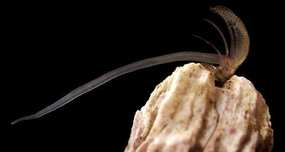
A marine catfish can taste with any part of its body.
Marine Catfish: The Fish That Tastes With Its Entire Body
Imagine being able to taste your surroundings just by swimming through them. That's exactly what marine catfish do every day. These remarkable fish have taste buds distributed across their entire external body surface—not just in their mouth like most animals, but covering their skin from head to tail.
Scientists have measured up to 700 taste buds per square centimeter on catfish skin. To put that in perspective, humans have roughly 10,000 taste buds total, all concentrated in our mouths. A single catfish might have hundreds of thousands spread across its body.
Swimming Tongues
Researchers affectionately call catfish "swimming tongues" because of this extreme specialization. The distribution isn't random—it serves as a large chemical antenna that detects gradients in the water, helping the fish locate food and navigate their environment.
The densest concentration appears on the barbels—those whisker-like appendages around the mouth. But unlike whiskers, these structures are packed with taste receptors connected directly to the facial nerves, making them incredibly sensitive chemical detectors.
Why Cover Your Body in Taste Buds?
Marine catfish often live in turbid, murky waters where vision is nearly useless. When you can't see your dinner, you need another way to find it. By covering their bodies in taste receptors, catfish can detect the chemical signature of prey from multiple directions simultaneously.
This adaptation is so effective that catfish can detect concentration differences between their left and right barbels, then make precise turning movements to track down the source. It's like having a GPS system based entirely on taste.
The Japanese sea catfish (Plotosus japonicus) takes this even further. Recent research shows these marine species use their taste system to detect subtle pH changes in the water, helping them locate live prey that would otherwise be invisible in the darkness.
A Molecular Marvel
Scientists have identified eight different taste receptor genes in channel catfish, including five type I and three type II receptors. These receptors are expressed not just in the obvious places like barbels, but throughout taste buds embedded in the skin across the entire body.
The neural pathways processing all this taste information are equally impressive. Catfish have dedicated gustatospinal pathways—nerve circuits running from taste buds down the spinal cord—that allow rapid, reflexive responses to chemical stimuli detected anywhere on the body.
This means a catfish doesn't need to think about what it's tasting. If its tail brushes against something edible while swimming, the body can react automatically, reorienting to investigate the potential food source.
Perfect for Bottom Feeding
The combination of taste and smell receptors enriching their barbels makes catfish highly efficient bottom feeders. While other fish struggle to find food in muddy substrate, catfish essentially drag their tongues across the lake or ocean floor, tasting everything they encounter.
Among North Dakota's fishes, the channel catfish has one of the most highly developed senses of taste. This isn't just impressive—it's a masterclass in evolutionary adaptation. When your environment limits one sense, you don't just compensate. You turn your entire body into a sensory organ.
Frequently Asked Questions
How many taste buds does a catfish have on its body?
Why do catfish have taste buds all over their body?
What are catfish barbels used for?
Can catfish taste with their tail?
Do all fish have taste buds on their skin?
Verified Fact
This fact has been reviewed and verified against original sources.
Show verification details
Scientific research confirms catfish have taste buds distributed across their entire external body surface, with densities up to 700 taste buds per square centimeter. They are often called 'swimming tongues' due to this unique adaptation.