On the eve of Thanksgiving 1997, a New York woman brought five puppies into a maximum-security women's prison and taught a group of inmates to raise them. Today her prison-raised service dogs go home free of charge with wounded war veterans, each one spending two years with someone serving time and learning more than 70 commands. The puppies still grow up behind bars.
The Veterans' Service Dogs Raised by Prison Inmates
Gloria Gilbert Stoga brought five puppies into Bedford Hills Correctional Facility, New York's only maximum-security prison for women, on the eve of Thanksgiving 1997 and taught a group of carefully selected inmates to raise them. Almost three decades later, the service dogs her program sends home with wounded war veterans still start life the same way: raised from 8 weeks old by people serving time.
Five Puppies Nobody Wanted
Stoga started Puppies Behind Bars in 1997, while she was serving on a New York City youth commission. Her first class of inmate raisers met at Bedford Hills that October.
The puppies themselves were rejects. Guiding Eyes for the Blind had turned them down, and Stoga offered to buy the five for $500 apiece so the inmates could raise them.
Three weeks later, the Guiding Eyes board decided to give her the dogs for free.
Two of those five rejects went on to become guide dogs. The program's first guide dog, Lucie, graduated in August 1999.
From Guide Dogs to Dog Tags
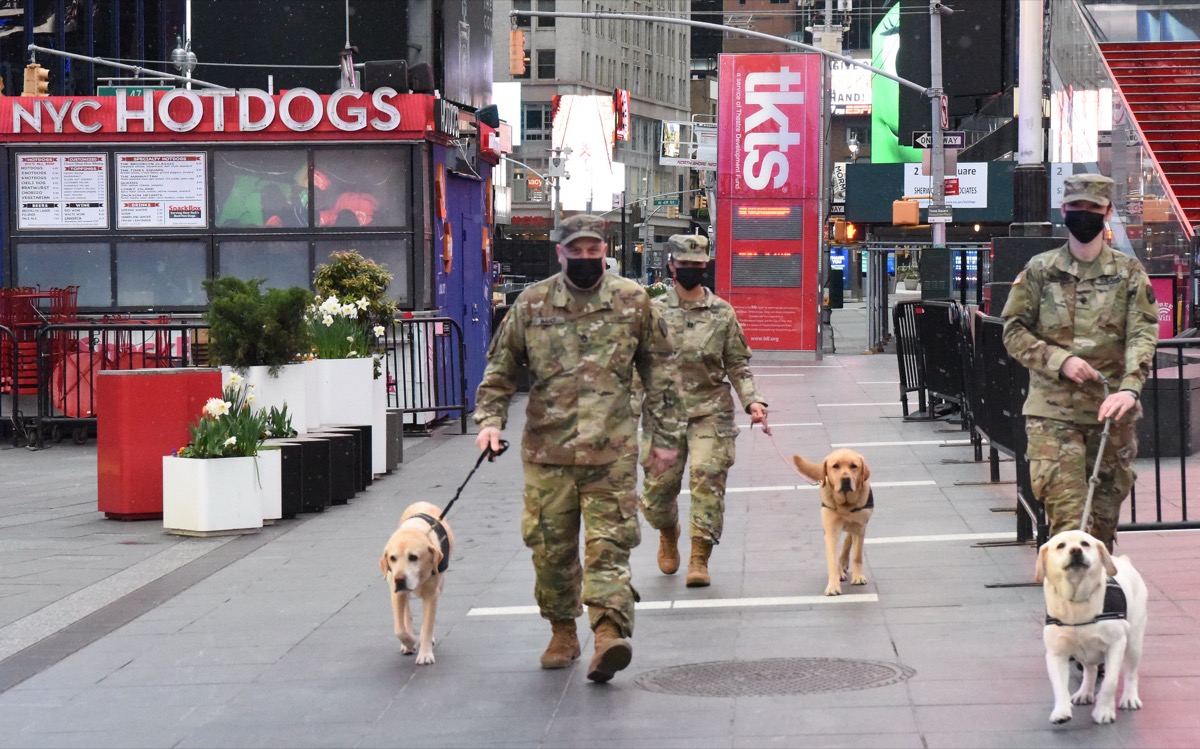
After the September 2001 attacks, Puppies Behind Bars began raising explosive-detection dogs for law enforcement inside its prisons as well, starting in May 2002.
Two of its graduates, Sam and John, went to work as explosive-detection dogs for the U.S. Park Police at the Statue of Liberty, sweeping vehicles, visitor screening sites and ferries.
In June 2006 the group launched Dog Tags: Service Dogs for Those Who've Served Us. From then on, many of the dogs raised behind the wall had a new destination: wounded war veterans.
The first service dog was paired with an Iraq war veteran in February 2008.
Two Years Behind the Wall
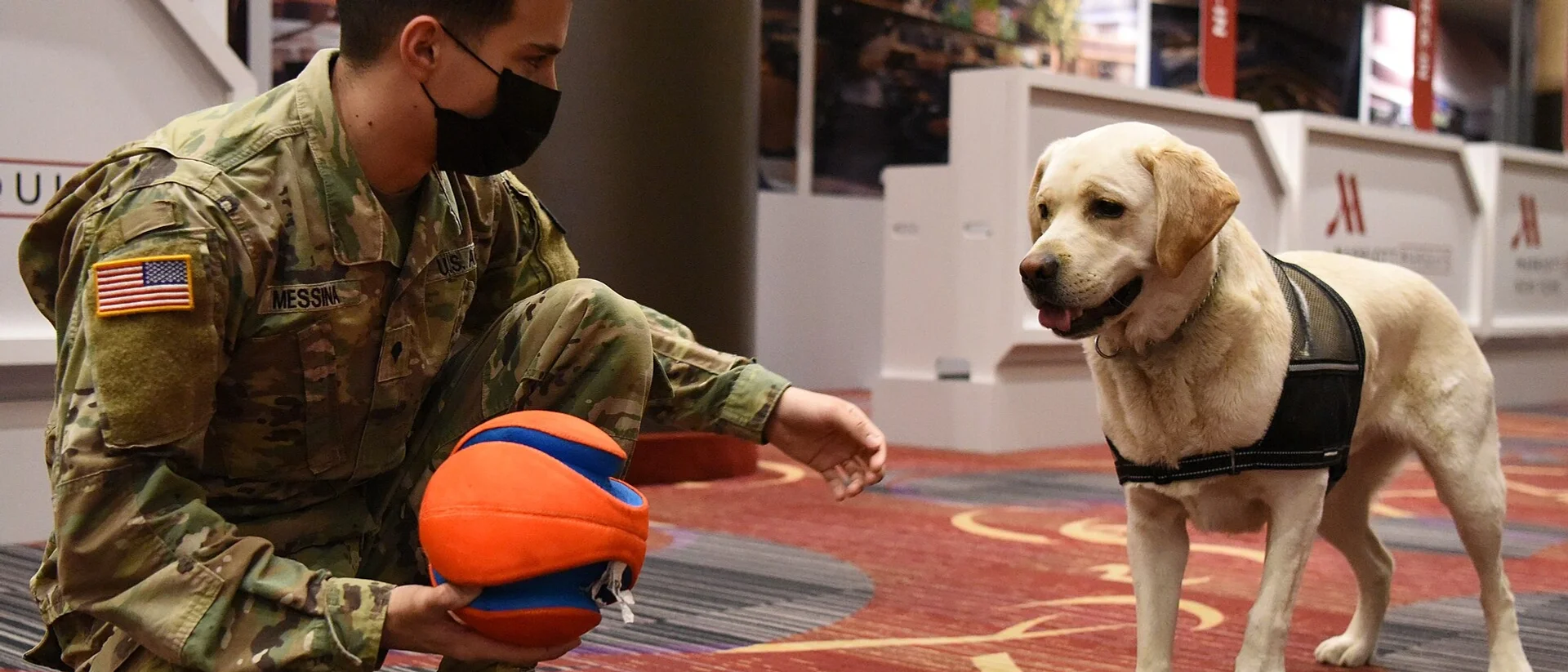
Each Labrador puppy enters prison at 8 weeks old and lives with its incarcerated raiser for about two years.
Full-time instructors come in to teach the raisers for a full day every week. By the end, each dog knows more than 70 commands built to help its partner with daily life.
More than 250 volunteers help socialize the puppies to experiences outside the prison.
The finished dogs are paired with their new partners free of charge.
The Handoff
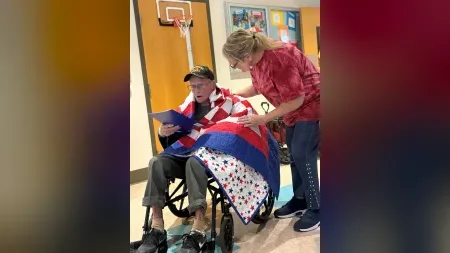
At an August 2019 graduation ceremony at Bedford Hills, five recipients received their new dogs inside the prison. One of them was Jeanne Meyer, a retired Air Force colonel, who left with a dog named Angel.
"I never thought I would be standing in a state correctional facility with a puppy, who was phenomenally trained by inmates, who's now going to be my partner," she said.
One of the raisers, Rebecca Polomaine, put the other side of it simply: "Training a dog that's going to help somebody else, there's no words to explain how that makes me feel. That is my reward."
To date, more than 180 dogs have been placed with veterans, first responders and police departments.
In August 2026, the Yonkers Police Department swore in its first two facility dogs, Nilsen and Gator. Both were raised at Green Haven Correctional Facility in Stormville, New York.
The Next Litter Is Already Inside
At any given time, about 125 incarcerated raisers are training roughly 60 puppies in four New York prisons.
Some raisers keep going after release. The group now employs five formerly incarcerated puppy raisers as full-time staff, and all five teach the people still inside.
The puppies still grow up behind bars, and they still go home with veterans.
Top photo: Senior Airman Sean Madden, U.S. Air National Guard, via The National Guard / Wikimedia Commons, CC BY 2.0.
Source:Tallberg Foundation
Enjoyed this fact?
Be the first to love this
Get a new fact every morning.
A fascinating fact in your inbox every morning. Free. Unsubscribe anytime.
Frequently Asked Questions
What is Puppies Behind Bars?
How did Puppies Behind Bars start?
How long do inmates raise the puppies?
Do veterans pay for a Puppies Behind Bars service dog?
How many commands do Puppies Behind Bars dogs learn?
Verified Fact
Verified Oct 2, 2026 · 7 sources checked
Source: Tallberg FoundationShow verification details
Claims checked
- First five puppies brought into a maximum-security women's prison just before Thanksgiving 1997
- The first five were guide-dog rejects, and two became guide dogs
- First dog paired with a wounded veteran in 2008 (was 2006)
- Dogs spend two years with inmate raisers, learn over 70 commands and are placed free
- About 60 puppies are in training in four New York prisons today
Sources: Puppies Behind Bars, Tallberg Foundation, Berkshire Style, Smithsonian, Good Morning America, National Park Service, Hudson Valley Country
Related Topics
More from Animals
View all Animals →