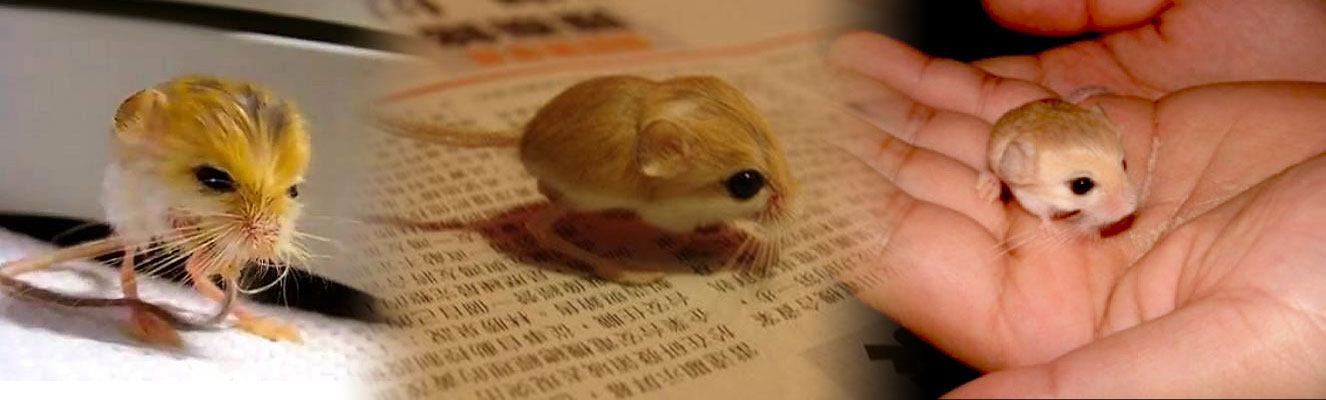
Measuring in at barely 2" long, the Pygmy Jerboa looks like a cross between a mouse and a duckling - and it's extremely cute!
The Pygmy Jerboa: World's Tiniest Kangaroo-Mouse Hybrid
Imagine a creature so impossibly tiny and adorable that it broke the internet before breaking the internet was even a thing. The pygmy jerboa, specifically the Baluchistan pygmy jerboa, measures a mere 1.7 inches (4.3 cm) from nose to rump—roughly the length of a AA battery. Add an 3-inch tail for balance, and you've got one of the world's smallest rodents hopping around the deserts of Pakistan and Afghanistan.
But size isn't what makes these creatures unforgettable. It's the bizarre proportions. Picture a mouse head attached to kangaroo legs, topped with ears that look three sizes too large. Their hind legs are disproportionately long and powerful, while their tiny forelimbs dangle uselessly as they bounce across sand dunes like furry ping-pong balls. The effect is both comical and endearing—nature's own cartoon character.
Built for Desert Survival
Those ridiculous-looking legs aren't just for show. Pygmy jerboas have evolved into hopping specialists perfectly adapted to harsh desert environments. They can leap up to 3 feet in a single bound—that's roughly 20 times their body length. Imagine if you could jump the length of three school buses in one go.
Their oversized ears serve a critical function beyond looking adorable: thermoregulation. Desert nights are cold, days are scorching, and those big ears help dissipate heat and detect predators. The pale, sand-colored fur provides camouflage against the desert floor, while their long tail acts as a stabilizing rudder during those spectacular leaps.
Nocturnal Ninjas
You'll never spot a pygmy jerboa during daylight hours. These tiny rodents are strictly nocturnal, spending days in cool underground burrows and emerging only after sunset to forage. They subsist mainly on seeds and insects, which they locate with those massive ears and excellent night vision.
They're also surprisingly solitary creatures. Unlike many rodents that live in colonies, pygmy jerboas prefer the solo life, marking territories and avoiding unnecessary social interaction. In the harsh desert, going it alone means not sharing precious food resources.
Internet Stardom
In 2010, a video of a pygmy jerboa hopping around went viral, racking up millions of views. Viewers couldn't believe such a creature actually existed—many assumed it was CGI or a toy. But these pocket-sized hoppers are very real, though seeing one in the wild is extremely rare.
Conservation status varies by species, but habitat loss and the exotic pet trade pose threats. Despite their viral fame, pygmy jerboas don't make good pets—they're wild animals with specialized needs that can't be met in captivity.
The Smallest of the Small
The Baluchistan pygmy jerboa shares the title of world's smallest rodent with the African pygmy mouse, according to the Guinness Book of Records. Adult females weigh just 3.2 grams—less than a single sugar packet. They're so light that a strong desert wind could theoretically blow one off course mid-hop.
Several pygmy jerboa species exist across Central Asia, each adapted to specific desert regions. The thick-tailed pygmy jerboa and pale pygmy jerboa are close relatives, all sharing that signature kangaroo-mouse aesthetic that makes them instantly recognizable—and irresistibly cute.
Frequently Asked Questions
How big is a pygmy jerboa?
Why does the pygmy jerboa look like a kangaroo?
Where do pygmy jerboas live?
Can you keep a pygmy jerboa as a pet?
Is the pygmy jerboa the smallest rodent in the world?
Verified Fact
This fact has been reviewed and verified against original sources.
Show verification details
The Pygmy Jerboa (specifically the Baluchistan pygmy jerboa) does measure approximately 1.7 inches (4.3 cm) in body length, making the '2 inch' claim slightly rounded but essentially accurate.