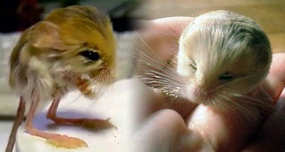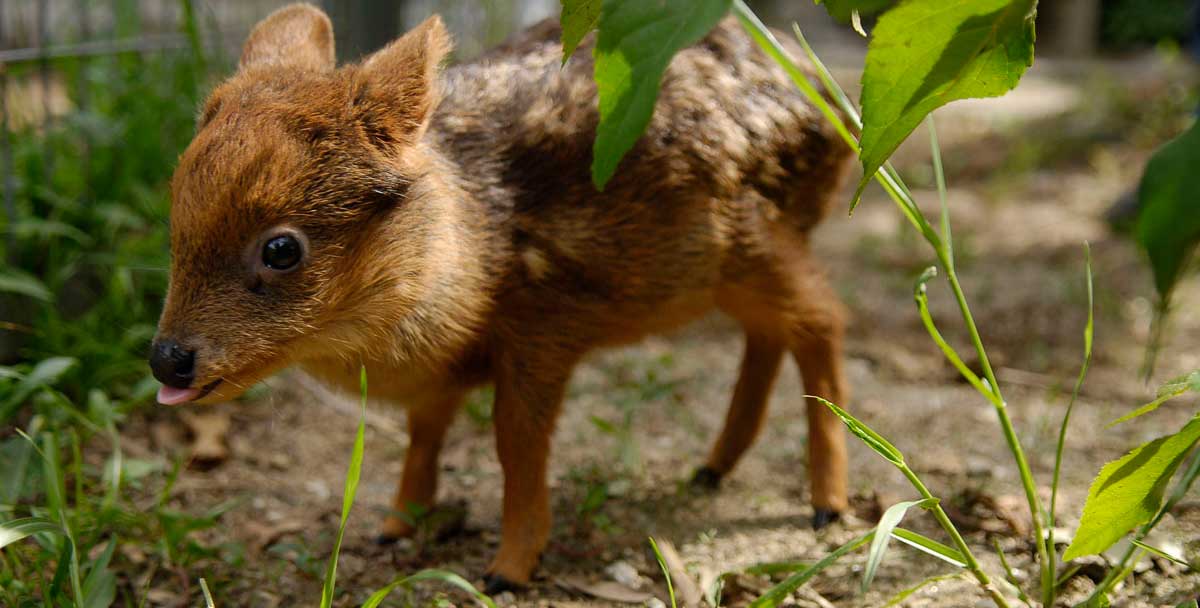
The Pudu deer is the world’s smallest deer. They live in bamboo thickets to hide from predators, and can weigh up to 12 kilograms.
The Pudu: World's Smallest Deer Weighs Less Than a Cat
Imagine a deer the size of a beagle. That's the pudu—the world's smallest deer species, standing barely 13-17 inches tall at the shoulder. These pint-sized ungulates make their home in the temperate rainforests of South America, where being small is actually a survival advantage.
There are two species: the northern pudu and the southern pudu. The northern variety holds the record as the absolute tiniest, weighing just 7-13 pounds—about the size of a housecat. The southern pudu is slightly heftier, tipping the scales at up to 26 pounds, with one exceptional individual reaching 30 pounds. Still, that's smaller than most dogs.
Built for Hiding
Pudus live in dense forests across Chile, Argentina, Colombia, Ecuador, and Peru. Their small stature isn't a disadvantage—it's a feature. These deer navigate bamboo thickets and heavy underbrush with ease, creating tunnel-like pathways through vegetation that larger animals can't penetrate.
When a puma, fox, or eagle spots them, pudus don't try to outrun the threat. Instead, they dive into the densest cover available, using their compact bodies to disappear into spaces predators can't follow. They've even been observed climbing and jumping to escape danger—behaviors unusual for deer.
Antlers in Miniature
Male pudus grow antlers, but don't expect impressive racks. These tiny spikes extend just 2.5-3 inches from between their ears and lack the branching forks seen in larger deer species. The antlers shed annually, and for most of the year, males and females look remarkably similar—both sporting reddish-brown coats that blend perfectly with forest floors.
Pudus are solitary and secretive, most active at dawn and dusk. They mark their territories with scent glands, leaving chemical messages for other pudus while staying largely invisible to humans. Spotting one in the wild is considered a rare treat.
Tiny Deer, Big Threats
Despite their elusiveness, pudus face serious challenges. The southern pudu is classified as near threatened, while the northern pudu has so little data that conservationists can't even assess its status properly. Habitat loss from logging and agriculture squeezes their forest homes, and domestic dogs have become one of their most dangerous predators.
But there's hope. Zoos worldwide are working to breed pudus in captivity, with successful births making headlines. The Woodland Park Zoo and Queens Zoo have both celebrated pudu fawns in recent years, helping ensure these miniature marvels don't vanish from Earth.
Next time you see a deer, try to picture one you could hold in your arms. That's the pudu—proof that evolution sometimes favors the small, the sneaky, and the impossibly adorable.
Frequently Asked Questions
How big is a pudu deer?
Where do pudu deer live?
What are pudu deer predators?
Are pudu deer endangered?
Do pudu deer have antlers?
Verified Fact
This fact has been reviewed and verified against original sources.
Show verification details
The fact is accurate. Pudus are indeed the world's smallest deer species. The weight figure of 'up to 12 kg' is correct for the southern pudu (the more common species), though the northern pudu is even smaller at 3.3-6 kg.