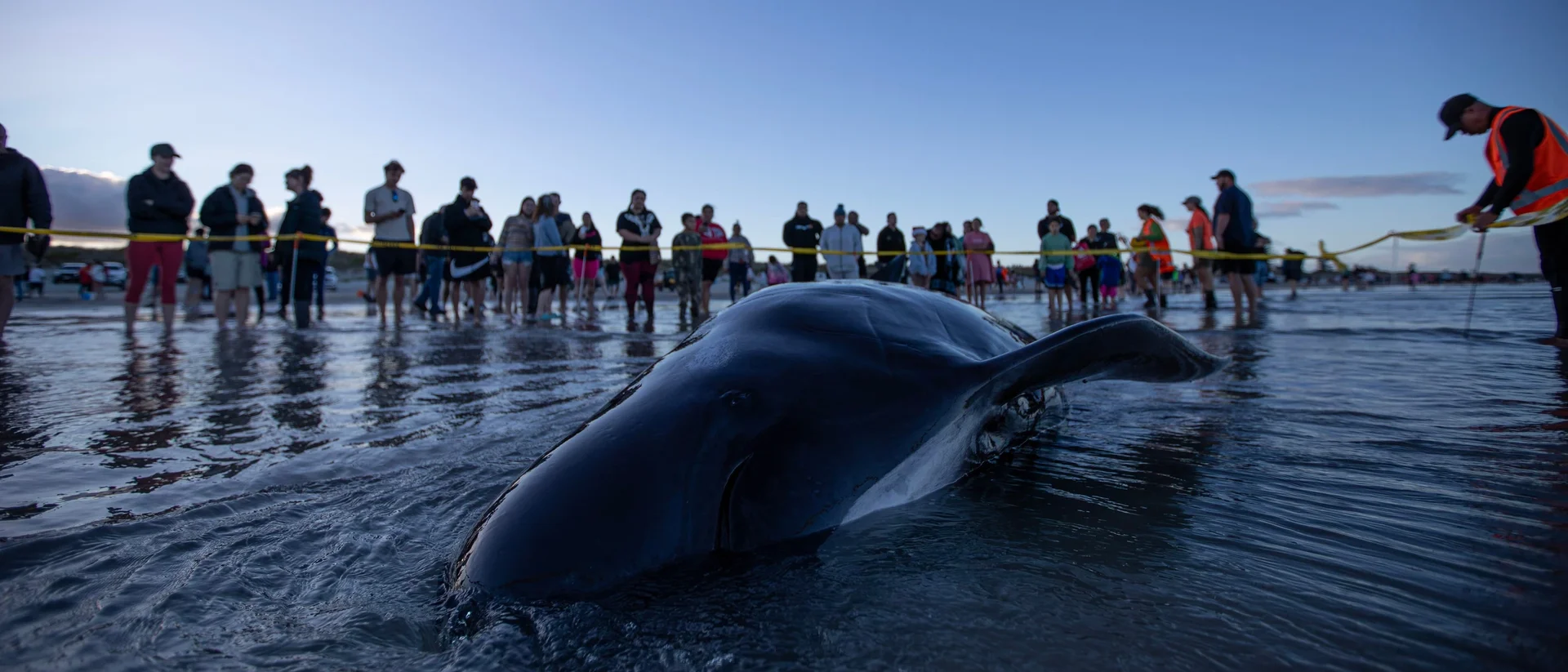
Hundreds of strangers showed up at Ruakaka Beach in New Zealand when 40 pilot whales stranded themselves at dusk. Volunteers dug trenches around the whales, slid fabric sheets beneath their bodies, and lifted them off the sand in coordinated teams - forming a human wall to guide each animal back into the sea. Thirty-six of the forty whales made it home.
Hundreds Carried 40 Stranded Whales Back to Sea
When the call came through on a Sunday evening in November 2024, hundreds of people dropped what they were doing and drove to the beach.
Forty Whales at Dusk
Just after 5:30PM on November 24, 2024, a pod of 40 long-finned pilot whales beached themselves at Ruakaka Beach in Northland, New Zealand, near Whangarei. The stranding happened fast, in fading light, with the tide against them. The New Zealand Department of Conservation and Project Jonah - a marine mammal rescue charity - put out an urgent call for volunteers.
Sheets, Trenches, and Human Chains
What arrived was extraordinary. Hundreds of members of the public joined roughly 30 trained Project Jonah medics on the sand. The method: dig a trench around each whale's torso to loosen the compacted sand, slide a fabric sheet underneath the animal, and lift. Teams of people on either side of a sheet would raise a whale - some weighing several hundred kilograms - and carry it toward the water. Once at the shallows, volunteers formed a human wall in the surf, holding the animals steady and guiding them away from the beach. Local iwi Patuharakeke led the on-ground response, coordinating the community effort and ensuring the animals were treated with the respect their culture demands. Pilot whales are considered taonga - a sacred treasure - in Maori tradition.
Thirty-Six Made It
By 8PM the same evening, the majority of the whales had been refloated. Volunteers and DOC staff stayed through the night, watching the water for any signs of re-stranding. By the end of the rescue, 36 of the 40 whales had been successfully returned to the sea. Four did not survive. A Maori ceremony was held on the beach for the four that were lost. DOC ranger Joel Lauterbach described the scene: "It's amazing to witness the genuine care and compassion people have shown toward these magnificent animals."
Strangers on the Same Side
What made Ruakaka unusual was the scale of spontaneous coordination. There was no central authority directing the crowd - just trained medics, iwi leadership, and hundreds of ordinary people who understood what needed to happen and did it together. The rescue lasted hours, through the dark, in the surf, and it worked.
Enjoyed this? Get a new fact every morning.
A fascinating fact in your inbox every morning. Free. Unsubscribe anytime.
Frequently Asked Questions
How many pilot whales were rescued at Ruakaka Beach?
How do volunteers rescue stranded whales?
What is Project Jonah?
Why do pilot whales strand themselves?
What does taonga mean in Maori culture?
Verified Fact
Verified Nov 24, 2024 · 5 sources checked
Source: New Zealand Department of ConservationShow verification details
Claims checked
- 40 pilot whales stranded on Ruakaka Beach
- 36 of 40 whales were refloated; 4 died
- Hundreds of volunteers helped, using sheets and trenches
- Maori ceremony held for deceased whales
Sources: New Zealand Department of Conservation, CBS News, NZCity.co.nz, NZ Herald, Te Ao Maori News