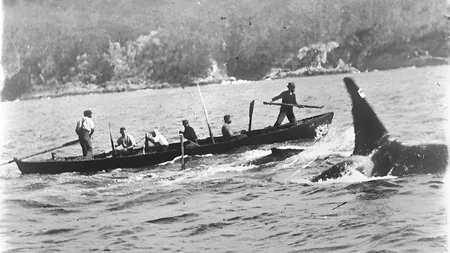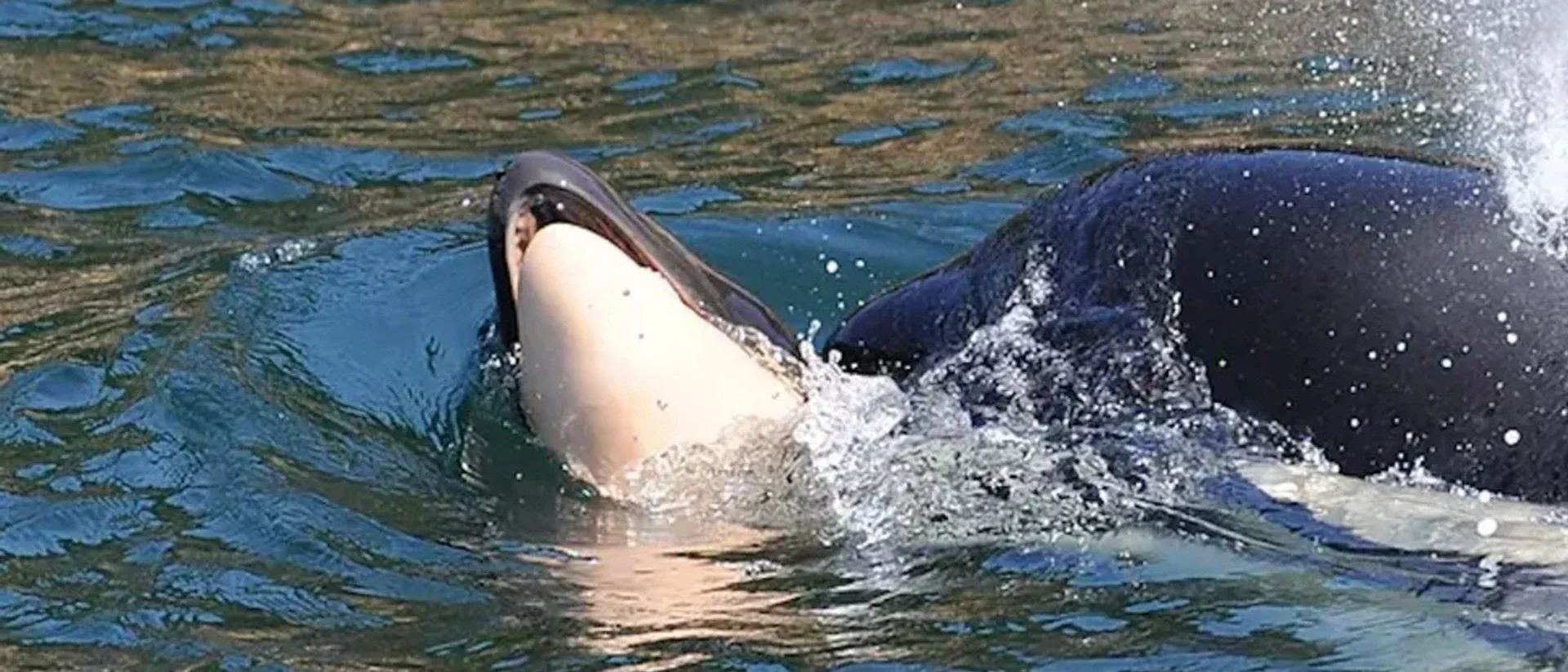
Tahlequah is a wild orca off Seattle. In 2018, her newborn calf died. She refused to let the body sink. She carried it on her head for 17 days and nearly 1,000 miles. Scientists called it a Tour of Grief. Seven years later, she lost another calf. She carried that one for at least 11 days too. She loved deeply enough to grieve like this twice.
The Orca Who Grieved Twice
In the summer of 2018, a wild orca named Tahlequah did something no researcher had ever documented on this scale. When her newborn calf died within hours of birth, she refused to let the body sink. For 17 days and nearly 1,000 miles through the waters off Seattle and British Columbia, she balanced the calf on her rostrum - her beak - and carried it through the Pacific Northwest.
The "Tour of Grief"
Scientists called it a "Tour of Grief." Tahlequah - designated J35 by researchers - swam for days while supporting the calf's body with her head, nudging it to the surface over and over. Other members of her pod took turns helping her carry the load. When she finally released the calf after 17 days, the world exhaled.
Seven Years Later
Tahlequah gave birth again in late 2024. A female calf - designated J61 by the Center for Whale Research - was first spotted in Puget Sound on December 20. By New Year's Eve, researchers confirmed J61 had not survived. On January 1, 2025, Tahlequah was seen pushing J61's body through the same waters.
At Least 11 Days
NOAA Fisheries biologist Brad Hanson noted the physical cost: carrying the 300-pound calf created significant drag, raising Tahlequah's energy expenditure with every stroke. She carried J61 for at least 11 days, with sightings continuing into mid-January. The Center for Whale Research called the loss "particularly devastating" - J61 was female, and Southern Resident killer whales number only around 73 animals. Every female lost is a generation that will never exist.
What Scientists Say About Orca Grief
Carrying the dead is documented in other species - elephants, dolphins, primates - but 17 days across nearly 1,000 miles remains the longest and farthest on record for an orca. Researchers do not fully understand the behavior, but the consistency of Tahlequah's response - the same posture, the same refusal, the same toll on her body - makes it one of the most striking examples of extended grief ever observed in the wild.
Frequently Asked Questions
Who is Tahlequah the orca?
How long did Tahlequah carry her dead calf in 2018?
What happened to Tahlequah in 2025?
How many Southern Resident killer whales are left?
Do other animals grieve like Tahlequah?
Verified Fact
Verified Jun 20, 2026 · 6 sources checked
Source: National GeographicShow verification details
Claims checked
- Tahlequah carried her dead calf in 2018 for 17 days and nearly 1,000 miles
- She carried a second dead calf in 2025 for at least 11 days
- Researchers described the 2018 behavior as a "tour of grief"
- Other pod members helped carry the 2018 calf, not the 2025 calf
Sources: National Geographic, NOAA Fisheries, Wikipedia, World Animal Protection, CBS News, Newsweek
Related Topics
More from Animals
View all Animals →