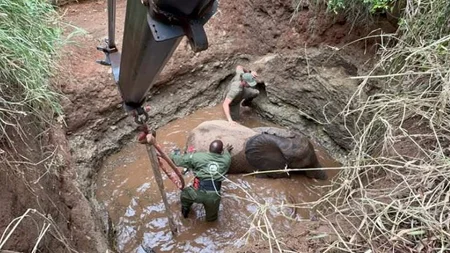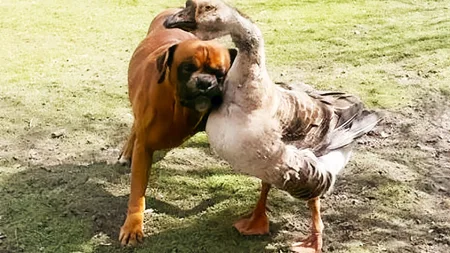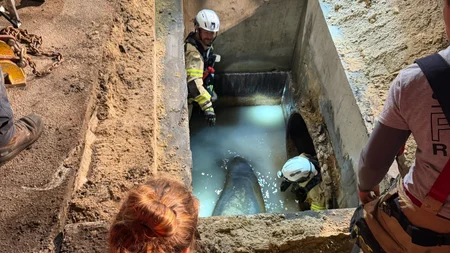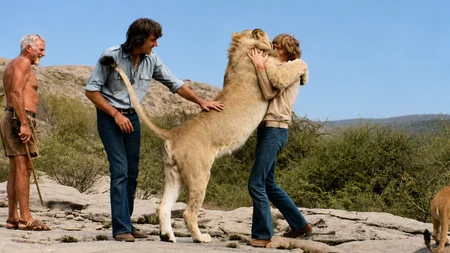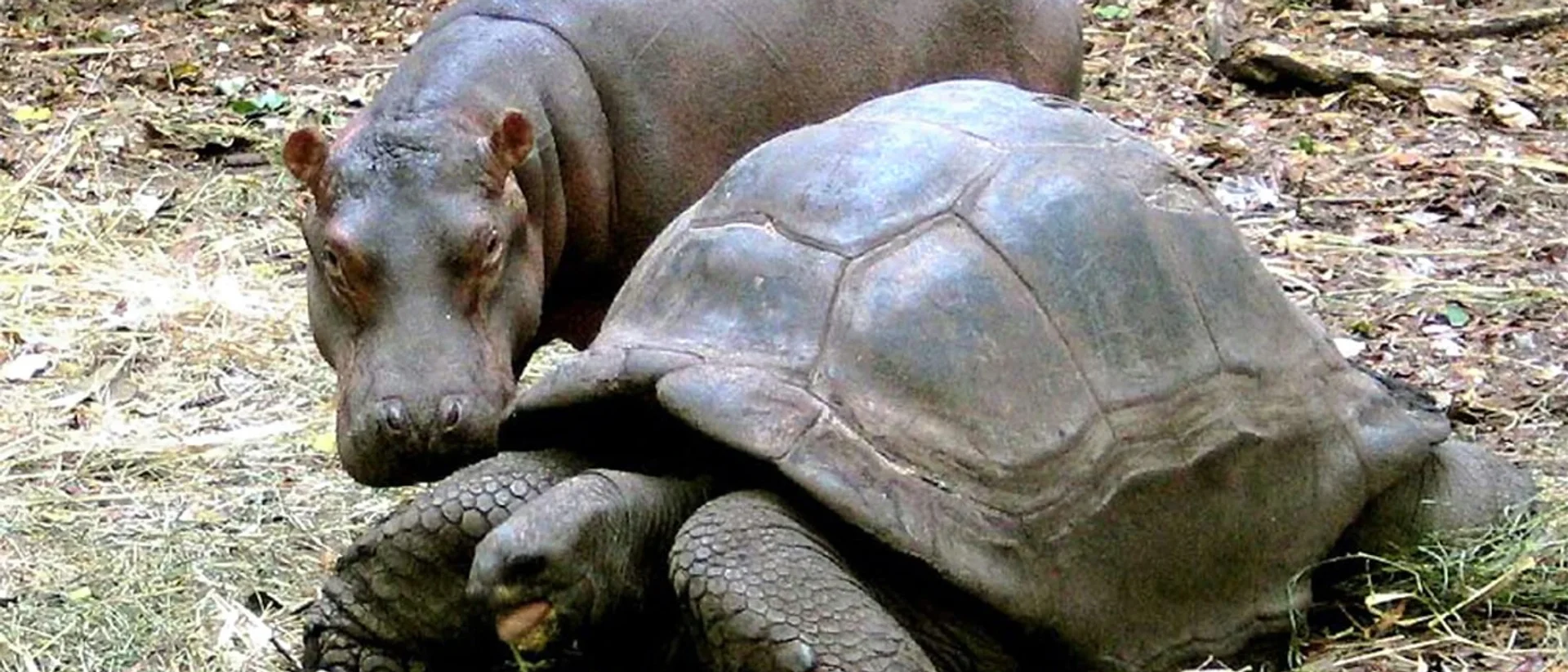
Owen was a one-year-old hippo swept out to sea by the 2004 Indian Ocean tsunami. Villagers in Malindi, Kenya spent hours dragging him to shore with ropes and nets. At Haller Park he refused to leave the side of Mzee, a 130-year-old giant tortoise. The two ate, swam, and slept side by side for years.

The Baby Hippo Who Adopted a 130-Year-Old Tortoise

4k viewsPosted 13 years agoUpdated 11 minutes ago

A one-year-old hippo washed out to sea by a tsunami ended up choosing a giant tortoise as his mother. It sounds like a children's book. It is one, several times over, but it started as a real rescue on the Kenyan coast.

Swept Out to Sea

On December 26, 2004, the Indian Ocean tsunami tore through the coastline near Malindi, Kenya. A pod of hippos living along the Sabaki River was caught in the surge and swept out toward the ocean. Most of the herd made it back to land. One calf, roughly a year old and weighing close to 600 pounds, did not. He was found exhausted and stranded on a coral reef offshore, too far out to swim back on his own.

Hundreds of Villagers, One Terrified Hippo

Word spread quickly through Malindi, and hundreds of local villagers turned out to help. The rescue took most of a day and used ropes, fishing nets, small boats, and cars to try to corner the panicked animal. He was still fast and strong despite his exhaustion, and it eventually took a diving tackle from one of the volunteers to bring him down. The crowd, watching from the shore, agreed on the spot that the hippo should be named after the man who caught him: Owen.

He Chose a Tortoise as His Mother

Owen was taken to Haller Park, a wildlife sanctuary near Mombasa run by conservationist Dr. Paula Kahumbu. With no other hippos around, keepers released him into an enclosure that already had a resident: Mzee, an Aldabra giant tortoise believed to be about 130 years old. Mzee's dark, rounded shell was roughly the size and color of an adult hippo, and the frightened calf latched onto him instantly, cowering behind him the way a baby hippo would shelter behind its mother.

Mzee was not thrilled about it at first. He hissed and pulled away, unused to sharing his space with anyone. Owen kept following anyway, staying close at every turn, and within days the tortoise gave in. Keepers reported the pair eating, swimming, and sleeping side by side, with Owen nudging Mzee along and grooming him the way hippos groom each other.

A Friendship That Outgrew Itself

The bond lasted for years and made global headlines, inspiring the 2006 book Owen & Mzee: The True Story of a Remarkable Friendship by Isabella Hatkoff, Craig Hatkoff, and Paula Kahumbu, along with a sequel and an off-Broadway musical. Eventually, though, Owen grew into a full-sized adult hippo, weighing well over a ton, and it was no longer safe for him to share close quarters with an elderly tortoise. Keepers moved him in with other hippos, including a female named Cleo, whom he bonded with in turn.

Mzee returned to his original enclosure among Haller Park's other tortoises and reptiles, where he remains a park favorite.

NPR

Enjoyed this? Get a new fact every day.

Follow FunFactz for the best ones in your feed.

or get one in your inbox

Frequently Asked Questions

Who are Owen and Mzee?
Owen is a hippo who was separated from his herd during the 2004 Indian Ocean tsunami off the coast of Kenya. Mzee is an Aldabra giant tortoise, roughly 130 years old, who Owen bonded with after being rescued and taken to Haller Park near Mombasa.
How did Owen the hippo get separated from his herd?
On December 26, 2004, the Indian Ocean tsunami swept through the Kenyan coast near Malindi and carried Owen's herd out toward the ocean. Most of the hippos returned to land, but the one-year-old calf was found stranded on a coral reef and had to be rescued by villagers.
How old is Mzee the tortoise?
Mzee is estimated to be around 130 years old, making him roughly 130 times Owen's age when the two were first introduced as a one-year-old calf. Aldabra giant tortoises are known for living well over a century.
Are Owen and Mzee still together?
No. Once Owen grew into a full-sized adult hippo, it was no longer safe for him to share close quarters with an elderly tortoise, so keepers moved him in with other hippos at Haller Park, including a female named Cleo. Mzee remained at the park.
Is the Owen and Mzee story true?
Yes. The rescue and friendship were widely reported by outlets including NPR and Reuters in 2005, documented by Haller Park staff and conservationist Dr. Paula Kahumbu, and later turned into a bestselling children's book series.

Verified Fact

This fact has been reviewed and verified against original sources.

Source: NPR
Show verification details

Re-audited 2026-07-09 (independent fact-verifier pass, separate from creator self-check). Primary source: NPR "A Hippo and Tortoise Tale" (npr.org/2005/07/17/4754996), read in full via NPR-network mirror (wunc.org) since npr.org itself timed out on WebFetch; cross-checked against Wikipedia "Owen and Mzee", Haller Park official blog, and Reuters archive listing. Citation fidelity: CONFIRMED. NPR source explicitly states the Dec 26 2004 tsunami, Owen swept from a hippo family near Malindi, rescued and taken to the Mombasa sanctuary (Lafarge Ecosystems / Haller Park) run by Dr. Paula Kahumbu, and Mzee stated as "130 year old tortoise" who Owen ran to and cowered behind "as a baby hippo does to its mother." source_url matches all headline specifics - no change needed. Numeric coherence: Mzee age hedged as "about/roughly 130" throughout (NPR says 130 flat; Reuters archive caption says "100 year old"; range 100-130+ per multiple sources) - hedging is correct, not overclaimed. 2004/2005 dates reconcile (tsunami Dec 26 2004; NPR piece Jul 17 2005; book 2006). FOUND AND FIXED: FAQ "How old is Mzee" said Mzee (~130) is "roughly 100 times Owen's age" (Owen = 1yr) - arithmetically wrong (130x, not 100x). Corrected to "roughly 130 times." Orphaned/agency check: CONFIRMED CLEAN. No field asserts Owen was "orphaned" or that his mother died - NPR itself only says the herd was swept out and "only the baby" was seen after; text/article/faqs correctly use "separated/stranded/swept out" only. Reversed-agency check: CONFIRMED correct direction throughout - Owen (hippo) initiates and follows Mzee (tortoise), not the reverse; corroborated by NPR ("Owen immediately ran to the safety of a giant tortoise... cowering behind him") and Wikipedia/Grokipedia detail on Owen nudging Mzee to walk. Two unsupported/inconsistent secondary details found and corrected (not in NPR or any source checked - Wikipedia, Haller Park blog, Reuters archive, Snopes all silent on both): (1) article closer claimed "staff say [Mzee] still shows a preference for hanging around hippos whenever he gets the chance" - no source supports this; replaced with the sourced fact that Mzee returned to his original reptile enclosure at Haller Park (per Wikipedia: "Mzee was returned to his original enclosure"). (2) social_engagement_comment said Mzee "hissed and snapped" (implies biting, unsupported, and inconsistent with the article's own "hissed and pulled away") and that "Owen would panic if Mzee walked out of sight" (no source uses "panic"); corrected to "hissed and pulled away" (matches article + sources) and to the sourced, more specific behavior that "Owen would not eat until Mzee started eating first." No em-dashes found in text/article/faqs/social fields. social_text = 320 chars (within 280-420 range) and text equals social_text with markdown stripped - both checked programmatically. Weight detail "close to 600 pounds" in article corroborated by multiple secondary sources (also cited as ~300kg/~660lb) - kept, appropriately hedged with "close to." Discrepancies found: 1 numeric error (FAQ multiplier) + 2 unsupported/off-source narrative embellishments (article closer, engagement-comment phrasing) - all corrected in place this pass. No scheduled_posts existed for this fact (pre-imaging), so no cascade/cancellation needed. image_social/image_card/image_banner are all still NULL (image-curator has not run yet) - no image nulling needed.

Related Topics

More from Animals

View all Animals