
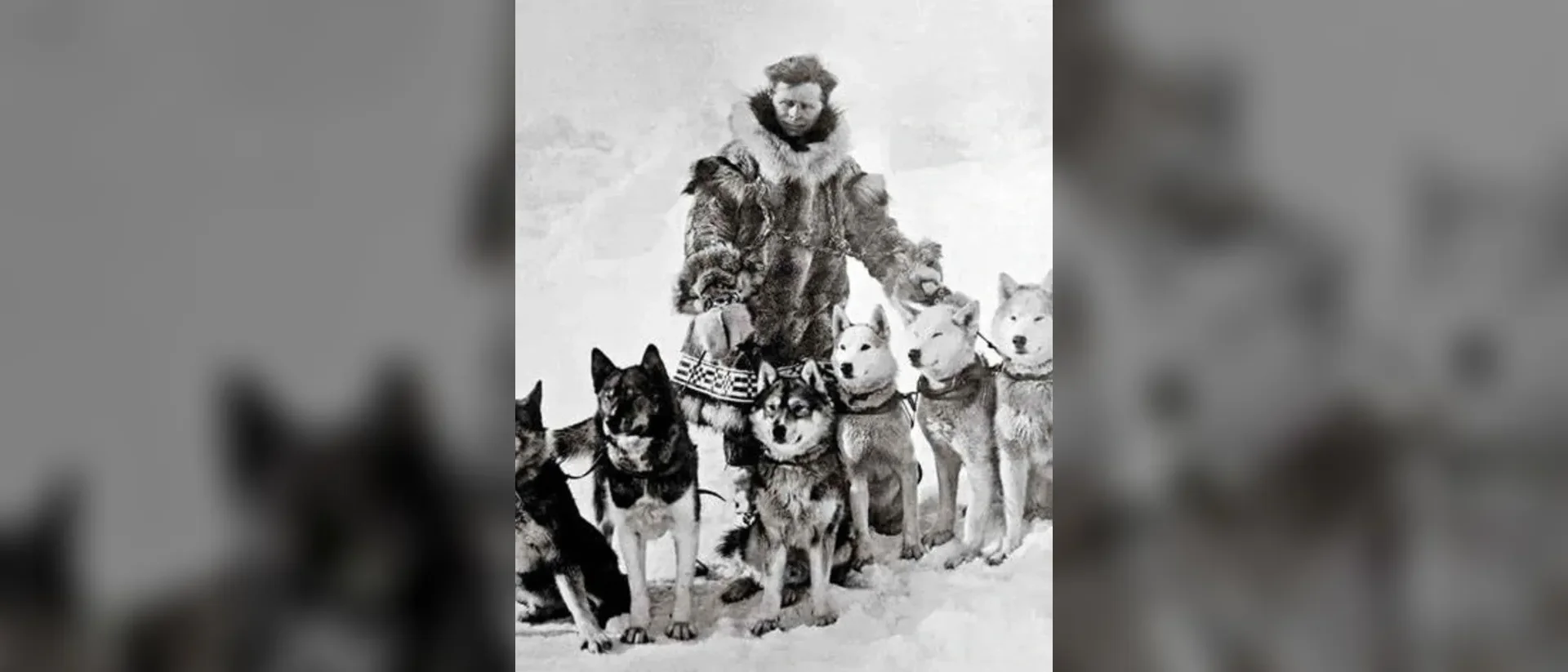
Togo was 12 years old in 1925. That's ancient for a sled dog. Diphtheria threatened to kill children across Nome, Alaska. Musher Leonhard Seppala and Togo ran the serum relay's longest, most dangerous leg. It covered over 260 miles, including a deadly crossing of the frozen Norton Sound. Balto ran the final 55 miles into town. He got the parade, the movie, and the Central Park statue. Togo got almost nothing.
Togo Ran 260 Miles for Nome. Balto Got the Statue.
When a plane finally landed in New York carrying a sled dog hero from Alaska in December 1925, thousands of people lined up to see him. His name was Balto. The dog who had actually done the hardest, most dangerous work of the mission wasn't even there.
A Race Against a Deadly Outbreak
In January 1925, diphtheria broke out in Nome, Alaska, a remote town cut off from the rest of the country by winter ice.
Without antitoxin, children across the region faced death within days.
The nearest supply was 674 miles away in Nenana, and the only way to move it fast enough was by dog sled.
Territorial officials organized a relay of 20 mushers and about 150 dogs to carry the serum across Alaska in a single continuous run.
Most teams covered around 30 miles each before handing the package to the next musher.
The Leg Nobody Else Could Run
One team covered far more ground than any other.
Leonhard Seppala, Alaska's most respected musher, and his lead dog Togo ran more than 260 miles round trip, roughly eight times the average leg.
Their route included a crossing of the frozen Norton Sound, where shifting sea ice could break apart without warning.
On the return trip, the ice beneath Seppala's team broke away and began drifting into open water with the whole team stranded on it.
Seppala tied a line to Togo and threw him across the gap to pull the floe back toward shore.
The line snapped under the strain, so Togo leaped into the frigid water, grabbed the broken line in his mouth, wrapped it around his own body, and towed the ice floe carrying the team back to solid ground.
Togo was 12 years old at the time, an age when most sled dogs had long since retired.
The Dog Who Got the Statue
The final 55-mile leg into Nome went to musher Gunnar Kaasen and his lead dog, Balto.
Because Balto's team was the one photographed arriving with the serum, he became the face of the entire relay almost overnight.
A statue of Balto went up in New York's Central Park before the end of 1925.
Togo, who had run the longest and most treacherous stretch of the whole 674-mile route, received no such reception.
Seppala later said plainly: "I never had a better dog than Togo. His stamina, loyalty and intelligence could not be improved upon."
Justice, Decades Later
Recognition eventually caught up with Togo.
Polar explorer Roald Amundsen awarded him a gold medal in 1926.
Statues honoring Togo were later raised in Cleveland (1997), New York's Seward Park (2001), and Poland Springs, Maine (2022).
Togo died in 1929 at age 16, and his preserved body is now on display at the Iditarod Trail Sled Dog Race headquarters in Wasilla, Alaska.
In 2019, Disney told his story in the film Togo, starring Willem Dafoe as Seppala.
Nearly a century later, historians agree on what mushers already knew in 1925: Togo did the hard part.
Frequently Asked Questions
Who was Togo the sled dog?
Why is Balto more famous than Togo?
How far did Togo run in the 1925 serum run?
How old was Togo during the serum run?
Did Togo ever get recognition for his role?
Verified Fact
Verified Jul 16, 2026 · 4 sources checked
Source: American Kennel Club (AKC)Show verification details
Claims checked
- Togo was 12 in 1925 and led Seppala's team for 7 years
- Togo's leg was the longest and most dangerous, over 260 miles including Norton Sound
- Balto ran the final 55 miles; Togo's distance was nearly five times that
Sources: National Park Service, American Kennel Club, Wikipedia, Central Park Conservancy