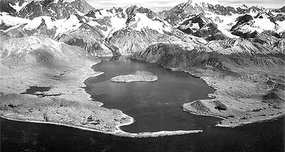
Tsunamis ( tidal waves ) travel as fast as jet planes.
Tsunamis Travel as Fast as Jet Planes Across the Ocean
When a massive earthquake strikes beneath the ocean floor, it doesn't just shake the ground—it sets an entire column of water in motion. That displaced water becomes a tsunami, and in the deep ocean, it transforms into one of nature's fastest phenomena, racing across thousands of miles at speeds rivaling a Boeing 747.
In the open ocean where depths average around 4,000 meters (13,000 feet), tsunamis travel at approximately 700-800 kilometers per hour (435-500 mph). To put that in perspective, a commercial jet typically cruises at 900 km/h (560 mph). The physics behind this incredible speed is elegantly simple: tsunami velocity equals the square root of gravity multiplied by water depth. The deeper the water, the faster the wave.
Not Your Average Wave
Unlike wind-driven waves that only disturb the ocean's surface, tsunamis are shallow-water waves that move through the entire water column from seafloor to surface. Despite traveling in water thousands of meters deep, they're classified as "shallow-water waves" because their wavelengths—often exceeding 500 kilometers (300 miles)—are enormous compared to ocean depth.
Out in the deep ocean, you probably wouldn't even notice a tsunami passing beneath your boat. The wave height might be less than a meter, spread across that massive wavelength, with waves arriving 10 minutes to 2 hours apart.
The Deadly Slowdown
The real danger emerges when these speed demons hit shallow coastal waters. As the ocean floor rises, the tsunami must slow down—dropping to around 30-50 km/h (20-30 mph) near shore. But here's the terrifying part: all that energy has nowhere to go but up.
The wave's height increases dramatically as it compresses. A 1-meter wave in deep water can grow into a 10-30 meter (33-100 foot) monster at the coastline. It's like watching a race car slam on the brakes—the forward momentum has to go somewhere, and in this case, it goes vertical.
Racing Across the Pacific
This jet-plane speed means tsunamis can cross entire ocean basins in hours:
- Alaska's Aleutian Islands to Hawaii: ~5 hours
- Portugal to North Carolina: ~8.5 hours
- Chile to Japan: ~22 hours
These aren't theoretical numbers. After the 2011 Tōhoku earthquake in Japan, tsunami waves reached the Hawaiian Islands in about 7 hours and the U.S. West Coast in roughly 10 hours, traveling over 8,000 kilometers across the Pacific.
A Note on "Tidal Waves"
The fact mentions "tidal waves," but this is actually a misnomer that scientists have been trying to retire for decades. Tsunamis have nothing to do with tides—they're generated by underwater earthquakes, volcanic eruptions, or landslides. The term "tidal wave" likely stuck because early observers saw the ocean recede dramatically before a tsunami struck, resembling an extreme low tide, but the similarity ends there.
The word tsunami comes from Japanese: tsu (harbor) + nami (wave), coined because these waves often caused devastating damage in harbors and bays where their energy concentrated.
So yes, tsunamis genuinely do travel as fast as jet planes—at least until they reach the coast, where they trade speed for devastating height. It's a reminder that some of nature's most powerful forces are also among its fastest.
Enjoyed this? Get a new fact every morning.
A fascinating fact in your inbox every morning. Free. Unsubscribe anytime.
Frequently Asked Questions
How fast do tsunamis travel in the ocean?
Why do tsunamis slow down near the coast?
Are tsunamis the same as tidal waves?
How long does it take a tsunami to cross the Pacific Ocean?
Can you see a tsunami coming in the open ocean?
Verified Fact
This fact has been reviewed and verified against original sources.
Show verification details
Scientifically accurate. In deep ocean (4000m average depth), tsunamis travel at ~700 km/h (500 mph), comparable to commercial jets. Speed calculated using physics formula: √(gravity × water depth).