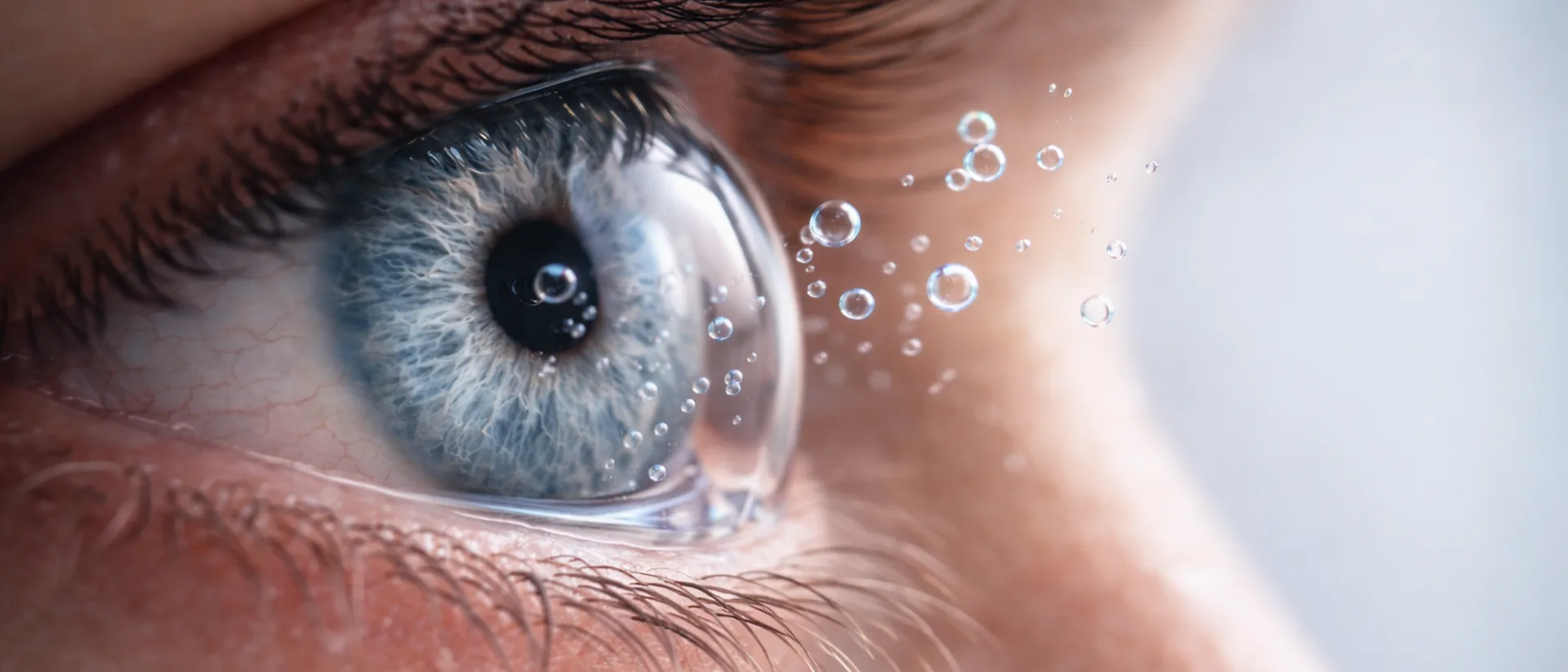
Your cornea has no blood supply at all — it gets its oxygen directly from the air, dissolved through your tears. It's one of the only tissues in the human body that is completely avascular. This is also why wearing contact lenses for too long can cause problems: they block oxygen from reaching the cornea.
The Part of Your Eye That Breathes Air Instead of Blood
Every cell in your body needs oxygen to survive. For most tissues, that oxygen arrives via blood vessels — an intricate network of arteries, veins, and capillaries that reaches virtually every corner of your body. On average, few cells in the human body are more than 30 microns from a blood vessel.
But there's one notable exception: your cornea. This transparent layer covering the front of your eye has no blood vessels at all. Zero. It gets its oxygen the old-fashioned way — straight from the atmosphere, dissolved through your tears.
Why No Blood Vessels?
The reason is elegantly simple: the cornea must be transparent. Blood is opaque. If blood vessels ran through the cornea the way they do through every other tissue, you'd be looking at the world through a web of red lines. Evolution solved this problem by making the cornea one of the few avascular tissues in the human body.
Instead of blood, the cornea relies on two oxygen sources. When your eyes are open, atmospheric oxygen dissolves into your tear film and diffuses into the corneal tissue. When your eyes are closed (like during sleep), a secondary supply comes from the blood vessels in your eyelids and from the aqueous humour — the clear fluid behind the cornea.
The Contact Lens Problem
This is where things get medically interesting. A contact lens sits directly on top of the cornea, creating a barrier between the tissue and its primary oxygen source. Corneal hypoxia — oxygen deprivation — is the most common complication of contact lens wear.
When the cornea doesn't get enough oxygen, it starts to swell. The tissue switches from aerobic to anaerobic metabolism, lactic acid builds up, and water gets drawn into the cornea faster than it can be pumped out. In mild cases, this causes blurry vision and discomfort. In severe cases, it can trigger corneal neovascularization — the growth of new blood vessels into the cornea — which is the eye's desperate attempt to get oxygen through blood, the same way every other tissue does.
This is essentially the cornea abandoning its core design principle (transparency) because it's being suffocated.
Modern Solutions
Newer silicone hydrogel contact lenses have significantly reduced this problem. They allow far more oxygen to pass through to the cornea compared to older soft lens materials. Gas-permeable hard lenses also perform well in this regard.
Still, no contact lens is as good as no contact lens when it comes to corneal oxygen supply. Eye doctors recommend limiting wear time, never sleeping in lenses not rated for overnight use, and giving your corneas regular breaks to breathe.
Not the Only Avascular Tissue
The cornea isn't entirely alone in its blood-free existence. Cartilage is also avascular, receiving nutrients through diffusion from surrounding tissues. The lens of the eye (behind the cornea) is another avascular structure. But the cornea is unique in that it gets its oxygen primarily from the external atmosphere — making it, in a sense, the only part of your body that literally breathes air.
Frequently Asked Questions
How does the cornea get oxygen without blood vessels?
Why can't the cornea have blood vessels?
Can contact lenses damage the cornea?
Are there other parts of the body without blood vessels?
Verified Fact
This fact has been reviewed and verified against original sources.
Source: WikipediaShow verification details
Well-established medical fact confirmed by multiple sources: Wikipedia, NCBI Bookshelf, PMC, Columbia Doctors, Kaiser Permanente, Africa Check fact-check. Corneal hypoxia from contact lenses is the most common complication of lens wear.