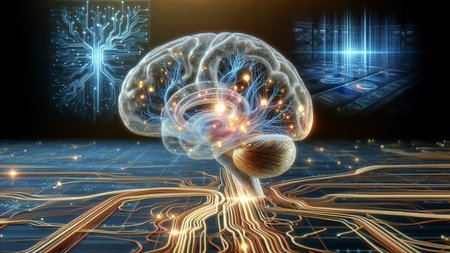
The desire to squeeze and hug cute things comes from the same place in your brain as aggression.
The Weird Science of 'Cute Aggression'
That adorable puppy. That impossibly tiny baby. That fluffy kitten. You see them, and your brain does something a little weird. Instead of just feeling pure delight, you might feel an overwhelming urge to squeeze, squish, or even playfully 'harm' the cute thing. This isn't a sign of aggression or malice; it's a fascinating psychological phenomenon known as cute aggression.
The fact is, this peculiar reaction does indeed stem from a complex interplay of brain activity, linking intense positive emotions with expressions that, on the surface, resemble aggression. It's a way our brains cope with being absolutely overwhelmed by cuteness.
The Paradox of Cuteness Overload
Cute aggression is a prime example of what psychologists call a dimorphous expression of emotion. This is when an intensely positive experience triggers an outward expression that seems contradictory, often resembling a negative emotion. Think of crying tears of joy, or screaming in excitement at a concert – these are all ways our bodies try to balance strong emotional states.
It's not about genuinely wanting to cause harm. Instead, it’s a playful, non-harmful urge. The sensation might manifest as clenched teeth, a verbal exclamation like 'I could just eat you up!', or that irresistible desire to hug a fluffy creature a little too tight.
Your Brain on Cute: A Balancing Act
So, what exactly is happening in our grey matter when we encounter something irresistibly cute? Research into cute aggression has revealed some intriguing insights. Studies using electroencephalography (EEG) show heightened activity in specific areas of the brain when people experience this phenomenon.
- Emotion Centers: The orbitofrontal cortex, a region heavily involved in processing emotions and pleasure, lights up. This is where the intense positive feelings are generated.
- Reward System: There's also increased activity in the brain's mesolimbic reward system. Cuteness is perceived as a highly rewarding stimulus, triggering these pleasure pathways.
The key, however, lies in how the brain manages these intense feelings. When confronted with an overwhelming amount of positive emotion, our brains might employ a coping mechanism. Cute aggression acts as an emotional regulator, bringing us back to a more balanced state.
An Evolutionary Quirk?
Why would our brains evolve such a seemingly strange response? One leading hypothesis suggests an evolutionary advantage. Imagine being completely incapacitated by the sheer adorableness of an infant. If parents or caregivers were paralyzed by cuteness, they might not be able to perform the necessary protective and nurturing duties.
By introducing a slight 'aggressive' edge – a playful, non-harmful urge – the brain might be tempering the intensity of the positive emotions. This allows us to remain functional and capable of caring for those vulnerable, cute beings. It’s almost as if our brains are saying, 'Okay, that's incredibly cute, but let's not get *too* overwhelmed; we still have a job to do.'
It's Perfectly Normal
If you've ever felt the urge to gently pinch a baby's cheek or make exaggerated 'grrr' noises at a kitten, rest assured, you're not alone, and it's completely normal. Cute aggression is a common, healthy, and harmless human response to extreme cuteness.
It highlights the complex and often paradoxical nature of human emotions. Our brains are constantly working to manage a spectrum of feelings, and sometimes, that means expressing intense joy in ways that might seem a little bit… weird.
Frequently Asked Questions
What exactly is cute aggression?
Does cute aggression mean I actually want to hurt cute things?
Why do people experience cute aggression?
Is it normal to feel cute aggression?
What parts of the brain are involved in cute aggression?
Verified Fact
This fact has been reviewed and verified against original sources.
Show verification details
The phenomenon, known as 'cute aggression,' is a recognized psychological response. It describes the urge to squeeze or playfully 'harm' something overwhelmingly cute, not out of malice, but as a way to regulate intense positive emotions.
Related Topics
More from Body & Health
View all Body & Health →