
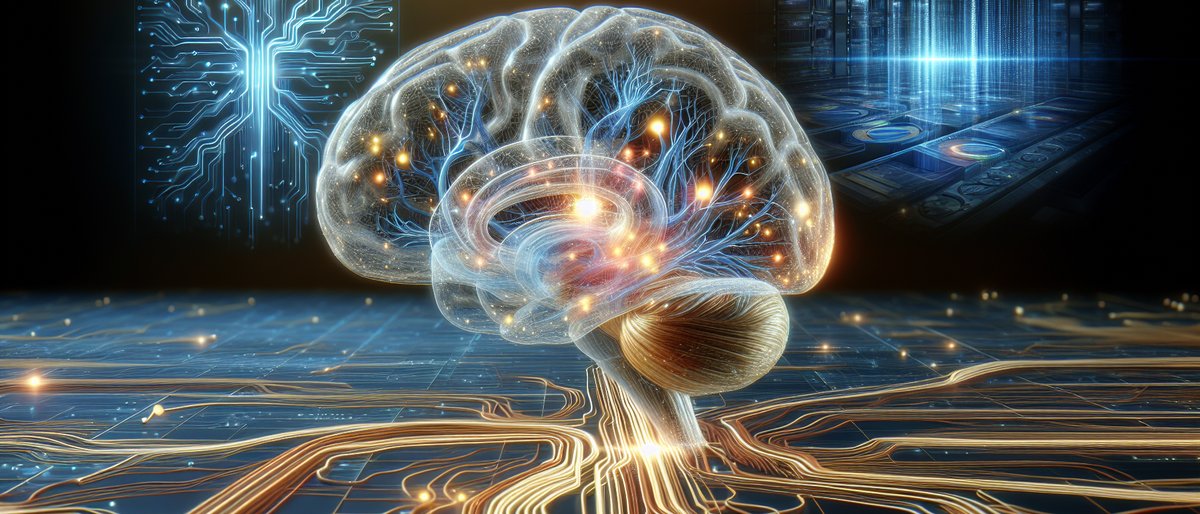
The human brain has an estimated storage capacity of 2.5 petabytes—enough to hold 3 million hours of television.
Your Brain Could Store 3 Million Hours of TV
Your brain is running the most sophisticated storage system ever created, and it didn't cost you a dime for cloud subscriptions. Scientists estimate the human brain can hold approximately 2.5 petabytes of information. That's 2,500 terabytes, or roughly enough space to store 3 million hours of television programming.
To put that in perspective: you could watch TV continuously for 300 years before you'd run through that much content.
How Does the Brain Actually Store Information?
Unlike your computer's hard drive, your brain doesn't save neat little files in organized folders. Instead, memories are encoded through synaptic connections—the gaps between neurons where chemical and electrical signals pass. Every time you learn something new, the connections between specific neurons strengthen.
The average brain contains roughly 86 billion neurons, each capable of forming thousands of synaptic connections. This creates a web of potential pathways so vast that researchers struggle to calculate its true limits.
The Catch: You Don't Store Everything
Here's the twist—despite this massive capacity, your brain is ruthlessly selective about what it keeps:
- Sensory filtering: Your brain discards 99% of sensory input before it ever reaches conscious awareness
- Memory consolidation: Only emotionally significant or repeatedly accessed information gets promoted to long-term storage
- Reconstruction: Memories aren't video recordings—they're rebuilt each time you recall them, which is why they change over time
This selectivity isn't a bug; it's a feature. A brain that literally stored everything would be overwhelmed with useless data—every blink, every breath, every passing thought fighting for attention.
Why Can't I Remember Where I Put My Keys?
Storage capacity and retrieval are completely different systems. Your brain almost certainly encoded where you set down your keys. The problem is accessing that information among billions of other stored moments.
Think of it like having a 2.5-petabyte hard drive with a terrible search function. The data's there—finding it is another matter entirely.
Sleep plays a crucial role in this process. During deep sleep, your brain essentially runs maintenance, strengthening important neural pathways while pruning irrelevant ones. Chronic sleep deprivation doesn't just make you tired; it actively sabotages your brain's filing system.
Compared to Computers
Modern smartphones typically offer 128-512 gigabytes of storage. Your brain's estimated capacity is roughly 5,000 to 20,000 times larger. And unlike your phone, your brain doesn't slow down when it's nearly full—it just gets more selective about what it prioritizes.
The real marvel isn't the storage space itself. It's that this biological supercomputer runs on about 20 watts of power—less than a dim light bulb—while managing to keep you alive, dreaming, and occasionally remembering where you parked.
Frequently Asked Questions
How much can the human brain store?
Does the brain remember everything?
How many gigabytes is the human brain?
Why do we forget things if the brain has so much storage?
How much energy does the brain use?
Verified Fact
This fact has been reviewed and verified against original sources.
Source: View sourceShow verification details
Corrected exaggerated claim. The brain has enormous storage capacity (estimated 2.5 petabytes) but doesn't literally store 'everything' - memory is selective, reconstructive, and subject to decay.