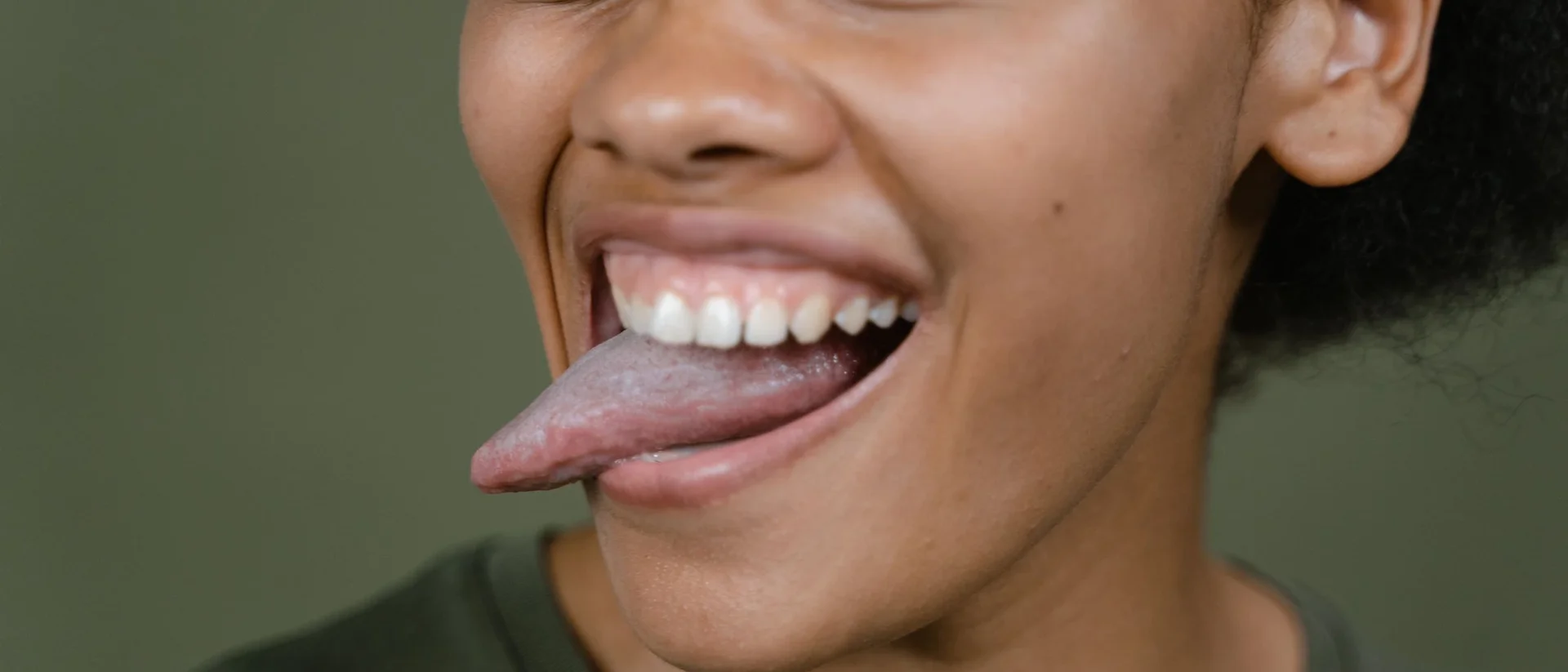
Like fingerprints, everyone's tongue print is different.
Your Tongue Has a Unique Print Just Like Your Fingers
The next time you stick out your tongue, remember you're displaying a pattern that exists nowhere else in the world. Just like fingerprints, every person's tongue has a completely unique set of features—from the shape and color to the arrangement of those tiny bumps (papillae) covering its surface. Even identical twins, who share the same DNA, have different tongue prints.
This isn't just a quirky anatomical fact. Scientists are seriously exploring tongue prints as a revolutionary biometric identification tool that could complement or even replace fingerprints and iris scans in the future.
What Makes Your Tongue Unique?
Your tongue's uniqueness comes from multiple factors working together. The geometric shape varies person to person—some tongues are more rectangular, others triangular or square. The color differs based on individual physiology. But the real distinction lies in the surface texture and papillae patterns.
A groundbreaking 2023 study using machine learning analyzed 3D scans of over 2,000 papillae samples from 15 participants. The results? Researchers could identify individuals with approximately 48% accuracy from examining just a single papilla. That's remarkable considering there are thousands of papillae on your tongue.
Why Tongues Beat Fingerprints
Tongue prints offer several advantages over traditional biometric systems:
- Genetic independence - No two tongues are alike, even in identical twins
- Physical protection - Your tongue is safely enclosed in your mouth, unlike fingers exposed to wear and environmental damage
- Proof of life - Sticking out your tongue requires conscious action, making it harder to fake than fingerprints or iris scans
- Stability over time - Tongue anatomy remains relatively consistent throughout your lifetime
Research published in December 2024 in the Journal of Pharmacy and Bioallied Sciences highlighted how advances in image processing and machine learning have strengthened tongue print recognition systems, making them increasingly accurate for healthcare, security, and forensic applications.
The Future of Licking Your Phone to Unlock It
Before you worry about hygiene, tongue-based biometrics would likely use non-contact imaging systems rather than physically licking devices. Researchers envision cameras that can capture detailed tongue images for authentication.
The technology could be particularly valuable in forensics. Unlike fingerprints that can be left accidentally at crime scenes, tongue prints would require deliberate documentation—but their uniqueness makes them powerful for victim or suspect identification when other methods fail.
While you probably won't be unlocking your smartphone with your tongue anytime soon, the science confirms what nature already knew: you're unique right down to the tip of your tongue.
Frequently Asked Questions
Are tongue prints really unique like fingerprints?
Can tongue prints be used for identification?
What makes everyone's tongue different?
Do identical twins have the same tongue print?
Why are tongue prints better than fingerprints for identification?
Verified Fact
This fact has been reviewed and verified against original sources.
Source: View sourceShow verification details
Multiple peer-reviewed studies confirm tongue uniqueness. Recent 2023 research using machine learning on 3D scans showed individuals could be identified with 48% accuracy from a single papilla.