📝Updated for accuracy
Some details in this fact have been corrected based on our review of primary sources.
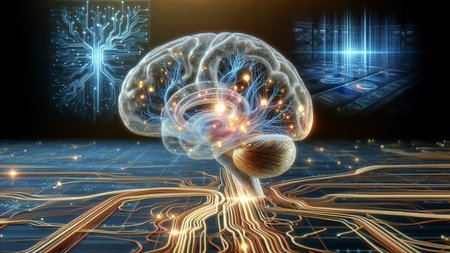
A 44-year-old man lost around 50%-75% of his brain to hydrocephalus (water on the brain) and continued to live a normal life. Specialists believe the fluid filled so slowly over his life that the brain remapped itself to retain functionality despite the loss of mass.
The Man Who Lived With Half a Brain
Imagine living a full, ordinary life, engaging with the world, raising a family, and holding down a job. Now, imagine doing all of that with only a fraction of the brain typically considered essential for such tasks. This isn't science fiction; it's the astounding reality of a 44-year-old French man whose case has captivated neuroscientists and challenged our understanding of the human mind.
For decades, scientists believed that specific regions of the brain were solely responsible for certain functions. Damage to these areas would inevitably lead to irreversible deficits. This incredible individual shattered those long-held assumptions, demonstrating the brain's almost unfathomable capacity for adaptation.
A Flood Within the Skull
The man's extraordinary condition stemmed from hydrocephalus, often colloquially known as "water on the brain." This medical state involves an abnormal accumulation of cerebrospinal fluid (CSF) within the brain's ventricles. Typically, hydrocephalus can cause severe neurological damage, leading to cognitive impairment, developmental delays, and even death if left untreated.
The fluid accumulation in this man's brain began in infancy. He had been diagnosed with hydrocephalus as an infant and had a shunt inserted to drain the fluid, which was later removed when he was 14. Specialists suggest this gradual, decades-long onset may have been a crucial factor in how his brain adapted.
The Brain's Astonishing Remapping
Doctors suggest that as the fluid slowly expanded over the years, it progressively compressed and displaced brain tissue, and that the remaining tissue may have reorganized to compensate. This kind of slow remapping, where functions typically handled by larger areas are taken over by smaller regions, is one theory for how his brain kept working.
This phenomenon, known as brain plasticity, is the organ's ability to change and adapt throughout life. While generally recognized, this case pushed the boundaries of what was thought possible. The brain, it seemed, was willing to do whatever it took to maintain functionality, even if it meant performing its duties with a drastically reduced physical structure.
- Compensatory Growth: Remaining neurons formed new connections.
- Functional Shifts: Undamaged areas took on new responsibilities.
- Slow Adaptation: The gradual nature of the fluid buildup may have allowed for this remapping.
Living a Normal Life, Against All Odds
When the man eventually sought medical attention for mild weakness in his leg, doctors were stunned by his brain scans. The lead neurologist on the case estimated, visually from the images, that 50% to 75% of his cranial cavity was filled with fluid, leaving only a thin outer layer of brain tissue.
Despite this radical anatomical difference, his life was surprisingly ordinary. He was married, a father of two children, and worked as a civil servant. His IQ was measured at 75, below average, but doctors did not consider him intellectually disabled.
His story forces us to reconsider fundamental questions about consciousness and the minimum amount of brain matter required for complex thought and personality. It suggests that the brain's structure might be less rigid than previously assumed, and its functional reserve far greater.
A Testament to Neuroplasticity
This extraordinary case serves as a powerful testament to the incredible plasticity of the human brain. It highlights its profound ability to adapt and rewire itself in the face of extreme adversity. It's a reminder that our understanding of this most complex organ is still evolving, and that nature continues to present us with profound mysteries.
The man with half a brain isn't just a medical curiosity; he's a living example of resilience and a beacon of hope, pushing the boundaries of neuroscience and inspiring awe for the human body's capacity for survival and adaptation.
Frequently Asked Questions
How much of his brain did the man actually lose?
What is hydrocephalus?
How did he manage to live a normal life with so little brain tissue?
Does this mean we don't need all of our brain?
What does this case teach us about the brain?
Related Topics
More from Body & Health
View all Body & Health →