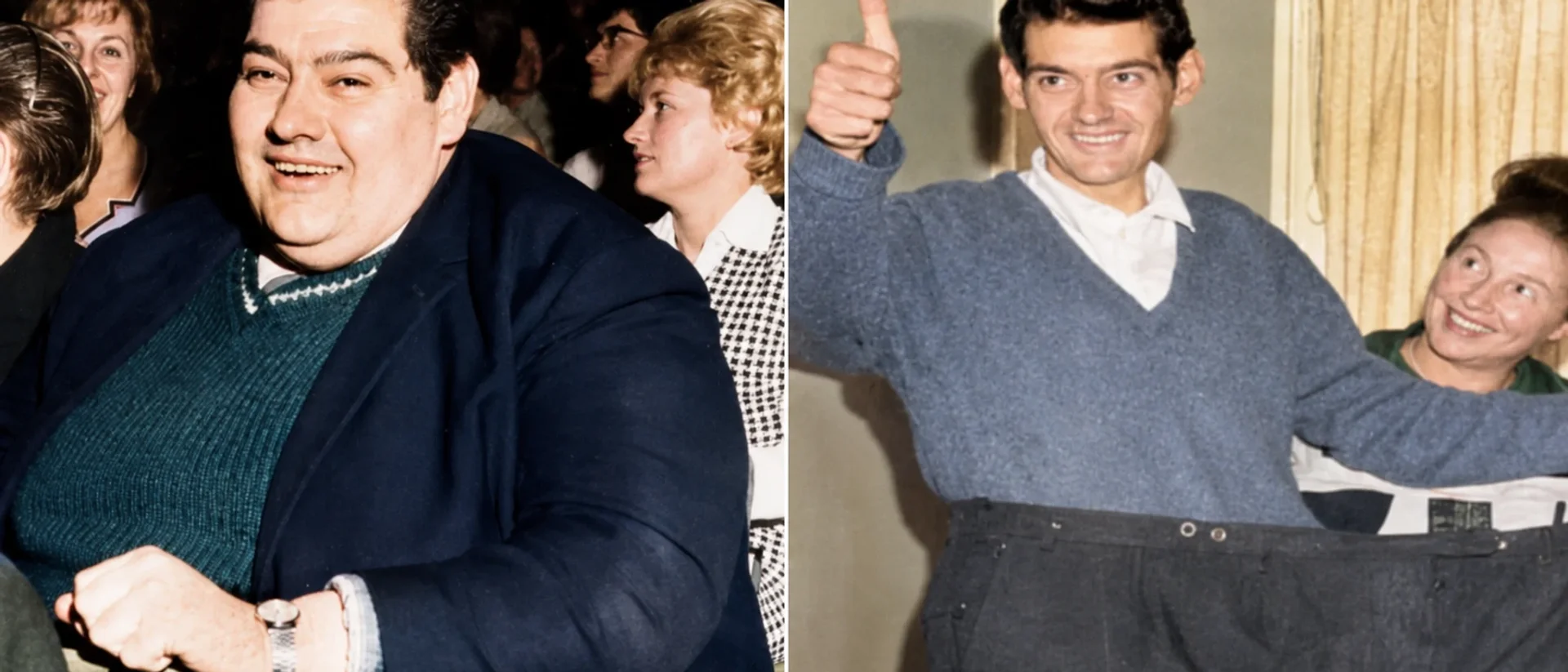
Angus Barbieri walked into a Dundee hospital at 27 weighing 456 pounds and asked doctors to help him stop eating until he was thin. They expected a few days. He lasted 382 days on nothing but tea, coffee, water, and vitamins, living entirely off body fat. He dropped to 180 pounds and kept the weight off for the rest of his life. The longest medically supervised fast in history.
The Man Who Didn't Eat for Over a Year—And Survived
In June 1965, a 27-year-old Scottish man named Angus Barbieri walked into Maryfield Hospital in Dundee with an audacious goal: to stop eating until he reached a healthy weight. What started as a short-term medical fast turned into one of the most extreme experiments in human endurance ever recorded.
Barbieri didn't eat a single morsel of food for 382 days.
When he checked into the hospital, Barbieri weighed 456 pounds (207 kg). He was sick of being morbidly obese and determined to make a change. Doctors initially planned a brief fast of a few days, as medical wisdom at the time favored short fasts over extended ones. But Barbieri adapted remarkably well to not eating, and he insisted on continuing.
Living on Nothing but Tea and Willpower
For over a year, Barbieri consumed zero calories. His "diet" consisted entirely of black tea, coffee, sparkling water, and vitamin supplements (including potassium and sodium to maintain electrolyte balance). Doctors also gave him yeast extract for additional nutrients. That was it.
He lived at home in Tayport, Scotland, going about his daily life while making frequent visits to the hospital for monitoring. Blood tests, weight checks, and metabolic assessments became routine. Despite eating nothing, Barbieri remained ambulatory and active throughout the fast.
The Science of Survival
How did he not die? The answer lies in ketosis - a metabolic state where the body burns fat for fuel instead of glucose. When you stop eating, your body exhausts its glycogen stores (usually within 24-48 hours) and then switches to breaking down fat cells. Barbieri had plenty of fat to burn.
His blood glucose levels dropped to around 30 mg/dL during the last eight months of the fast - far below normal - but his body adapted. Instead of glucose, his brain ran on ketones, a byproduct of fat metabolism. Remarkably, medical tests showed his glucose tolerance remained normal, and he experienced minimal adverse effects.
There were some metabolic hiccups: temporary elevations in calcium, decreased magnesium levels, and increased excretion of certain electrolytes. But overall, his body handled the prolonged starvation with surprising resilience.
Breaking the Fast
On June 30, 1966 - one year and 17 days after he stopped eating - Angus Barbieri finally reached his goal weight of 180 pounds (82 kg). He had lost an astonishing 276 pounds.
Eleven days later, on July 11, 1966, at 10 a.m., he ate his first meal: a boiled egg, a slice of bread with butter, and a cup of coffee. After more than a year without food, he later admitted that he'd "forgotten what food tasted like."
The Aftermath
- Barbieri maintained his weight loss for years afterward, weighing around 196 pounds five years post-fast
- His case was published in the Postgraduate Medical Journal in 1973
- The 1971 Guinness Book of World Records recognized it as the longest recorded fast
- Barbieri lived until 1990, passing away at age 51 from causes unrelated to the fast
Important note: Prolonged fasting without medical supervision is extremely dangerous and can be fatal. Barbieri's fast was conducted under close medical monitoring with supplementation to prevent life-threatening deficiencies. Modern medical consensus does not recommend extended fasting for weight loss - what worked for one man in 1965 under controlled conditions should not be attempted at home.
Still, Angus Barbieri's 382-day fast remains one of the most remarkable demonstrations of human metabolic adaptability ever documented. His body proved that, given enough fat stores and careful monitoring, humans can survive far longer without food than most of us would ever imagine.
Enjoyed this? Get a new fact every morning.
A fascinating fact in your inbox every morning. Free. Unsubscribe anytime.
Frequently Asked Questions
How long did Angus Barbieri go without eating?
How much weight did Angus Barbieri lose during his fast?
What did Angus Barbieri consume during his year-long fast?
Did Angus Barbieri have any health problems from fasting for a year?
Is it safe to fast for 382 days like Angus Barbieri?
Verified Fact
This fact has been reviewed and verified against original sources.
Source: ScienceAlertShow verification details
Thoroughly documented medical case. Angus Barbieri fasted for 382 days (June 14, 1965 to June 30, 1966) under medical supervision at Maryfield Hospital in Dundee, Scotland.
Related Topics
More from Body & Health
View all Body & Health →