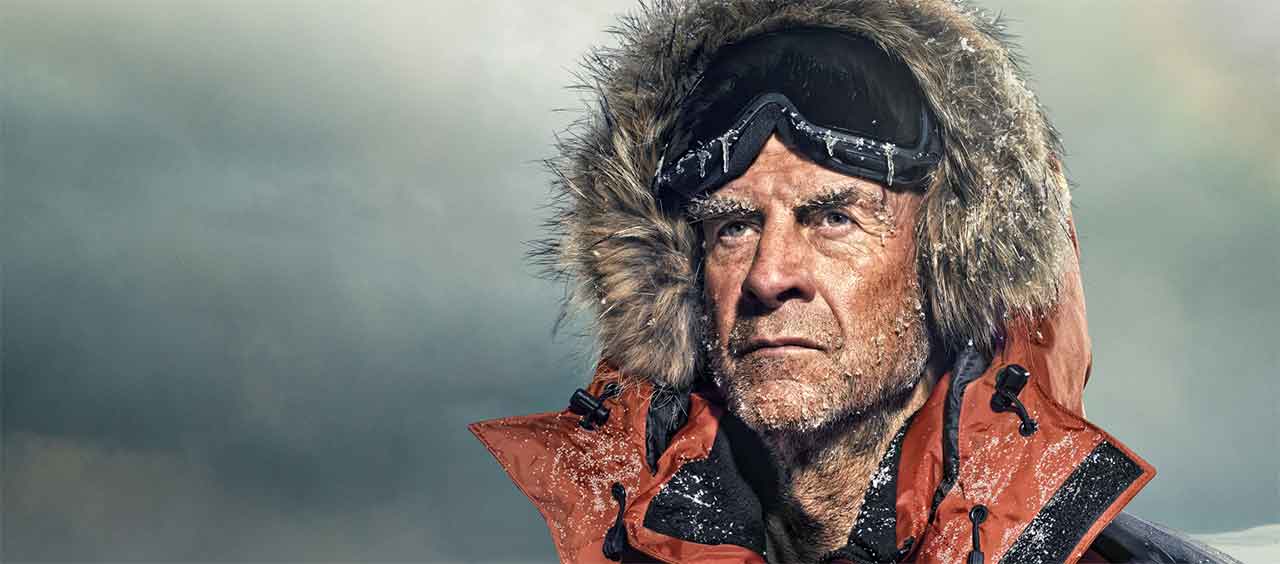
Sir Ranulph Fiennes had a heart attack and a double bypass. Four months later, at 59, he ran seven marathons in seven days on seven continents, finishing the lot in roughly 26 hours of running. He has also sawed off his own frostbitten fingers with a fretsaw in his garden shed, discovered the lost city of Ubar, and summited Everest at 65. Guinness calls him the greatest living explorer.
Sir Ranulph Fiennes: The Explorer Who Defies Human Limits
Most people would take it easy after a heart attack and double bypass surgery. Sir Ranulph Fiennes ran seven marathons in seven days across seven continents—just four months later.
And that's arguably the least crazy thing he's ever done.
The Marathon Man (With a Brand New Heart)
In 2003, at age 59, Fiennes completed what's known as the 7x7x7 challenge. Seven marathons, back-to-back, on seven continents. His cardiologist wasn't exactly thrilled with the idea.
The route took him from:
- Patagonia (South America)
- Falkland Islands (Antarctica)
- Sydney (Australia)
- Singapore (Asia)
- London (Europe)
- Cairo (Africa)
- New York (North America)
He finished all seven in just over 26 hours of total running time. With a heart that had been cracked open and repaired months earlier.
DIY Surgery in a Shed
After returning from a 2000 North Pole expedition, Fiennes discovered his frostbitten fingers were causing unbearable pain. The dead tissue had to go, but the wait for surgery was too long.
His solution? Head to his garden shed with a fretsaw and handle it himself. He sawed off the tips of all the fingers on his left hand, one by one, over several days.
Doctors were horrified. Fiennes was relieved—the pain stopped.
Finding a Lost City (Between Polar Expeditions)
In 1991, Fiennes led the expedition that discovered Ubar, the legendary "Atlantis of the Sands" mentioned in the Quran and One Thousand and One Nights. Using NASA satellite imagery and ground-penetrating radar, his team located the ruins in Oman's Empty Quarter desert.
Scholars still debate whether the site is truly the mythical city, but the archaeological discovery was groundbreaking regardless. Not bad for a guy better known for freezing his extremities off.
Everest at 65
After two failed attempts that left him hospitalized, Fiennes finally summited Mount Everest in 2009 at age 65. He became the oldest Briton to reach the peak at the time.
This completed his achievement of reaching both poles and the highest point on Earth—making him the first person to cross both polar ice caps and climb Everest. The "greatest living explorer," as the Guinness Book of World Records calls him, finally ticked that box.
Why Though?
Fiennes has raised over £18 million for charity through his expeditions. The seven marathons alone raised money for the British Heart Foundation—fitting, given his cardiac history.
He's also survived malaria, nearly died in a fall through Antarctic ice, and been pulled from expeditions due to kidney stones and frostbite. At 81, he shows no signs of slowing down. Most recent adventure? Becoming the oldest person to complete the Global Reach Challenge in 2020.
Some people collect stamps. Sir Ranulph Fiennes collects near-death experiences and world records.
Enjoyed this? Get a new fact every morning.
A fascinating fact in your inbox every morning. Free. Unsubscribe anytime.
Frequently Asked Questions
Did Ranulph Fiennes run 7 marathons in 7 days?
Why did Ranulph Fiennes cut off his own fingers?
How old was Ranulph Fiennes when he climbed Mount Everest?
What is the lost city of Ubar that Ranulph Fiennes discovered?
Is Ranulph Fiennes still alive?
Verified Fact
This fact has been reviewed and verified against original sources.
Show verification details
All claims are factually accurate. The marathons occurred in 2003, four months after his heart attack and double bypass. The finger amputation was in 2000 using a fretsaw after returning from a North Pole expedition.
Related Topics
More from Body & Health
View all Body & Health →