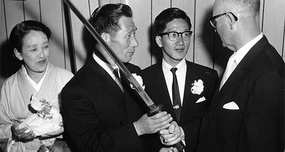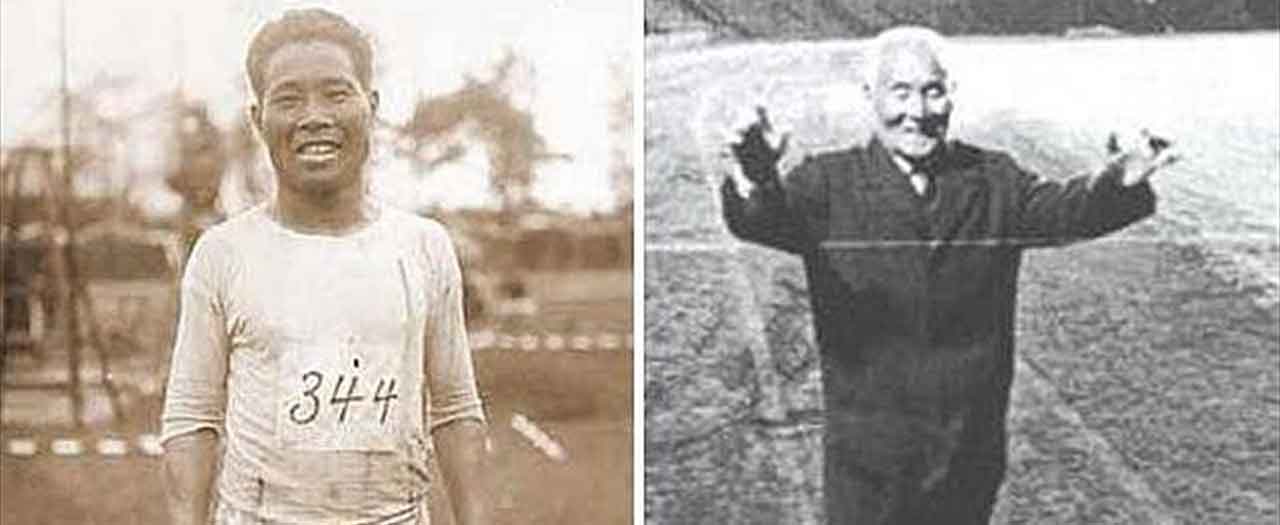
At the 1912 Olympics, a marathon runner quit and went home to Japan without telling officials and was considered a missing person in Sweden for 50 years. In 1966, he was invited to complete the marathon. His time: 54 years, 8 months, 6 days, 5 hours, 32 minutes and 20.379 seconds.
The Olympic Runner Who Went Missing for 54 Years
Imagine running a marathon so slowly that you get married, have six children, and raise ten grandchildren before crossing the finish line. That's exactly what happened to Shizo Kanakuri, whose Olympic marathon took 54 years, 8 months, 6 days, 5 hours, 32 minutes, and 20.3 seconds to complete—making it the longest marathon in recorded history.
The Grueling Journey to Stockholm
In 1912, 20-year-old Shizo Kanakuri qualified to represent Japan at the Stockholm Olympics. It was Japan's first-ever Olympic appearance, and Kanakuri was one of only two athletes sent. But getting there was an ordeal in itself: an 18-day journey by ship and train through the Trans-Siberian Railway.
By the time he arrived in Sweden, Kanakuri was exhausted and weakened from the journey. The race day didn't help matters—Stockholm was experiencing unseasonably hot weather, with temperatures soaring above 90°F (32°C).
The Disappearance
During the marathon, Kanakuri struggled with the oppressive heat. About halfway through the race, he passed a garden party where a Swedish family was enjoying refreshments. Overcome by heat exhaustion and feeling humiliated by his poor performance, he stopped to accept their offer of orange juice.
Then something unusual happened: he stayed for over an hour, resting in the shade. Eventually, still too ashamed to return to the race, Kanakuri took a train to his hotel, boarded a ship the next day, and sailed back to Japan—without telling a single Olympic official.
Race officials were frantic. One runner, Portuguese marathoner Francisco Lázaro, had died during the race from heat exhaustion. Swedish authorities feared the worst for Kanakuri and added him to the country's missing persons list. They searched, but found nothing.
Fifty Years on the Missing Persons List
For half a century, Shizo Kanakuri remained officially missing in Sweden. Meanwhile, back in Japan, he went on to have a distinguished career as the "Father of the Marathon" in his home country. He married, had six children, and became a respected running coach and advocate for long-distance running in Japan.
Swedish officials had no idea their "missing" athlete was living a full and productive life across the globe.
The Invitation to Finish
In 1967, Sveriges Television (Swedish National TV) was researching historical Olympic records when they discovered Kanakuri's name still listed as missing from the 1912 marathon. They tracked him down in Japan and extended an extraordinary invitation: Would he like to come back and officially finish the race?
At 76 years old, Kanakuri accepted. Upon arriving in Sweden on March 20, 1967, he jumped off the plane and jogged around the tarmac to warm up—showing, as the Associated Press reported, "great vigor."
Crossing the Finish Line at Last
Dressed in a suit and tie, Kanakuri ran about 100 meters before breaking the tape in front of Swedish television cameras. The ceremony was heavily covered in Swedish media, and when the official time was announced—54 years, 8 months, 6 days, 5 hours, 32 minutes, and 20.3 seconds—the crowd erupted in laughter and applause.
When asked about his record-breaking slow time, Kanakuri delivered one of the greatest quotes in Olympic history: "It was a long trip. Along the way, I got married, had six children and ten grandchildren."
After the ceremony, Kanakuri returned to the same garden villa where he'd stopped for orange juice 55 years earlier. There, he met Bengt Petre—the son of the family who had hosted him during his moment of crisis.
A Legacy Beyond the Marathon
Despite his infamous Olympic "disappearance," Kanakuri competed in two more Olympic Games (1920 and 1924) and became instrumental in popularizing marathon running throughout Japan. He organized races, coached athletes, and helped establish running as a major sport in his country.
His 1967 finish line ceremony transformed an embarrassing moment into a heartwarming story of perseverance, humor, and the enduring spirit of the Olympics. It remains one of the most charming and unusual stories in the history of the Games—proof that it's never too late to finish what you started.
Frequently Asked Questions
Why did Shizo Kanakuri disappear during the 1912 Olympics?
How long was Shizo Kanakuri listed as a missing person in Sweden?
What was Shizo Kanakuri's official marathon finishing time?
What did Shizo Kanakuri do after the 1912 Olympics?
Did Shizo Kanakuri ever compete in the Olympics again after 1912?
Verified Fact
This fact has been reviewed and verified against original sources.
Show verification details
The fact is accurate except for one detail: Kanakuri completed the marathon in March 1967, not 1966. All other details including the 54-year time span and the specific finish time are correct.