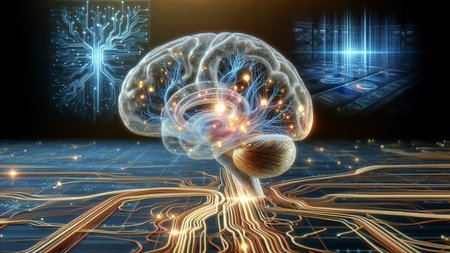
The human brain is insensitive to pain.
Why Brain Tissue Can't Feel Pain (But Headaches Hurt)
It sounds impossible, but it's true: brain tissue cannot feel pain. Unlike your skin, muscles, or internal organs, the brain itself has zero pain receptors (called nociceptors). This isn't a theory—it's been proven thousands of times in operating rooms around the world.
During awake brain surgery, patients remain conscious while neurosurgeons stimulate, cut, or remove brain tissue. These patients don't feel pain from the brain itself. Some even chat with doctors, play musical instruments, or solve math problems while surgeons work directly on their exposed brains. The only anesthesia needed is for the scalp and skull—the brain requires none.
Why Did We Evolve Without Brain Pain Receptors?
From an evolutionary standpoint, brain pain receptors would be pretty useless. The brain is sealed inside your skull—if something's directly damaging it, you're already in serious trouble, and pain signals won't help much. Instead, your body protects your brain with layers of defense: the hard skull, three protective membranes (meninges), and cushioning cerebrospinal fluid.
Pain receptors work best in parts of your body that interact with the environment—your skin detects a hot stove, your tooth nerve screams about a cavity. But your brain? It floats in protective fluid, wrapped in membranes, locked in bone. It doesn't need to feel threats because it's already heavily guarded.
So Why Do Headaches Exist?
If brains can't feel pain, what's happening when your head is pounding? The answer: everything around your brain can feel pain just fine.
- Blood vessels in and around the brain (especially during migraines)
- The meninges (protective membranes wrapping the brain)
- Muscles and nerves in your face, neck, and scalp
- Your sinuses and jaw
When you have a headache, these pain-sensitive structures are inflamed, compressed, or irritated—not the brain tissue itself. A migraine, for instance, involves blood vessel dilation and inflammation of the meninges. Tension headaches come from tight neck and scalp muscles. Your brain is just an innocent bystander.
The Medical Breakthrough This Enabled
This quirk of anatomy made modern neurosurgery possible. Awake craniotomy—surgery performed while the patient is conscious—lets surgeons remove brain tumors or treat epilepsy while monitoring brain function in real-time. If a patient suddenly can't speak or move their hand when a certain area is stimulated, surgeons know to avoid that spot.
Without the brain's insensitivity to pain, this life-saving procedure would be impossible. Patients would be writhing in agony instead of calmly describing what they're experiencing.
Recent research from 2022 suggests that certain brain structures previously thought to be pain-insensitive—like the pia mater (the innermost membrane touching the brain)—might actually have some pain sensitivity when mechanically stimulated. But the general principle holds: brain tissue itself remains insensitive to pain.
Frequently Asked Questions
Can you feel pain during brain surgery?
Why doesn't the brain have pain receptors?
If the brain can't feel pain, why do headaches hurt?
What is awake brain surgery?
Does any part of the brain feel pain?
Verified Fact
This fact has been reviewed and verified against original sources.
Show verification details
The fact is accurate. Brain tissue itself lacks nociceptors (pain receptors), which is why neurosurgeons can perform awake brain surgery without causing pain when touching brain tissue. This is well-documented in medical literature.
Related Topics
More from Body & Health
View all Body & Health →