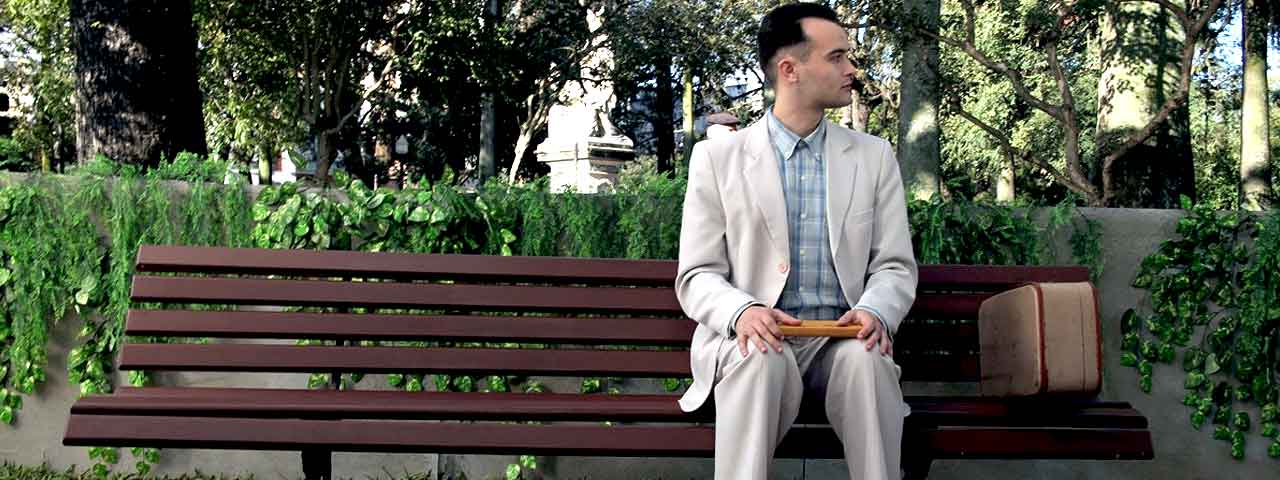
In the “Forrest Gump” novel that the movie is based on, Forrest goes into space with NASA. Upon return, he crash lands on an island full of cannibals. He only survives because he beats the head cannibal at chess everyday.
Forrest Gump's Wild Space Adventure in the Original Novel
If you've only seen the movie, you have no idea how weird the original Forrest Gump story gets. Winston Groom's 1986 novel is an absolute fever dream compared to the Oscar-winning Tom Hanks film—and the NASA space mission might be the most bonkers detour of all.
In the book, doctors discover Forrest has a rare gift: he's a mathematical savant who can perform complex calculations in his head, outperforming NASA's own computers. Naturally, NASA recruits him as an astronaut. Because why wouldn't they?
Space Travel With an Orangutan Named Sue
Forrest doesn't go to space alone. He's joined by the first female astronaut and a male orangutan named Sue. Yes, you read that right—a male ape named Sue. The space mission goes smoothly until Sue wrecks the ship mid-flight, forcing an emergency crash landing.
They don't land at Cape Canaveral. They crash in the jungles of New Guinea, right into the territory of a cannibal tribe.
Chess Master Meets Cannibal Chief
Here's where things get even stranger. The tribe captures Forrest and his crew, and it looks like curtains for our unlikely hero. But the cannibal chief—who happens to be Yale-educated—has a passion for chess.
Forrest challenges him to daily chess matches. Every day he wins, he gets to stay alive another 24 hours. No pressure.
This continues day after day, with Forrest using his strategic mind to outplay the chief and keep himself off the menu. It's survival of the smartest, one chess game at a time.
Why the Movie Skipped This Entirely
The 1994 film adaptation famously streamlined Groom's chaotic novel into a more grounded (if still extraordinary) life story. Director Robert Zemeckis and screenwriter Eric Roth cut the space mission, the orangutan, the cannibals, and the chess matches entirely.
Also missing from the film: Forrest's careers as a professional wrestler, Hollywood stuntman, and chess champion. The book is relentlessly weird, packed with adventures that would've made the movie three hours longer and significantly harder to market.
But that's what makes the novel so fascinating. While the movie gave us chocolate boxes and shrimp boats, the book gave us NASA disasters and life-or-death chess tournaments in the jungle. Both are great—they're just telling very different stories about the same character.
So next time someone quotes "Life is like a box of chocolates," you can casually mention that in the book, life is more like crash-landing in cannibal territory and betting your survival on your chess skills. You know, totally normal stuff.
Frequently Asked Questions
Did Forrest Gump really go to space in the book?
How does Forrest Gump survive the cannibals in the novel?
What's different between Forrest Gump book and movie?
Why was the space mission cut from Forrest Gump movie?
Who wrote the Forrest Gump novel?
Verified Fact
This fact has been reviewed and verified against original sources.
Show verification details
Accurate. Winston Groom's 1986 novel includes this wild storyline where Forrest goes to space with NASA and an orangutan named Sue, crashes in New Guinea, and survives captivity by beating the cannibal chief at chess daily.
Related Topics
More from Entertainment
View all Entertainment →