
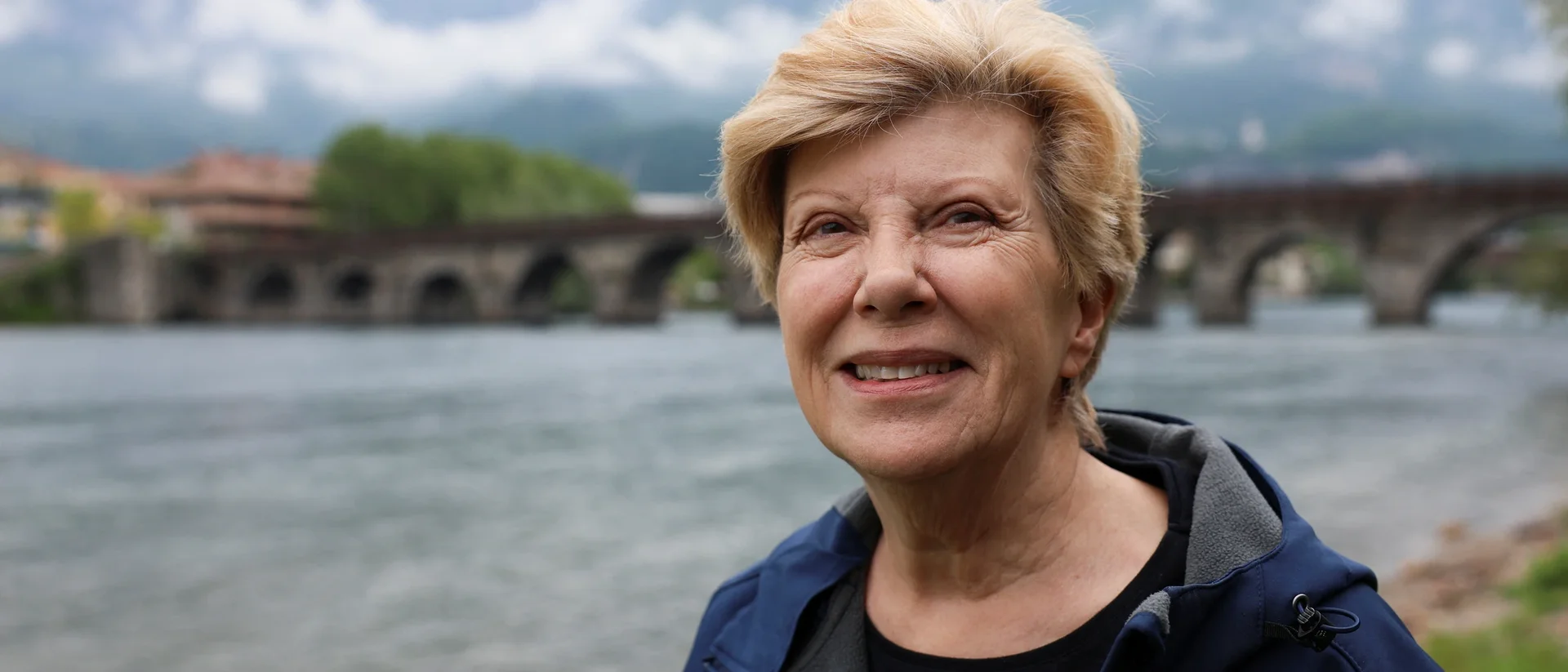
A geologist named Ann Pizzorusso says she solved a 500-year mystery in the Mona Lisa. She matched the rocky landscape behind the subject to Lecco, Italy - the 14th-century Ponte Azzone Visconti bridge, the limestone Alps, and Lake Garlate. Leonardo worked in the Lecco region for years. Not every art historian agrees, but the geological case is hard to argue with.
A Geologist Says She Solved the Mona Lisa's 500-Year Background Mystery
The Mona Lisa is the most studied painting on Earth - and for 500 years, no one could agree on what is behind her. The rocky landscape, the arched bridge, the still water in the distance: experts have pointed to the Arno Valley, Arezzo, and a dozen other places. A geologist with a Renaissance scholarship just made the strongest case yet for a specific answer.
The Geologist Who Read the Rocks
Ann Pizzorusso holds a master's degree in Italian Renaissance studies and has written five books on Leonardo da Vinci. When she looked at the Mona Lisa, she did not focus on art history - she focused on geology. The limestone rock formations visible over the woman's left shoulder are not generic Italian mountains. Pizzorusso identified them as the distinctive dolomite and limestone Alps that frame the city of Lecco, a town on Lake Como in northern Italy's Lombardy region. The serrated, pale-grey ridgelines in Leonardo's painting match Lecco's skyline with unusual precision.
Three Clues That Line Up
Pizzorusso pointed to three overlapping features. First, the arched bridge visible over the subject's left shoulder matches the Ponte Azzone Visconti, a 14th-century bridge that crosses the Adda River in Lecco - one of the few medieval arched bridges in the region standing in Leonardo's time. Second, the body of water in the mid-ground matches Lake Garlate, formed by the Adda River just south of Lecco. Third, the rock formations show the characteristic limestone and dolomite geology of the Lecco Alps, not the sandstone and clay common to the Florence and Arezzo regions earlier theories had favored.
Leonardo Was There
Historical records place Leonardo in the Lecco region between 1483 and 1498, during his period of service to Ludovico Sforza in Milan. He studied the navigation of the Adda River, worked with the Melzi family in nearby Vaprio, and made field notes about the local landscape. The Lecco area's geography - its mountains, river, and chain of lakes - appears repeatedly in his notebooks.
Not Everyone Agrees
Oxford art historian Martin Kemp, one of the world's leading Leonardo scholars, argues the backdrop is "an imagined place, not a real one." Francesca Fiorani of the University of Virginia says Leonardo created "personal imaginary renditions of nature" rather than copies. Pizzorusso's counter is that geology does not lie: the specific rock type, the bridge profile, and the water position are not generic features Leonardo could have invented by chance. She presented her findings at a geology conference in Lecco in May 2024. The argument continues.
Frequently Asked Questions
Where is the Mona Lisa background located according to Ann Pizzorusso?
Why does a geologist think she can solve an art history mystery?
Did Leonardo da Vinci actually visit Lecco?
Do all experts agree the Mona Lisa background shows Lecco?
What is the Ponte Azzone Visconti bridge?
Verified Fact
Verified Jun 10, 2026 · 5 sources checked
Source: Smithsonian MagazineShow verification details
Claims checked
- Geologist Ann Pizzorusso matched the Mona Lisa background to Lecco, Italy
- Three landmarks match (Ponte Azzone Visconti, limestone Alps, Lake Garlate)
- Book count corrected to five books, three about Leonardo
- She researched the area since the mid-1990s, not since 2017
- Art historians Martin Kemp and Francesca Fiorani dissent
Sources: Smithsonian Magazine, The Art Newspaper, Wikipedia, historical records on Leonardo/Adda River, University of Oxford