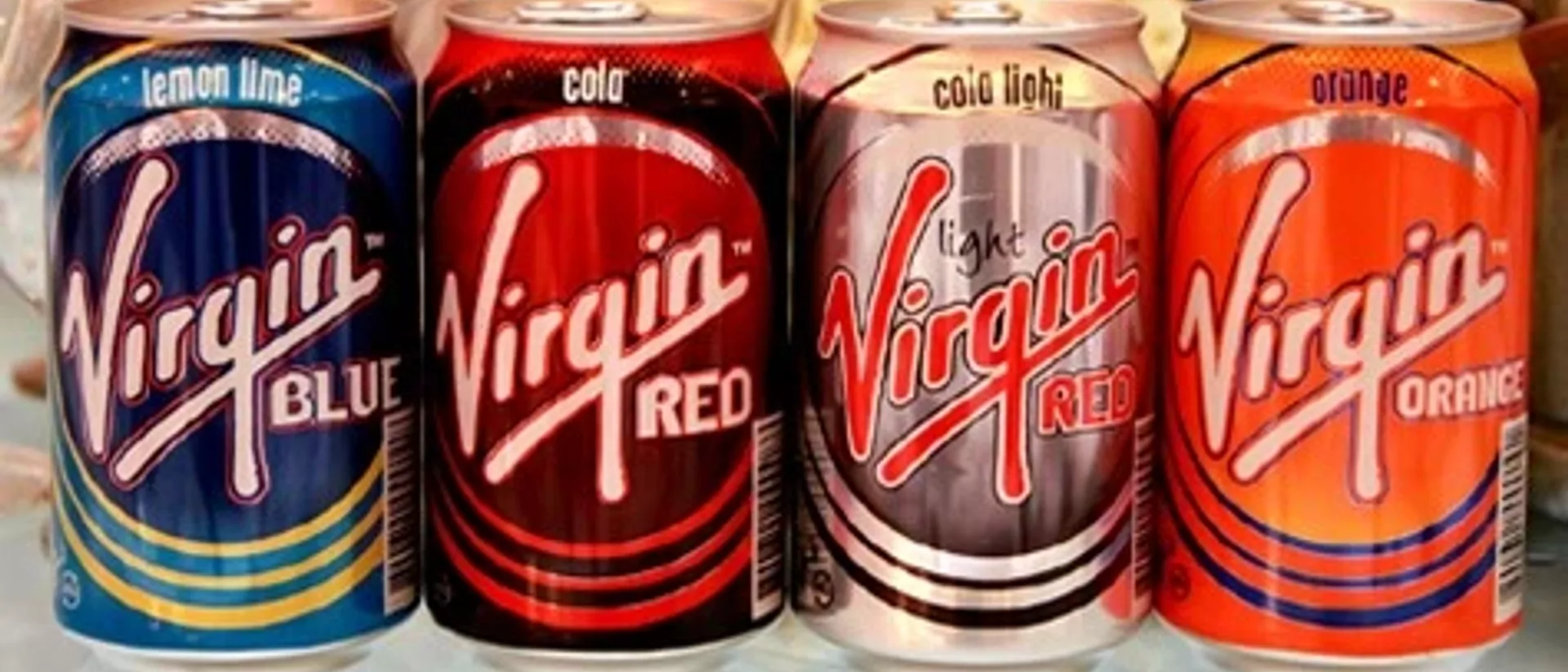
In 1996, Richard Branson's Virgin Cola took out full-page newspaper ads warning customers about a new "blue-detecting" technology — their cans would turn bright blue when the drink expired. The public safety message? "Do not buy any blue cans." Pepsi had just launched its bold new blue can design the same week. It was a masterclass in corporate trolling disguised as consumer protection.
Virgin Cola Told Customers Not to Buy Blue Cans. Pepsi Had Just Gone Blue.
On April 1, 1996, readers across the UK opened their morning newspapers to find a full-page advertisement from Virgin Cola. The ad announced a breakthrough: Virgin had developed a revolutionary "blue-detecting" technology embedded in their cans. If the drink inside expired, the can would turn bright blue as a warning. The message to consumers was clear and urgent — "Do not buy any blue cans."
The Real Target
There was just one problem with this public safety announcement: it wasn't real. And the timing was no accident. Pepsi had just unveiled its massive "Project Blue" rebrand, switching its iconic red-and-blue cans to an all-blue design in one of the most expensive corporate rebrands in history — reportedly costing around $500 million. Richard Branson saw an opportunity and took it with both hands.
Branson's Cola Wars Playbook
This wasn't Branson's first shot across the bow of Big Cola. When Virgin Cola launched in 1994, he drove a Sherman tank through Times Square and aimed its barrel at a giant Coca-Cola sign. He had a gift for turning marketing into spectacle, and the blue can prank was peak Branson — cheeky, deniable, and devastatingly on-target. The ad never mentioned Pepsi by name. It didn't have to.
The Aftermath
The prank generated massive media coverage and cemented Virgin Cola's reputation as the scrappy underdog willing to fight dirty. Of course, Virgin Cola never actually threatened Pepsi's market share — the brand quietly faded by the mid-2000s. But for one glorious April Fools' Day, Branson convinced an entire country that blue cans meant expired soda. Pepsi's $500 million rebrand suddenly had an asterisk next to it — and Branson hadn't spent more than the cost of a few newspaper ads.
Frequently Asked Questions
What was the Virgin Cola blue can prank?
Was Virgin Cola a real product?
Why did Pepsi change to blue cans?
Did Richard Branson pull other stunts against Pepsi and Coca-Cola?
Verified Fact
This fact has been reviewed and verified against original sources.
Source: BrandChannelShow verification details
Documented across multiple advertising and marketing history sources. Referenced in Branson biographies and retrospectives of 1990s cola wars.
Related Topics
More from Entertainment
View all Entertainment →