There is a giant mushroom in Oregon that is over 2,400 years old, covers 3.4 square miles of land, and is still growing!
Oregon's Humongous Fungus: A Giant Among Us
Imagine a living organism so vast it dwarfs entire cities, an ancient entity thriving silently beneath the forest floor. In the sprawling wilderness of Oregon, such a marvel exists: a colossal mushroom known affectionately as the "Humongous Fungus." This isn't just a patch of fungi; it's a single, interconnected organism that challenges our very definition of life's scale.
This remarkable organism, scientifically identified as Armillaria ostoyae, holds the title for one of the largest living things on our planet. Its sheer size and incredible age paint a picture of nature's hidden grandeur, often overlooked but undeniably awe-inspiring. Prepare to delve into the fascinating world of Oregon's subterranean giant.
The Colossal Colony Beneath Our Feet
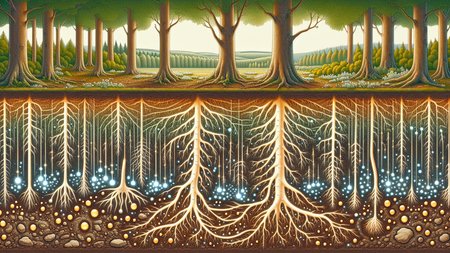
When we picture a mushroom, we usually envision a small, umbrella-shaped cap emerging from the soil. However, the Humongous Fungus is a different beast entirely. What we see above ground are merely the fruiting bodies, the "apples" of a much larger "tree."
The true mass of this organism lies hidden from view, a sprawling network of root-like structures called mycelia. These thread-like filaments permeate the soil, intertwining with tree roots and spreading across vast distances. It’s this intricate, underground web that constitutes the bulk of the Humongous Fungus.
The numbers associated with this fungal behemoth are truly astounding. Located within the Malheur National Forest in eastern Oregon, this single organism stretches across an incredible 3.4 square miles of land. To put that into perspective, that's an area roughly equivalent to 2,200 acres.
But its age is perhaps even more staggering. Scientists estimate that the Humongous Fungus has been growing continuously for an astonishing 2,000 to 8,000 years. Some studies even push that estimate higher, suggesting it could be as ancient as 8,650 years old. This makes it one of the oldest, as well as one of the largest, living organisms known to science.
Architect of Decay, Sustainer of Life
Beyond its impressive size, the Armillaria ostoyae plays a critical, albeit complex, role in its forest ecosystem. It's often referred to as a pathogen, capable of causing root rot disease in coniferous trees like firs, pines, and hemlocks. This can lead to significant tree mortality, especially in weakened or stressed forests.
However, its ecological function isn't purely destructive. As a decomposer, Armillaria ostoyae helps break down dead wood, returning vital nutrients to the soil. This natural process is essential for forest regeneration and maintaining nutrient cycles. It acts as a natural thinning agent, creating openings that allow new, healthier trees to flourish.
Researchers have dedicated years to studying this enormous fungus, piecing together its life cycle and impact. Its discovery as a single, genetically identical organism across such a vast area was a groundbreaking moment in mycology. Understanding how it sustains itself, spreads, and interacts with its environment provides invaluable insights into fungal biology.
Key aspects of its existence include:
- Rhizomorphs: Specialized root-like structures that help it spread underground and infect new trees.
- Nutrient Cycling: Breaking down organic matter, contributing to the forest's health.
- Genetic Unity: Despite its immense spread, genetic testing confirms it as one continuous individual.
Nature's Enduring Wonders
The Humongous Fungus in Oregon stands as a testament to the incredible and often hidden wonders of the natural world. It reminds us that some of the most extraordinary life forms are not necessarily the tallest trees or the largest animals, but rather the silent, sprawling networks beneath our feet.
This ancient, continually growing organism forces us to reconsider our perceptions of size, age, and interconnectedness in ecosystems. It’s a living, breathing piece of history, quietly shaping the landscape of the Malheur National Forest, and an educational reminder of nature's profound mysteries.
Frequently Asked Questions
What is the Humongous Fungus?
How large is the Humongous Fungus?
How old is the Humongous Fungus?
Is the Oregon giant mushroom edible?
Verified Fact
This fact has been reviewed and verified against original sources.