
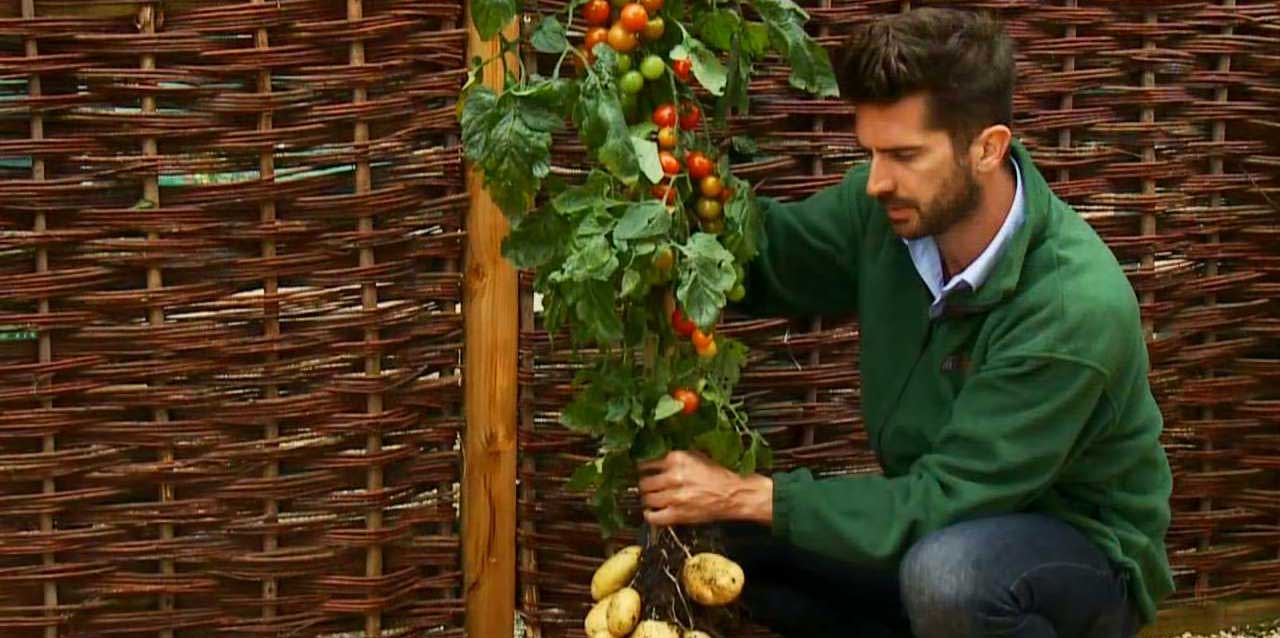
The TomTato is a plant that produces both potatoes and tomatoes!
The TomTato: One Plant That Grows Tomatoes AND Potatoes
Imagine walking into your garden and harvesting potatoes from the roots while plucking fresh tomatoes from the branches of the same plant. Sounds like science fiction? It's real, and it's called the TomTato.
This botanical hybrid isn't the result of genetic modification or some mad scientist's lab experiment. It's created through an ancient horticultural technique called grafting—the same method that's been used for thousands of years to create stronger fruit trees and hardier crops.
Two Plants, One Root System
The TomTato works by physically joining a tomato plant's upper portion to a potato plant's root system. Since tomatoes and potatoes are both members of the Solanaceae family (nightshades), they're compatible enough to grow as one unified organism. The graft heals, nutrients flow through both sections, and you get double the harvest from a single stem.
British horticultural company Thompson & Morgan popularized the TomTato commercially in 2013, though gardeners had been experimenting with tomato-potato grafts for years. They branded it as a space-saving solution for small gardens and balconies.
What You'll Actually Harvest
- Above ground: Cherry tomatoes—up to 500 sweet fruits per plant during the growing season
- Below ground: White potatoes—roughly 4-5 pounds of tubers per harvest
- Timeline: Tomatoes ripen throughout summer; potatoes are ready when the plant dies back in fall
The yields won't match what you'd get from two separate plants optimized for their individual growth, but the novelty factor is undeniable. You're essentially getting a biological two-for-one deal.
The Catch Nobody Mentions
While the TomTato sounds like the ultimate garden hack, it comes with practical limitations. The grafted plant requires identical care conditions that satisfy both species—specific watering schedules, nutrient balances, and temperature ranges. Get it wrong, and one half suffers while the other thrives.
You also can't save seeds or cuttings to propagate new TomTatos. Each plant must be grafted individually, which is why they're sold as established plants rather than seeds. They're also pricier than buying separate tomato and potato starts.
Not Actually New Science
Grafting vegetables onto compatible rootstock has been standard practice in commercial agriculture for decades. Disease-resistant tomato rootstocks protect heirloom varieties. Watermelons are grafted onto squash roots for vigor. The TomTato just happens to be the most visually dramatic example of the technique.
Soviet scientists experimented with similar tomato-potato grafts in the 1970s, hoping to maximize food production in limited spaces. The concept never caught on commercially because managing dual-harvest timing proved too finicky for industrial farming.
But for home gardeners who want to impress dinner guests with vegetables harvested from the same plant? The TomTato delivers pure novelty. It's proof that sometimes the most mind-blowing facts aren't about genetic engineering or futuristic technology—they're about cleverly combining techniques humans have used since ancient Rome.
Frequently Asked Questions
What is a TomTato plant?
How does the TomTato produce two different vegetables?
Can you eat both the potatoes and tomatoes from a TomTato?
Where can I buy a TomTato plant?
Is the TomTato real or just a myth?
Verified Fact
This fact has been reviewed and verified against original sources.