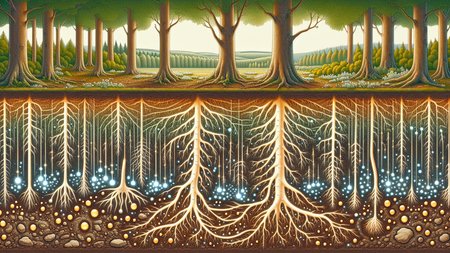
Research indicates that plants grow healthier when they are stroked.
Does Stroking Plants Make Them Healthier?
You've probably heard the advice: talk to your plants, stroke their leaves, show them love and they'll thrive. It sounds wholesome and intuitive. But science has bad news for well-meaning plant parents—your plants absolutely hate being touched.
Research from La Trobe University found that even the slightest touch activates a massive genetic defense response in plants. When touching is repeated, plant growth can be reduced by up to 30 percent. That loving stroke you thought was encouraging? It's actually triggering a full-scale molecular panic.
Why Plants Freak Out When You Touch Them
The phenomenon is called thigmomorphogenesis—a Greek mouthful meaning "touch-generated shape change." When plants detect mechanical stimulation, whether from wind, rain, insects, or your well-intentioned fingers, they divert enormous energy into defensive responses.
This isn't a minor reaction. Researchers discovered that responding to touch requires a huge expenditure of cellular resources, energy that would otherwise fuel normal growth and development. The plant essentially goes into crisis mode every single time.
The 30% Growth Tax
Scientists have measured the cost precisely. Repeated touching can slash plant growth by nearly a third compared to untouched control plants. The energy budget is finite, and every defense response means less energy for getting taller, developing leaves, or producing flowers.
Why such an extreme reaction? Plants likely evolved this sensitivity to detect threats: nibbling insects, approaching storms, or overcrowding from neighboring plants. Better safe than eaten is apparently the botanical motto.
The Twist: Tough Love Actually Works
Here's where it gets interesting. While touching reduces growth, it's not entirely bad news. Those stressed plants develop differently—they grow shorter and stockier rather than tall and spindly. Their stems thicken. Their structure becomes more robust.
Japanese farmers have exploited this for centuries, deliberately subjecting crops to mechanical stress to improve quality and resilience. The technique creates plants better equipped to handle wind, pests, and environmental challenges.
- Shorter stems mean less likelihood of toppling over
- Thicker stems can support more weight
- Stressed plants accumulate jasmonate defense hormones that ward off insects and fungal infections
- The compact growth form can actually be commercially desirable
What This Means for Your Houseplants
Should you completely ignore your fiddle-leaf fig? Not exactly. Occasional contact when watering or repositioning won't doom your plant. But that daily leaf-stroking ritual? Skip it.
The same applies to frequently rearranging plants, spinning them for even light exposure, or letting curious pets bat at the leaves. Every interaction comes with a metabolic price tag your plant would rather not pay.
So next time you're tempted to show your plants some tactile affection, remember: they'd prefer you love them from a distance. Sometimes the best plant care is benign neglect.
Enjoyed this? Get a new fact every morning.
A fascinating fact in your inbox every morning. Free. Unsubscribe anytime.