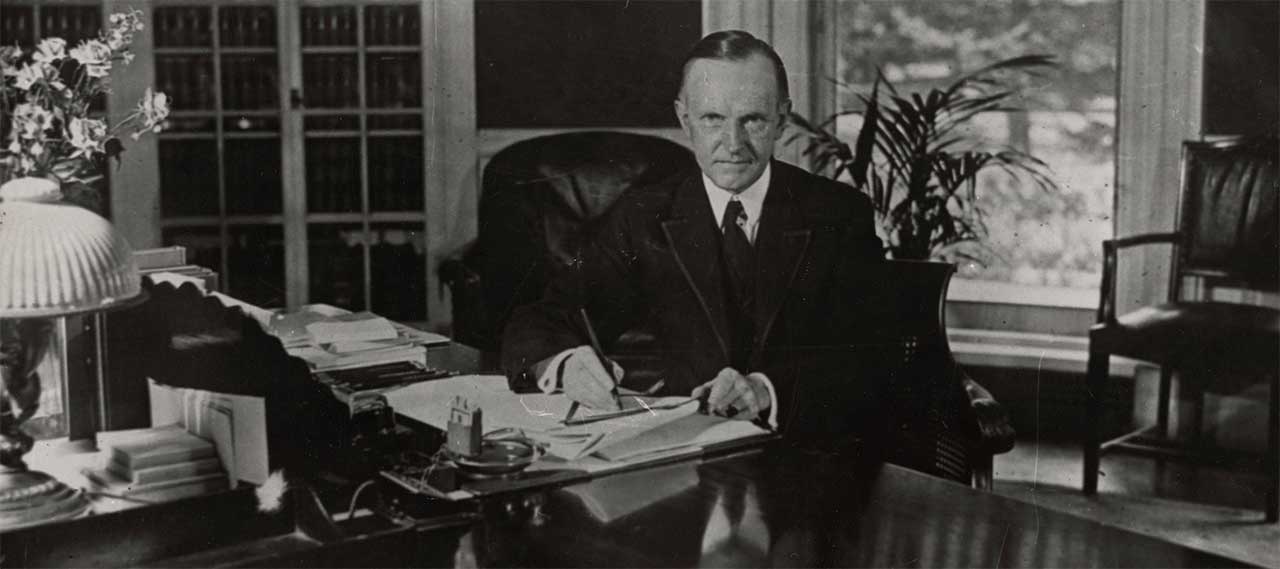
Former US President Calvin Coolidge (1923-1929) enjoyed buzzing for his Secret Service agents and then hiding under his desk as they frantically searched for him.
Calvin Coolidge's Secret Service Hide-and-Seek
Calvin Coolidge was known as "Silent Cal" for his famously taciturn nature. But behind that stoic exterior lurked something unexpected: a prankster with a surprisingly juvenile sense of humor.
The 30th President of the United States genuinely enjoyed pressing the buzzer to summon his Secret Service detail, then ducking under his desk to watch them burst in and frantically search for him. Imagine: the most powerful man in the free world, giggling under furniture while trained professionals scrambled in confusion.
The Quiet Man's Loud Jokes
This wasn't a one-time lapse in presidential dignity. Coolidge reportedly did this repeatedly, apparently finding it hilarious every single time. The contrast with his public persona couldn't be starker—the man who once responded to a dinner guest's bet that she could get more than two words out of him with simply "You lose" was secretly a desk-hiding troll.
His pranks weren't limited to Secret Service torment. Coolidge was known to:
- Press all the buttons on his desk simultaneously to summon every servant at once, then pretend nothing happened
- Hide in bushes on the White House lawn
- Ride the mechanical horse he kept in the White House (yes, really) while wearing a cowboy hat
Why "Silent Cal" Wasn't So Silent
The disconnect between Coolidge's public silence and private mischief makes more sense when you understand his background. Raised in rural Vermont, he was genuinely uncomfortable with the pomp of Washington society. His quietness wasn't aloofness—it was a New England farmer's suspicion of unnecessary words.
But among people he trusted? Different story entirely. His wife Grace once noted that at home, he could be surprisingly playful. The Secret Service pranks seem to have been his way of coping with the absurdity of having armed men follow his every move.
The Secret Service Perspective
One can only imagine what his protection detail thought. These were professionals trained to take bullets for the president, reduced to playing an unwanted game of hide-and-seek with their boss. Historical accounts suggest they took it in stride, though surely someone questioned their career choices while checking behind curtains for the leader of the free world.
The pranks also reveal something about the era. Today's security protocols would never allow a president to simply vanish, even momentarily. Coolidge operated in a time when the presidency was still somewhat approachable—when a commander-in-chief could duck under furniture without triggering a national security incident.
Legacy of a Presidential Prankster
Coolidge left office in 1929, just months before the stock market crash that would define the next decade. His reputation has fluctuated over the years—admired by small-government conservatives, criticized by those who saw his hands-off approach as negligent.
But the desk-hiding story endures because it humanizes an otherwise forgettable presidency. Silent Cal wasn't boring. He was just saving his energy for the important things—like watching grown men in suits panic over a missing president.
Frequently Asked Questions
Did Calvin Coolidge really hide from the Secret Service?
Why was Calvin Coolidge called Silent Cal?
What pranks did Calvin Coolidge play?
When was Calvin Coolidge president?
Verified Fact
This fact has been reviewed and verified against original sources.
Show verification details
The anecdote is well-documented, though 'bodyguards' should be 'Secret Service agents'. Also corrected his presidency dates (1923-1929, not 1924-28).
Related Topics
More from History & Culture
View all History & Culture →