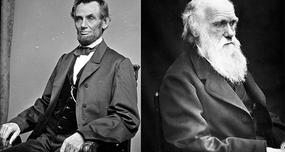
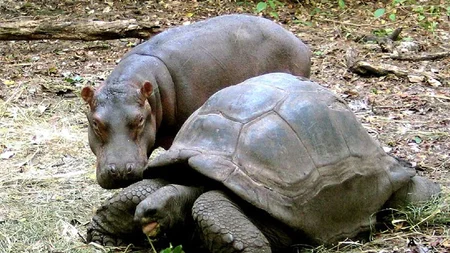
When Charles Darwin first discovered the Galapagos Tortoises, he tried to ride them!
Darwin Tried Riding Galapagos Tortoises (And Failed)
When the HMS Beagle dropped anchor in the Galápagos archipelago in September 1835, a young Charles Darwin encountered creatures that would change the course of science forever. But before the tortoises inspired his theory of evolution, he did something far less dignified: he tried to ride them.
In his journal "Voyage of the Beagle," Darwin admitted that he "frequently got on their backs" during his time on the islands. His technique was simple—he'd give a few raps on the back of their shells to get them moving. The tortoises would obediently rise up and trudge forward. There was just one problem: staying on.
The Balance Problem
Darwin confessed that he "found it very difficult to keep my balance" while perched atop these living tanks. Picture a 26-year-old naturalist in Victorian-era clothing, wobbling precariously as a 200-pound tortoise lumbered across volcanic rock. It's not exactly the dignified image we have of the father of evolutionary theory.
The giant tortoises Darwin encountered were massive—some required six to eight men to lift them from the ground. Their shells measured several feet across, and they could weigh over 500 pounds. Not exactly ergonomic seating.
A Different Era of Science
Darwin's tortoise-riding adventure highlights how much scientific fieldwork has changed. During his five-week stay in the Galápagos, Darwin and the Beagle crew also:
- Ate tortoise meat regularly (they found it delicious)
- Collected specimens to take back to England
- Walked right up to wildlife with zero restrictions
- Used tortoises as fresh meat storage on long sea voyages
Today, touching Galápagos tortoises is strictly prohibited. The islands operate under rigid conservation protocols, and visitors must stay at least six feet away from all wildlife. What Darwin casually did on a sunny October afternoon would now result in hefty fines and possibly deportation from Ecuador.
The Tortoise's Revenge
Darwin also described being "always amused" when approaching these giants. The moment he passed one, it would instantly draw in its head and legs, "uttering a deep hiss" and falling to the ground "with a heavy sound, as if struck dead."
That hiss was the tortoise equivalent of "Get off my lawn." These ancient reptiles, some of which can live over 100 years, were simply trying to exist in peace when this peculiar primate started using them as transportation.
The irony? Darwin's observations of these very tortoises—how their shell shapes varied between islands—became crucial evidence for his theory of natural selection. The creatures he rode helped him understand that species weren't fixed, but adapted to their environments over time. Not bad for an impromptu taxi service.
Frequently Asked Questions
Did Charles Darwin really ride giant tortoises?
Can you ride Galapagos tortoises today?
How big were the tortoises Darwin encountered?
What did Darwin do with the Galapagos tortoises?
How did tortoises help Darwin's theory of evolution?
Verified Fact
This fact has been reviewed and verified against original sources.
Show verification details
Confirmed through Darwin's own account in 'Voyage of the Beagle' - he wrote that he 'frequently got on their backs' and 'found it very difficult to keep my balance' when the tortoises walked.