
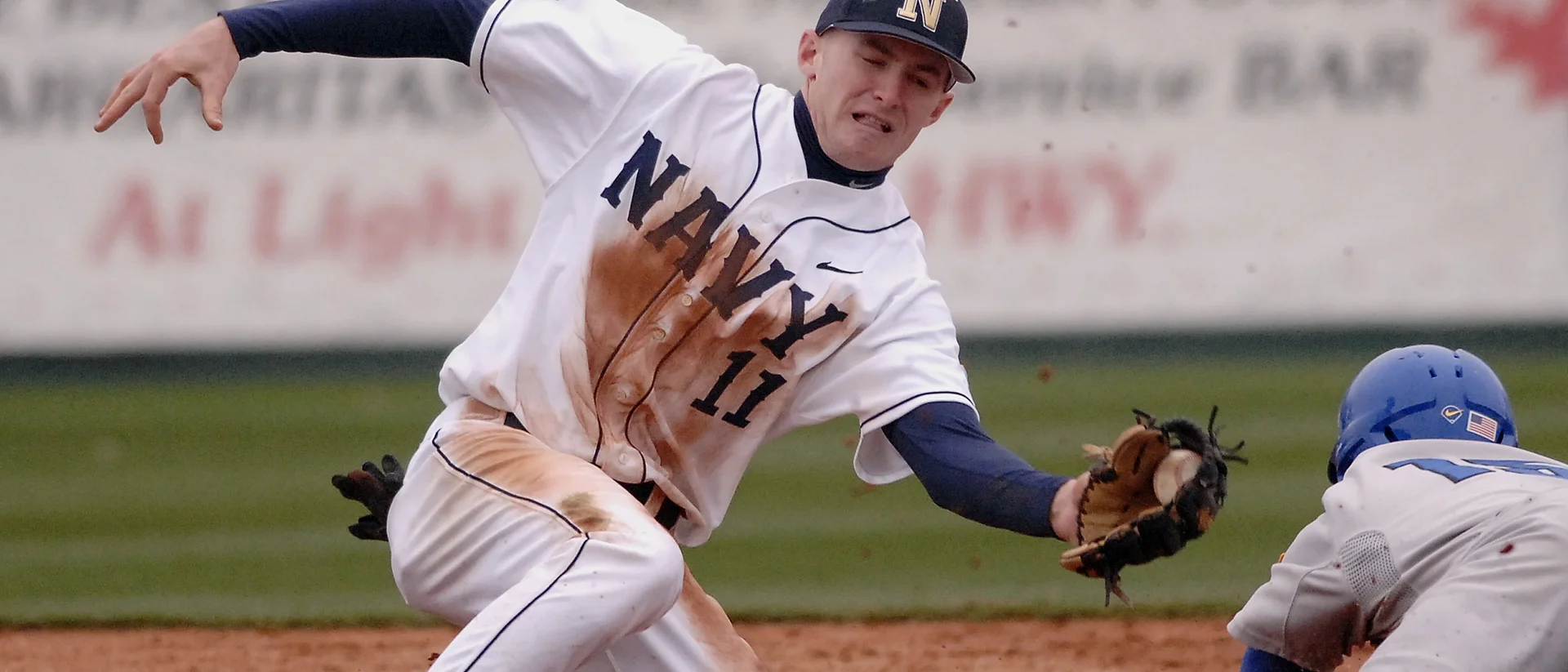
The shortstop was not invented as an infielder. The hand-made balls of the 1840s were too light to throw 200 feet. So one man stood in the grass between the outfield and the pitcher, relaying throws in. Doc Adams played that spot and believed he was the first. In 1857 he also set the bases at 30 yards. The bases are still 90 feet apart. Every team still fields a shortstop.
The Shortstop Was Invented Because the Ball Was Too Light
The shortstop is the position most teams hand to their best infielder. It began as a workaround for a ball that would not fly.
A Ball That Would Not Carry
The first Knickerbocker baseballs were made by hand, and they were light. Baseball's official historian, John Thorn, puts the problem plainly: the early ball could not be thrown even two hundred feet.
An outfielder who chased a hit into the far grass had no way to get the ball back to the pitcher's point in time to stop a runner.
The fix was a man in between. He stood out in the shallow grass, took the outfielder's throw, and relayed it in.
They called him the short fielder.
The Man Who Stood There
Daniel Lucius Adams was a New York physician who joined the Knickerbocker club in 1845. Everyone called him Doc.
Historians credit him with taking up that in-between spot himself.
In February 1896, at the age of 81, he told The Sporting News how it had worked.
"I used to play shortstop, and I believe I was the first one to occupy that place, as it had formerly been left uncovered."
The Walk Into the Infield
Then the equipment changed. Balls were wound harder and livelier, and an outfielder could reach the pitcher on his own.
The relay man was no longer needed out on the grass.
Instead of disappearing, he walked forward into the dirt and took up station between second base and third.
The job vanished. The position stayed.
Thirty Yards
Adams did something else that outlasted him. In 1857 he was the presiding officer at a convention of fourteen New York area clubs, called to settle one set of rules for everybody.
The old wording had measured the diamond in paces, which left every field a slightly different size.
"The distance between bases I fixed at 30 yards."
Thirty yards is 90 feet. In the same 1896 memoir he gave the other distance he had settled.
"The distance from home to pitcher's base I made 45 feet."
The same convention settled nine men to a side and nine innings to a game.
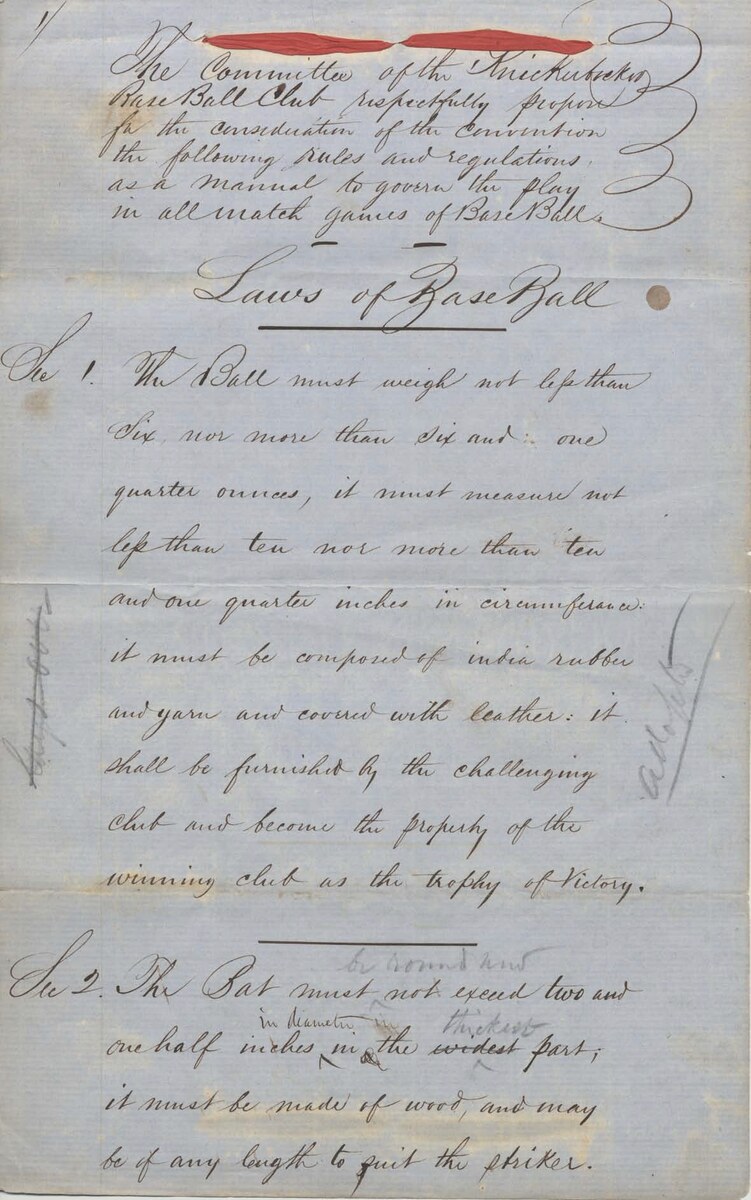
A handwritten document he drafted for that convention survives. It surfaced publicly in 2016, and it is written in his own hand.
He Made the Balls Himself
Before any of it, there was the problem of getting a ball at all. Nobody in New York was manufacturing them.
"We had a great deal of trouble in getting balls made, and for six or seven years I made all the balls myself, not only for our club but also for other clubs when they were organized."
So the man who decided where the shortstop should stand also wound, by hand, the ball that put him there.
Adams died in 1899. The light ball that made his job necessary is long gone.
Every team still fields a shortstop.
Enjoyed this? Get a new fact every morning.
A fascinating fact in your inbox every morning. Free. Unsubscribe anytime.
Frequently Asked Questions
Who was the first shortstop in baseball?
Why did the shortstop originally play in the outfield grass?
Why are baseball bases 90 feet apart?
Who was Doc Adams in baseball history?
Verified Fact
Verified Sep 12, 2026 · 4 sources checked
Source: Society for American Baseball ResearchShow verification details
Claims checked
- The shortstop began as a relay man for a ball too light to throw 200 feet
- Doc Adams said he believed he was the first to occupy that spot
- Adams presided over the 1857 convention that settled one code of rules
- He fixed the distance between bases at 30 yards, which is 90 feet
- He made the club's baseballs by hand for six or seven years
Sources: SABR Biography Project, The Sporting News (1896), ESPN, SCP Auctions