The first penalty flag was red, and it was cut from a Halloween costume and a bed sheet. A college coach hated the horn officials used to blow and wanted a bright cloth instead. He gave his wife eight hours before kickoff. Irma Beede cut the cloth and sewed a fishing weight into each flag. Officials now throw one on every field in America.
The First Penalty Flag Was a Halloween Costume
On the morning of October 17, 1941, a college football coach in Youngstown, Ohio decided he had heard the horn for the last time. By kickoff that night his wife had sewn four small red-and-white flags on her machine, and one of them was thrown in a real game for the first time in the history of the sport.
The Horn Everybody Hated
Officials in 1941 signaled a foul with a whistle or a small horn strapped to the wrist. The sound stopped everything.
Players heard it mid-play and stopped, unsure whether the down was over.
Dwight "Dike" Beede, the head coach at Youngstown College, had heard enough of it. "I always disliked the fish horn signal, figured it was a nuisance, irritating to the ears," he said.
His idea was simple. Mark the foul with something the crowd and the players could see, and let the play run on until the whistle.
Eight Hours and a Sewing Box
Youngstown was due to host Oklahoma City University at Rayen Stadium that night. On the morning of the game Beede asked the visiting coach, Os Doenges, for permission to try the idea as an experiment, and Doenges agreed.
That left his wife, Irma, roughly eight hours to turn the idea into four working flags. He wanted a bright color that would read from the stands: red, with white stripes.
She cut the red from their daughter's old Halloween costume and the white from a bed sheet, and sewed the pieces together on her machine.
Then she went to her husband's fishing tackle box for lead sinkers, so the flag would carry when it was thrown rather than flutter to the ground. The Ohio High School Athletic Association records the weights as those sinkers; the Beede daughters remember fishing weights going into a corner of each flag.
Each finished flag was about 16 inches square, red with white stripes, with the weight gathered at one end.
Irma Beede was later nicknamed the Betsy Ross of football.
Three of the Four Threw It Away
Four officials worked that game: Hugh McPhee, Jack McPhee, Bill Renner and Carl Rebele. Each got a flag and a pitch from the coach: "Do me a favor boys, instead of using the horns, try dropping these flags on violations. The fans never hear the horns. Besides its just an experiment."
It did not go over well. Three of the four officials threw their flags away after the game, and one of them wrote to Beede afterwards to tell him it was a terrible idea.
Jack McPhee kept his. He carried it to other games and kept throwing it, at Princeton-Yale, at Ohio State, and eventually at a Rose Bowl in front of 100,000 people.
At an Ohio State-Iowa game the conference commissioner, Major John Griffith, watched officials dropping cloths on the field and asked afterwards what they were doing. He liked the answer.
Football did not make the flag official until 1948, at the American Football Coaches rules session, seven seasons after those four homemade ones flew in Youngstown.
Where the Originals Went
Accounts of what survived differ. The National Federation of State High School Associations says the flag McPhee saved is on display at the College Football Hall of Fame in Atlanta, and that a flag the Rawlings company later presented to Irma is displayed at Youngstown State's Stambaugh Stadium.
Youngstown State's own telling is that two of the originals sit in Mosure Hall inside that stadium.
Either way, the red one is behind glass and the yellow one is everywhere.
Eighty-Five Years of Laundry
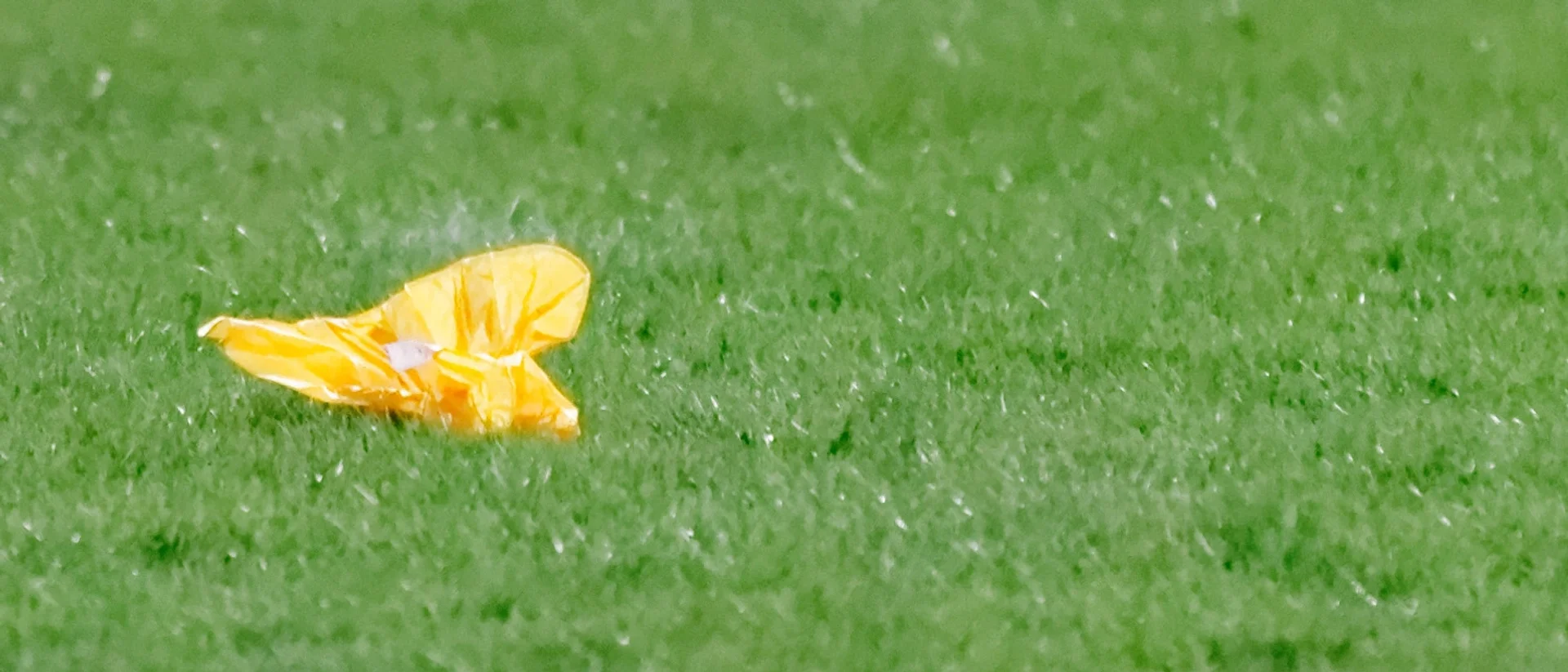
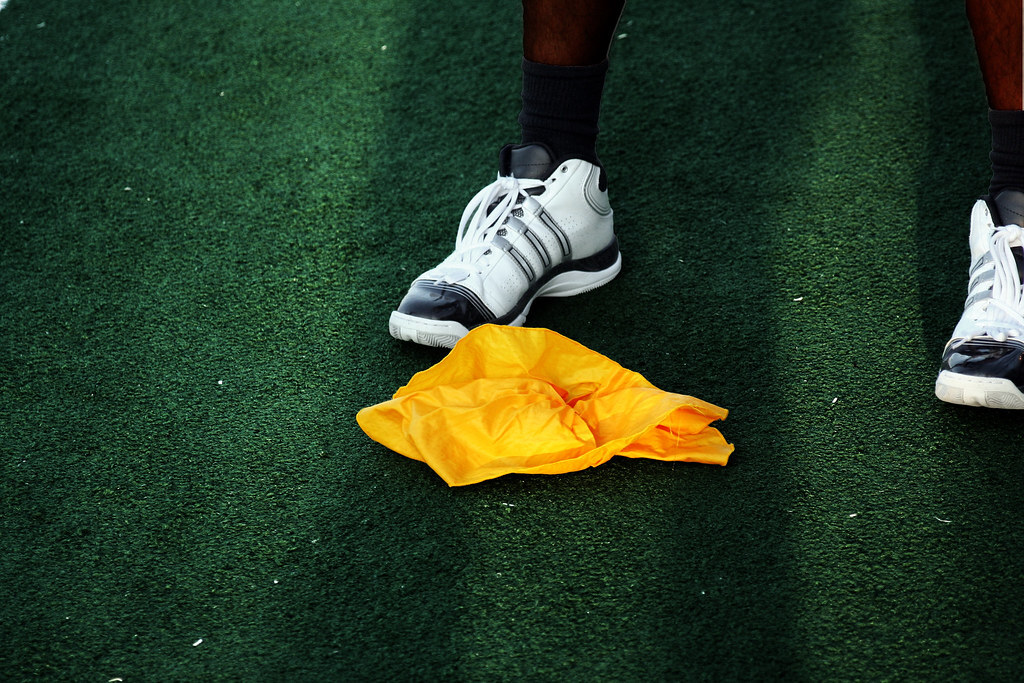
The modern flag is a yellow cloth weighted with sand, and officials call it everything from a hanky to the laundry.
It gets thrown for holding, for a false start, for twelve men on the field, in high school stadiums on Friday nights and in NFL stadiums on Sundays.
Youngstown State, the NFHS and the Ohio High School Athletic Association all date that first game to Friday, October 17, 1941, though a few accounts put it a day earlier.
October 17, 2026 is 85 years to the day since the first one landed on the grass at Rayen Stadium.
The flag stayed. The horn did not.
Source:NFHS
Enjoyed this fact?
Be the first to love this
Get a new fact every morning.
A fascinating fact in your inbox every morning. Free. Unsubscribe anytime.
Frequently Asked Questions
Who invented the football penalty flag?
When was the first penalty flag thrown?
What was the first penalty flag made of?
Why are penalty flags yellow?
When did football officially adopt the penalty flag?
Verified Fact
Verified Sep 13, 2026 · 4 sources checked
Source: NFHSShow verification details
Claims checked
- The first penalty flag was thrown at a Youngstown College game on October 17, 1941
- Coach Dike Beede called the officials' fish horn a nuisance, irritating to the ears
- Irma Beede sewed four flags in eight hours, cut from their daughter's Halloween costume and a bed sheet
- She weighted them with lead sinkers from a fishing tackle box
- Three of the four officials threw their flags away after the game
- Football adopted the flag in 1948
Sources: NFHS, Ohio High School Athletic Association, Youngstown State University, Wikipedia
Related Topics
More from History & Culture
View all History & Culture →