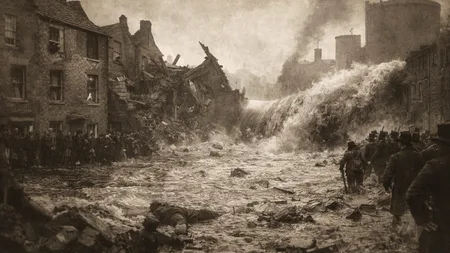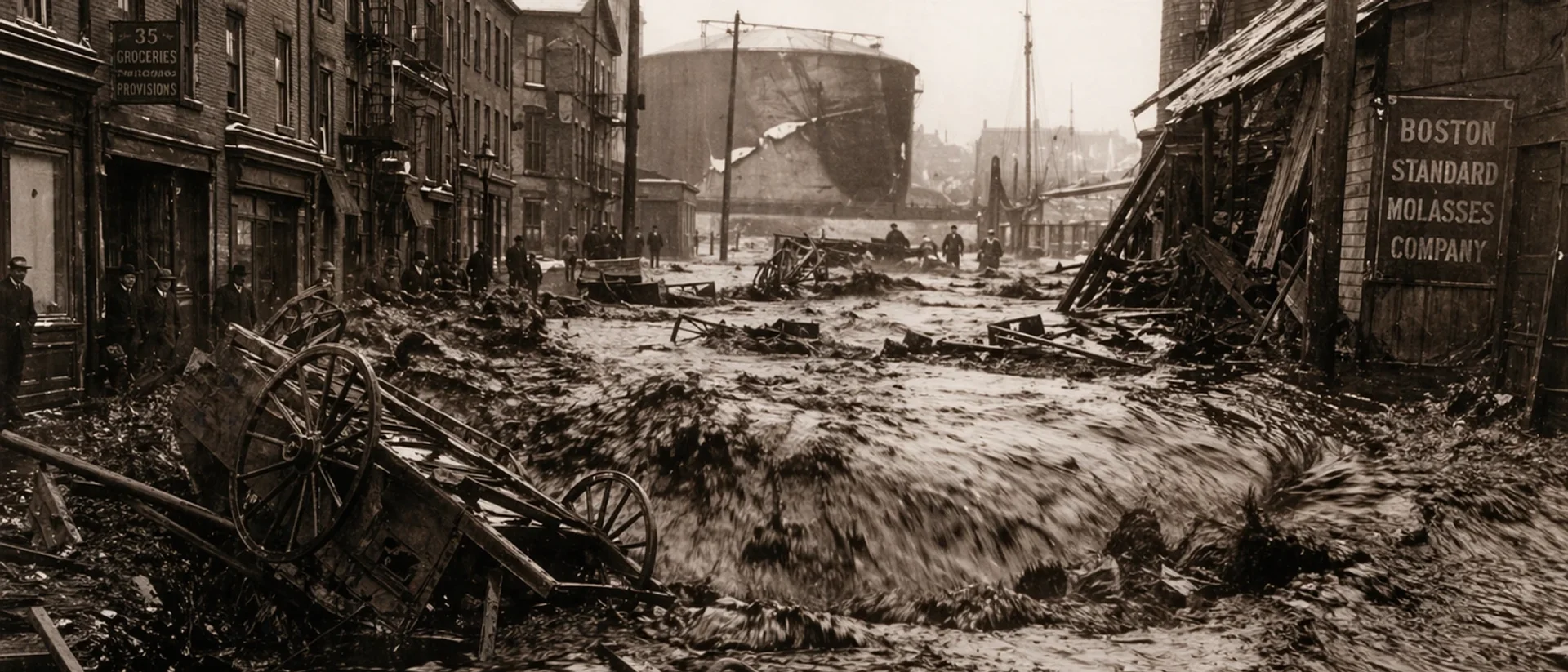
On January 15, 1919, a 50-foot steel tank in Boston's North End burst and released 2.3 million gallons of hot molasses. The sticky wave rushed down Commercial Street at roughly 35 mph, reached 15 feet high in places, and claimed 21 lives. Locals swore the streets smelled sweet for decades.
The Day Boston Drowned in 2.3 Million Gallons of Molasses
It sounds like the setup to a bad joke. A tank of molasses bursts in downtown Boston and a tidal wave of syrup tears through a neighbourhood. Then you look at the numbers and the joke stops being funny.
A Tank That Should Not Have Been There
The Purity Distilling Company put up a 50-foot steel tank on Commercial Street in 1915 to hold molasses bound for industrial alcohol, much of it destined for munitions during the First World War. The tank was rushed through construction, never properly pressure-tested, and leaked so badly that locals collected the runoff in buckets. The company painted it brown so the seepage would blend in.
Lunchtime, January 15, 1919
Around 12:30 PM the tank ruptured with a sound witnesses compared to a machine gun as the rivets popped loose. Out came 2.3 million gallons of warm molasses. The wave hit Commercial Street at roughly 35 mph and rose up to 15 feet in places. It snapped an elevated railway support, crushed firehouse walls, and pushed buildings off their foundations.
The Toll
21 people lost their lives and around 150 were injured. Rescuers spent four days pulling victims out of the hardening syrup. Horses that could not break free had to be put down by police. The Red Cross set up a relief station that stayed open for weeks.
The Tank Did Not Blow Up on Its Own
The United States Industrial Alcohol Company, which owned Purity Distilling, tried to blame anarchists. It did not work. A court-appointed auditor heard three years of testimony and ruled the tank was poorly designed and dangerously thin-walled. A fresh warm load had been pumped in the day before on top of colder molasses, and the resulting pressure was too much for the defective shell.
The First Big Class Action
119 residents filed what became one of the first successful class-action lawsuits in Massachusetts history. The case dragged on for six years. In 1925 USIA paid about $628,000 in damages, roughly $11 million in today's money. Families of those who died received around $7,000 each. The case helped push every state toward requiring licensed engineers to sign off on structural plans.
A Smell That Would Not Leave
Historian Stephen Puleo, who wrote Dark Tide, the definitive book on the disaster, has said a Boston Gas meter reader told him he could still smell molasses in North End basements into the 1960s. Locals insisted hot summer days brought the scent back for decades. Today a small plaque at the Langone Park entrance is the only marker left at the site.
Frequently Asked Questions
What caused the Great Molasses Flood of 1919?
How many people died in the Boston Molasses Flood?
How fast did the molasses wave move?
Did Boston really smell like molasses for decades afterward?
Was anyone held responsible for the molasses flood?
Is there a memorial to the Great Molasses Flood?
Verified Fact
This fact has been reviewed and verified against original sources.
Source: HISTORYShow verification details
Cross-checked against HISTORY.com, Wikipedia, Britannica, Boston.gov, Boston.com, Boston Magazine, and Stephen Puleo's Dark Tide. Date (Jan 15, 1919, 12:30 PM), volume (2.3 million gallons), tank height (50 ft), wave speed (35 mph), wave height (8-15 ft, some sources cite up to 40 ft), casualties (21 dead, 150 injured), settlement ($628,000 in 1925), and lingering smell reports (Puleo quotes meter reader into the 1960s) all confirmed. Cause: combination of defective tank design, rushed construction without pressure testing, and thermal expansion after a warm molasses delivery on top of colder contents.