
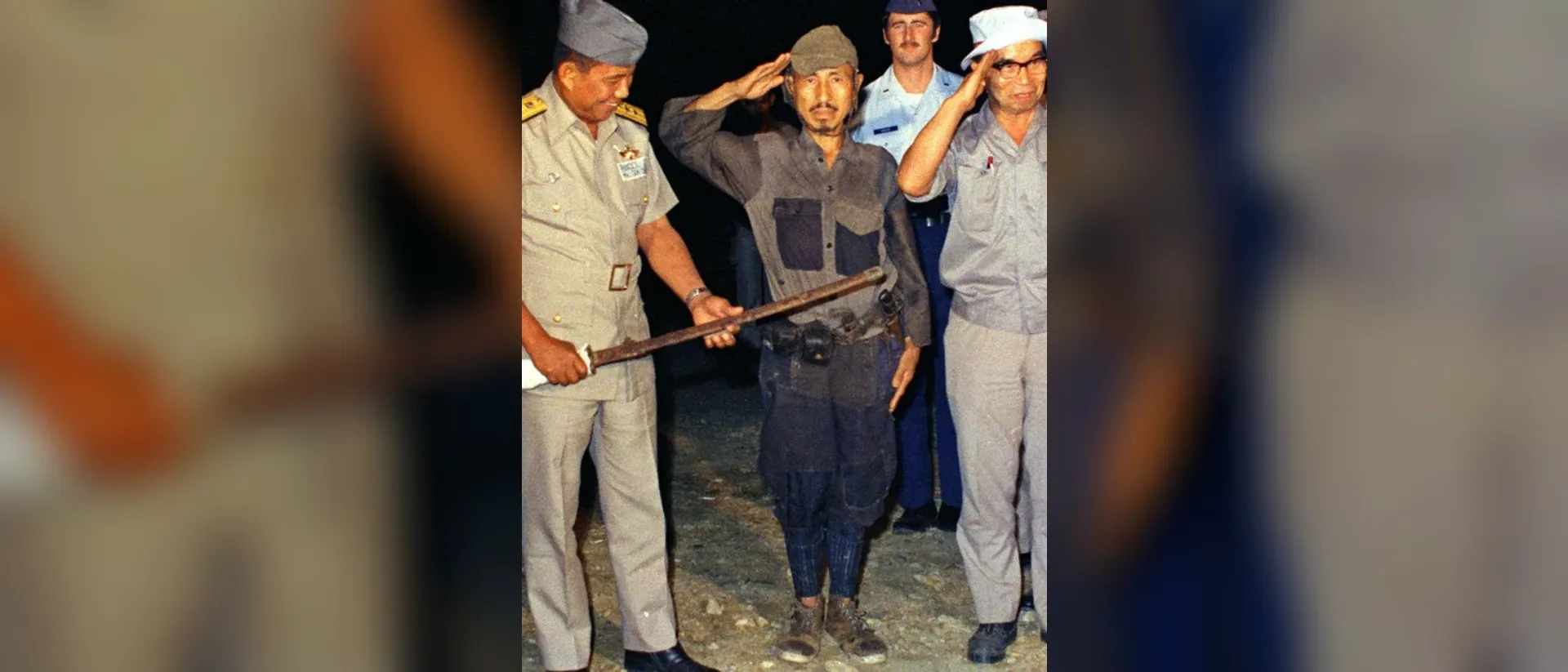
After World War 2 ended in 1945, a Japanese officer named Hiroo Onoda didn't surrender and continued the war for 29 years because he didn't know that Japan had surrendered and the war was over.
The Japanese Soldier Who Fought WWII for 29 Extra Years
On March 10, 1974, a 52-year-old Japanese soldier emerged from the jungle on Lubang Island in the Philippines, still wearing his tattered Imperial Army uniform and carrying a functioning rifle. Hiroo Onoda had just spent 29 years fighting a war that had ended three decades earlier.
Onoda wasn't hiding—he was fighting. As an intelligence officer trained in guerrilla warfare, he believed his mission was still active. He and three other holdouts survived on wild fruits, stolen rice, and the occasional cow they slaughtered, all while evading search parties and engaging in sporadic firefights with local police.
Why Didn't He Believe the War Was Over?
Over the years, the Philippine military dropped thousands of leaflets announcing Japan's surrender. Family members came to the island with loudspeakers, broadcasting personal messages. Newspapers were left in the jungle. Onoda dismissed all of it as enemy propaganda.
His training had prepared him for exactly this kind of psychological warfare. He believed the leaflets were fake, the newspapers were planted, and the voices of his family members were imitations. One by one, his companions either surrendered or were killed. By 1972, Onoda was alone.
The Adventurer Who Found Him
Enter Norio Suzuki, a 24-year-old Japanese adventurer on a quest to find "Lieutenant Onoda, a panda, and the Abominable Snowman, in that order." In February 1974, Suzuki actually tracked Onoda down in the jungle.
But even face-to-face with a fellow Japanese citizen, Onoda refused to surrender. He had one condition: orders from his commanding officer.
Suzuki returned to Japan and located Major Yoshimi Taniguchi, who had been Onoda's superior officer during the war. Taniguchi, now a bookseller, flew to the Philippines and on March 9, 1974, trekked into the jungle to personally relieve Onoda of his duties.
The Surrender
When Onoda finally emerged, he turned over his sword, his Arisaka Type 99 rifle (still in working condition), 500 rounds of ammunition, several hand grenades, and a dagger his mother had given him in 1944—intended for use if he were captured.
The next day, Philippine President Ferdinand Marcos held a formal surrender ceremony at Malacañang Palace in Manila. Rather than prosecute Onoda for the estimated 30 people he and his men had killed over the years, Marcos granted him a full pardon, recognizing that Onoda genuinely believed he was still at war.
Onoda returned to Japan on March 12, 1974, to a hero's welcome. The Japanese government had declared him dead in 1959. When he finally came home, he found a country transformed—modern, peaceful, and utterly foreign to the warrior who had left in 1944.
Life After the War
Struggling to adjust to contemporary Japan, Onoda eventually moved to Brazil where he became a cattle rancher. He later returned to Japan and established a nature camp for young people, hoping to teach self-reliance and survival skills.
Onoda never expressed regret for his actions, maintaining that he had simply been following orders and doing his duty. He died in 2014 at age 91, having lived longer in peacetime than he ever spent at war—though the war years clearly defined his entire life.
Frequently Asked Questions
How long did Hiroo Onoda fight after WWII ended?
Why didn't Hiroo Onoda believe the war was over?
Who convinced Hiroo Onoda to surrender?
Was Hiroo Onoda punished for fighting after the war?
What happened to Hiroo Onoda after he surrendered?
Verified Fact
This fact has been reviewed and verified against original sources.
Show verification details
Factually accurate. Hiroo Onoda, a Japanese Imperial Army intelligence officer, continued guerrilla operations on Lubang Island in the Philippines for 29 years after WWII ended.