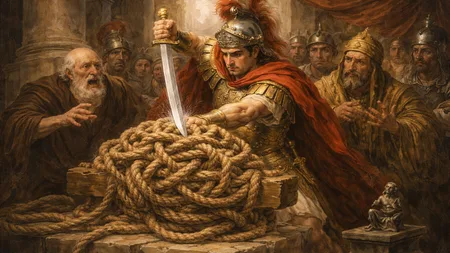
In the 1830s, a Greek prime minister tried to spread the potato in Greece but people weren't interested so he put armed guards in front of shipments of potatoes so people would think they were important. People then started stealing these potatoes so much that the crop spread to all of Greece.
The Potato Plot: How a Greek Leader Tricked a Nation
A Revolutionary Vegetable and a Resilient Nation
In the early 19th century, Greece was emerging from centuries of Ottoman rule, a young nation grappling with its identity and future. Amidst this period of profound change, a seemingly simple agricultural product – the potato – played a surprisingly significant role. This wasn't merely about nutrition; it was a story of ingenious leadership and human psychology.
The potato, originally from the Americas, had already begun its global journey, transforming diets across Europe. Yet, in Greece, it faced skepticism. Many viewed this tuber with suspicion, unfamiliar with its cultivation and culinary uses. This resistance posed a challenge for Ioannis Kapodistrias, Greece's first governor.
Ioannis Kapodistrias: A Visionary Leader
Ioannis Kapodistrias, a distinguished diplomat and statesman, took the helm of the newly independent Greek state in 1828. His task was immense: to build a nation from the ground up, establish institutions, and foster economic stability. Recognizing the potato's potential as a cheap, nutritious, and easily cultivated food source, Kapodistrias saw it as a vital tool in feeding his impoverished populace.
However, simply telling people to eat potatoes proved ineffective. Cultural inertia and a lack of understanding meant the new crop languished. Kapodistrias needed a more creative approach, something that would spark curiosity and overcome ingrained prejudices.
The Ingenious 'Potato Plot'
What he devised was a brilliant, albeit unconventional, strategy. Kapodistrias ordered shipments of potatoes to be brought ashore and prominently displayed in public areas. Crucially, these potato piles were then placed under the watchful eyes of armed guards. The message was clear, though unspoken: if something required such protection, it must be incredibly valuable and desirable.
The plan worked. People, seeing soldiers guarding these mysterious mounds, began to ponder their importance. The more forbidden the fruit (or, in this case, vegetable), the more enticing it became. Locals started to believe that these humble tubers held immense worth, far beyond their simple appearance.
- Initial skepticism: Greeks were unfamiliar and distrustful of the potato.
- Kapodistrias' goal: Introduce a resilient and nutritious food source.
- The tactic: Publicly display potatoes, guarded by soldiers.
- The psychological effect: Created an illusion of immense value and scarcity.
A Nation Embraces the Spud
The armed guards were reportedly given subtle instructions: while they were to prevent overt theft, they were also to turn a blind eye to surreptitious attempts. This created a perfect storm of perceived value and achievable transgression. Soon, people were 'stealing' the guarded potatoes, taking them home to plant and consume.
As these 'stolen' potatoes made their way into homes and fields, their true value became apparent. They grew well in Greek soil, provided sustenance, and slowly but surely, the potato became a staple. The clever ruse bypassed direct persuasion, leveraging human nature to achieve a widespread, voluntary adoption of a new crop.
This story is a testament to Kapodistrias' understanding of his people and his ability to employ innovative solutions to complex problems. It highlights how a leader's ingenuity can overcome cultural barriers and introduce profound changes that benefit society.
Lessons from the Guards and the Gourd
The Greek potato story isn't unique. Similar tales of cunning leaders introducing new crops exist across Europe, such as Frederick the Great in Prussia and Antoine-Augustin Parmentier in France. These anecdotes underscore a universal truth: sometimes, the best way to get people to embrace something new is not to force it, but to make them believe it's their own discovery, or even better, a treasure to be acquired.
So, the next time you enjoy a crispy fry or a fluffy baked potato, spare a thought for Ioannis Kapodistrias and his armed guards. Their subtle influence helped shape the culinary landscape of an entire nation.
Frequently Asked Questions
Who was Ioannis Kapodistrias?
Why did Greeks initially resist eating potatoes?
How did Kapodistrias convince people to eat potatoes?
Did this potato-spreading tactic work in other countries?
Verified Fact
This fact has been reviewed and verified against original sources.
Related Topics
More from History & Culture
View all History & Culture →