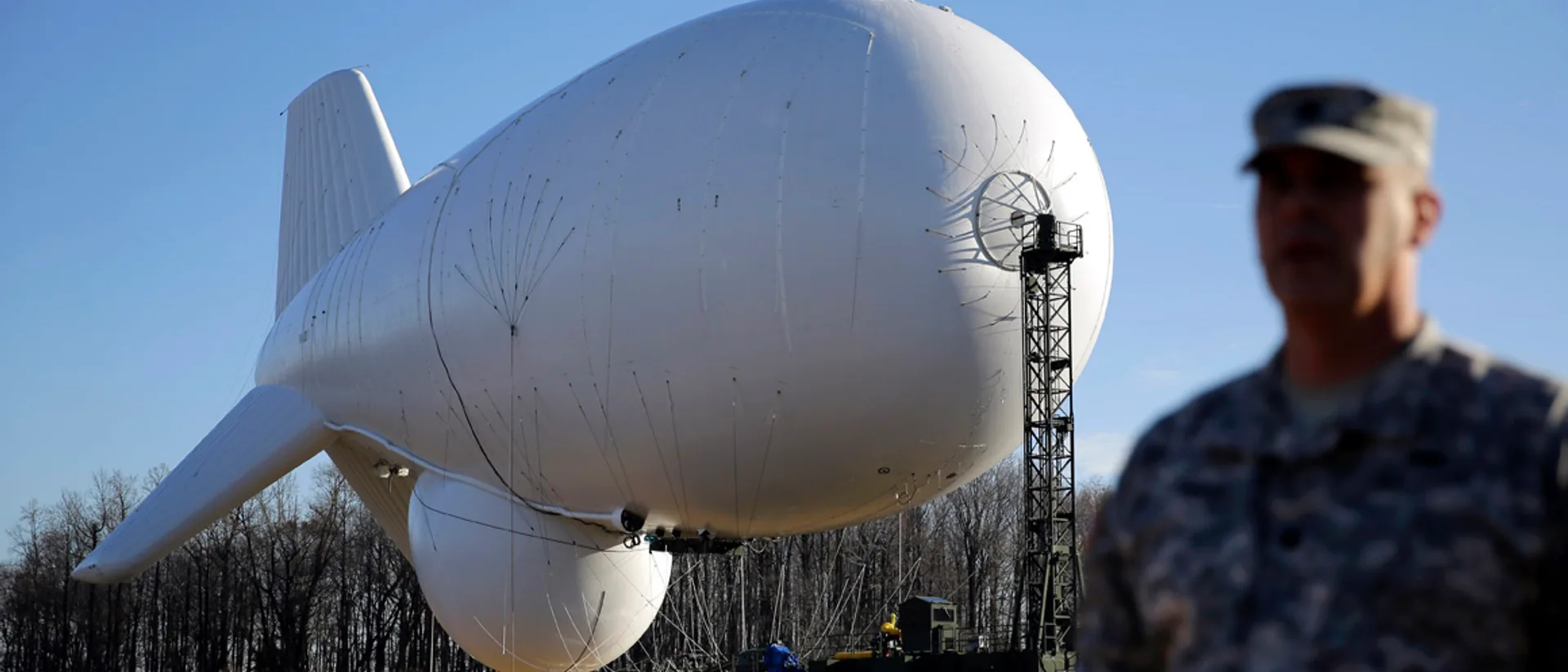
The US military spent $2.7 billion on a giant missile defense blimp called JLENS. On its second day of active duty, it broke free. It dragged 6,700 feet of cable across Pennsylvania. Knocked out power to 30,000 people. F-16s were scrambled but couldn't stop it. It deflated in a field. State police secured it. The program was quietly shelved.
The US Spent $2.7 Billion on a Missile Defense Blimp. It Broke Free on Day Two.
JLENS stood for Joint Land Attack Cruise Missile Defense Elevated Netted Sensor System. It was a pair of giant helium-filled aerostats, each 243 feet long, designed to float at 10,000 feet and detect incoming cruise missiles from hundreds of miles away.
The program cost $2.7 billion over nearly two decades of development.
Day Two
On October 28, 2015, one of the JLENS blimps was tethered at Aberdeen Proving Ground in Maryland during what was supposed to be a routine operational exercise. On its second day of active duty, the blimp broke free of its mooring cable.
It drifted northwest across Pennsylvania for three hours, dragging approximately 6,700 feet of heavy tether cable behind it. The cable tore through power lines, knocking out electricity to roughly 30,000 customers in Pennsylvania.
The Takedown
F-16 fighter jets were scrambled but could not shoot down the blimp without risking debris falling on populated areas. Eventually, the blimp deflated enough to descend on its own near Moreland Township, Pennsylvania, where state police secured the crash site.
The remaining JLENS blimp was deflated and the program was quietly shelved. Congress declined to fund it further.
America spent $2.7 billion building a missile defense system. It was taken out by wind.
Frequently Asked Questions
How much did JLENS cost?
What happened when it broke free?
How was it stopped?
Is the program still active?
Verified Fact
This fact has been reviewed and verified against original sources.
Source: LA TimesShow verification details
October 28, 2015 confirmed. $2.7B program cost confirmed. 6,700 feet of tether confirmed. 30,000 power outages confirmed. F-16 scramble confirmed. Program shelved confirmed.
Related Topics
More from History & Culture
View all History & Culture →