📝Updated for accuracy
Some details in this fact have been corrected based on our review of primary sources.
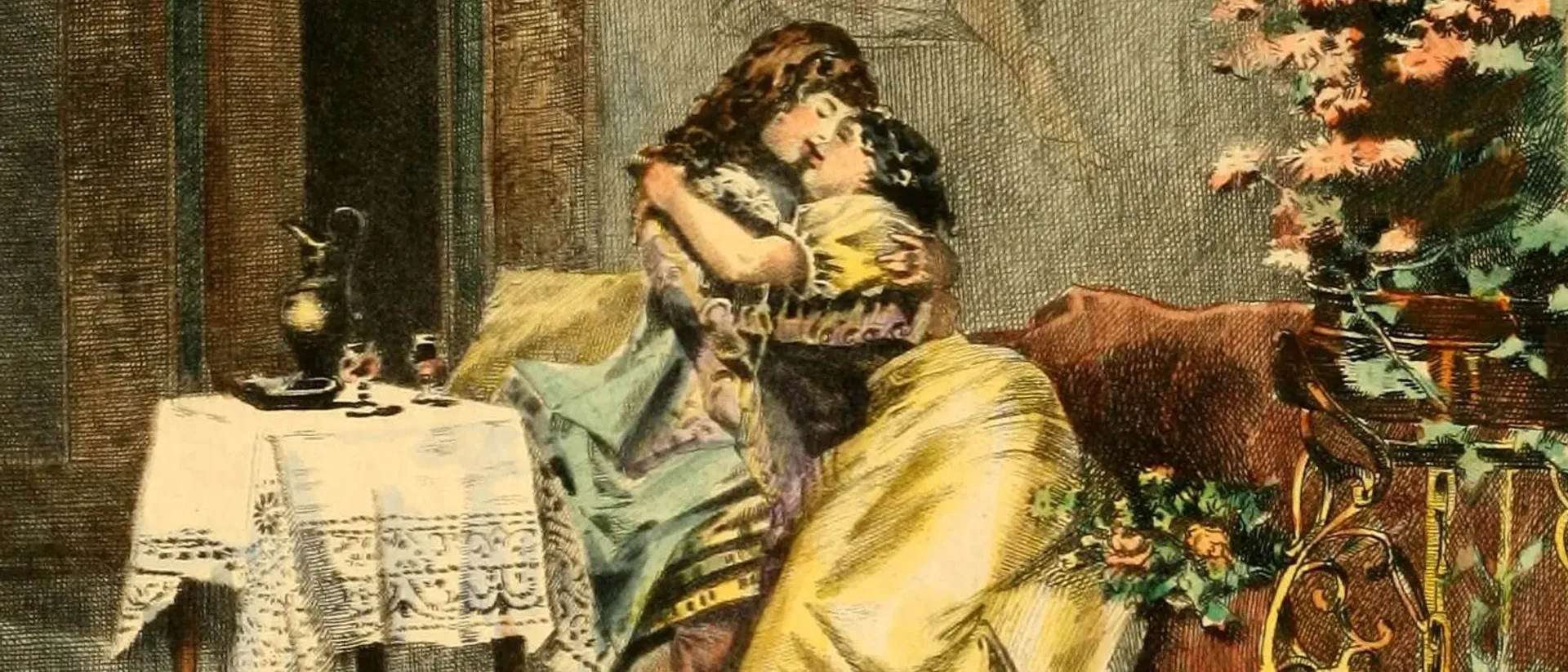
Julie d'Aubigny was a 17th-century French opera singer and one of the most feared swordfighters in Paris. When her girlfriend's parents sent the girl to a convent, Julie checked in as a novice, placed a dead nun's body in her lover's bed, set the building on fire, and escaped with her. She was sentenced to death. The king pardoned her.
She Was an Opera Singer. A Swordswoman. And She Once Burned Down a Convent to Rescue Her Girlfriend.
The Swordswoman
Julie d'Aubigny was born around 1670, the daughter of Gaston d'Aubigny, who served as secretary to Louis de Lorraine-Guise, the Count of Armagnac and Grand Squire of France. Her father trained the pages of the Count's court in swordsmanship — and he trained his daughter alongside them. By her teens, she was one of the most skilled fencers in Paris.
She began performing in sword exhibitions dressed as a man, using the stage name "La Maupin." She also took up singing and quickly proved to be a remarkable contralto.
The Convent
In her early twenties, Julie fell in love with a young woman in Marseille. When the woman's parents discovered the relationship, they sent their daughter to the Visitandine convent in Avignon to end the affair.
Julie's response was not to accept this. She entered the convent herself as a novice, gaining access to the grounds. When a nun in the convent died of natural causes, Julie took the body from the morgue, placed it in her lover's bed, and set the cell on fire. In the chaos and confusion of the blaze, she and her lover escaped into the night.
She was tried in absentia — under a male alias — and sentenced to death by fire. The sentence was never carried out.
The Opéra
Julie joined the Paris Opéra, where she became one of the most celebrated performers of her generation. Offstage, her reputation was equally dramatic. At a royal ball, she kissed a young woman on the dance floor. Three noblemen challenged her to duels over the incident. She fought all three that night and won all three, reportedly returning to the ball to continue dancing.
King Louis XIV eventually pardoned her for the convent incident, likely amused by her audacity and unwilling to lose one of his opera's finest singers.
The End
Julie d'Aubigny died around 1707, at approximately 37 years of age. Some accounts say she entered a convent herself — voluntarily this time — after the death of a lover. The woman who had once broken into a convent to steal someone out reportedly spent her final days in quiet reflection inside one.
Enjoyed this? Get a new fact every morning.
A fascinating fact in your inbox every morning. Free. Unsubscribe anytime.
Frequently Asked Questions
Was Julie d'Aubigny a real person?
Did she really burn down a convent?
How many duels did Julie d'Aubigny fight?
Did the King of France really pardon her?
Related Topics
More from History & Culture
View all History & Culture →