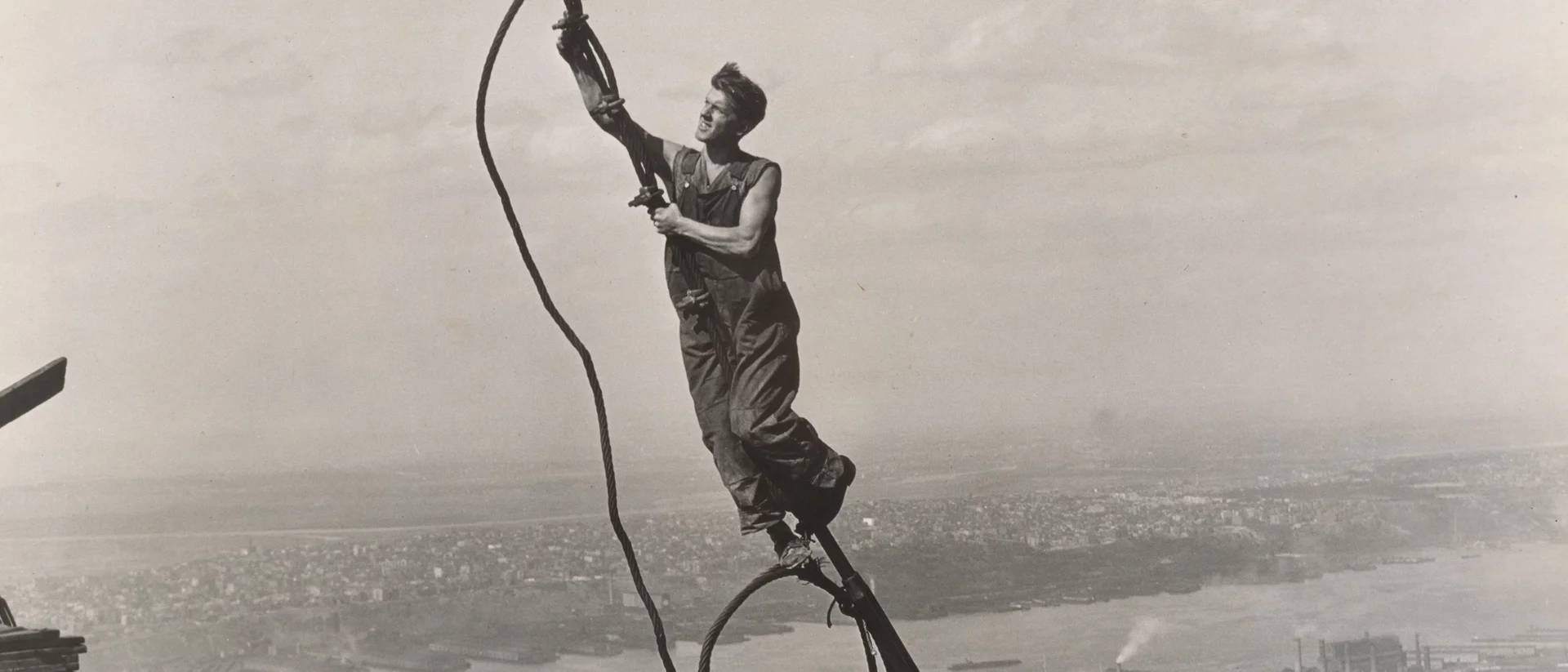
This ironworker on the Empire State Building was photographed by Lewis Hine, a man in his mid-50s whose pictures of kids in mills had already helped turn America against child labor. In 1930 Hine climbed the bare steel alongside the crews, and for the highest shots they swung him out in a basket nearly a quarter-mile above Fifth Avenue.
The Photographer Who Dangled Over Fifth Avenue
When the Empire State Building went up over Manhattan in 1930, the man hired to photograph it was a former schoolteacher in his mid-50s. Lewis Hine did not shoot from the sidewalk. He climbed the bare steel with the ironworkers, and for the highest angles he was swung out over Fifth Avenue in a basket.
A Teacher With a Camera
Hine was born in Oshkosh, Wisconsin, in 1874. He moved to New York to teach at the Ethical Culture School, and he took his classes to Ellis Island to photograph the immigrants arriving there.
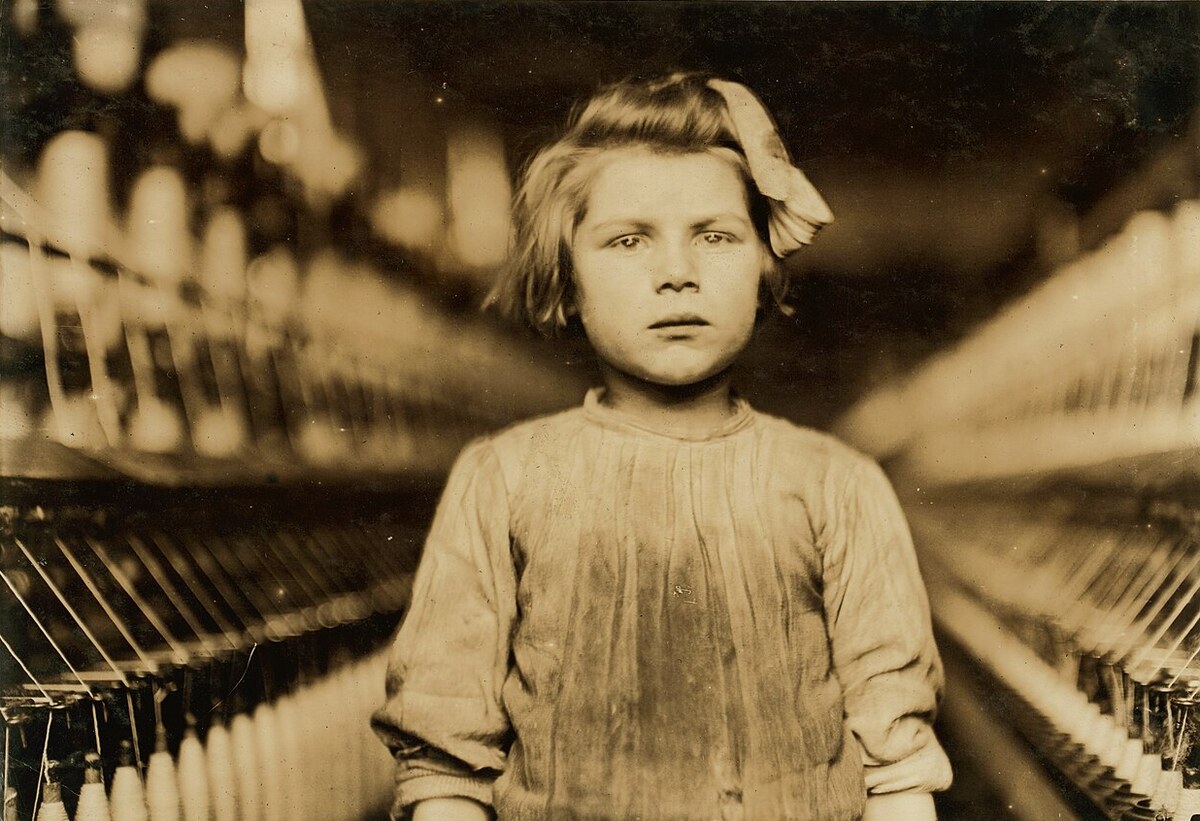
In 1908 he left teaching to become the photographer for the National Child Labor Committee. For roughly the next decade he traveled the country photographing children at work in mills, mines and factories.
Those pictures backed the committee's push against child labor. Congress created the federal Children's Bureau in 1912, and the Fair Labor Standards Act of 1938 eventually brought widespread child labor in the US to an end.
Hired to Shoot a Skyscraper
In 1930 Hine was commissioned to document the construction of the Empire State Building. Between May and November of that year, he worked among the bricklayers, riveters, engineers and steelworkers on the site.
The pace was ferocious. On the busiest days, nearly 5,000 workers swarmed the site, and the building's 102 floors were ready for occupancy in about 13 months.
Hine called the ironworkers his "sky boys." He went where they went, carrying 4x5 and 5x7 cameras up the open steel and taking many of the same risks as the men he photographed.
A Quarter-Mile of Air
To get the views he wanted, Hine had himself swung out from the building in a specially designed basket, hanging out over Fifth Avenue.
In a 1930 letter to a friend, he wrote that his "six months of skyscraping" had "culminated in a few extra thrills." Just before the high derrick came down, he wrote, "they swung me out in a box from the hundredth floor," with "a sheer drop of nearly a quarter of a mile" beneath him.
Later accounts put the basket at about 1,000 feet above the street. Hine's own estimate was higher.
Over about six months on site he made almost a thousand negatives. One of the best known, which the Metropolitan Museum of Art titles "Icarus, Empire State Building," shows a worker in overalls straddling a cable high above the city.
The Men Behind the Machines
In 1932 Hine published the pictures in a book, Men at Work. Its point was the same one he had been making since his mill photographs.
"Cities do not build themselves, machines cannot make machines, unless back of them all are the brains and toil of men."
His Empire State photographs now sit in collections including the Metropolitan Museum of Art and the National Archives. In 2013 the US Postal Service put four of them on stamps in its "Made in America: Building a Nation" series. The Portland Art Museum counts his Empire State pictures among the finest images of labor made in the 20th century.
Source:Antiques and the Arts Weekly
Enjoyed this fact?
Be the first to love this
Get a new fact every morning.
A fascinating fact in your inbox every morning. Free. Unsubscribe anytime.
Frequently Asked Questions
Who took the famous photos of the Empire State Building being built?
How did Lewis Hine photograph the Empire State Building?
How old was Lewis Hine when he photographed the Empire State Building?
Why is Lewis Hine famous?
How long did it take to build the Empire State Building?
Verified Fact
Verified Oct 14, 2026 · 6 sources checked
Source: Antiques and the Arts WeeklyShow verification details
Claims checked
- Lewis Hine was hired in 1930 to photograph the Empire State Building going up
- He climbed the bare steel with the ironworkers
- He was swung out in a basket over Fifth Avenue, a drop he put at nearly a quarter-mile
- Hine was born in September 1874, so he was 55 to 56 during the work
- His child labor photographs backed the campaign against child labor
- He made almost a thousand negatives over about six months on the site
Sources: Antiques and the Arts Weekly, US Postal Service, Portland Art Museum, Wikipedia, National Archives, Metropolitan Museum of Art
Related Topics
More from History & Culture
View all History & Culture →