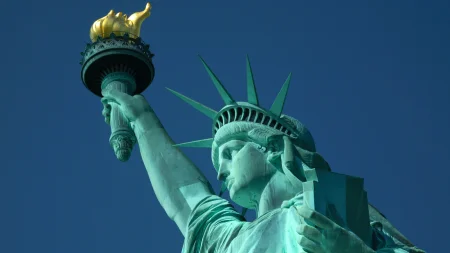
The Statue of Liberty is made out of copper. When originally built, it looked like a shiny new penny!
The Statue of Liberty's Copper Secret
Standing proudly in New York Harbor, the Statue of Liberty is one of the world's most recognizable symbols of freedom and democracy. Most people associate Lady Liberty with her distinct green hue. However, this wasn't always her appearance.
When Frédéric Auguste Bartholdi's masterpiece was unveiled in 1886, she wasn't green at all. Instead, she shimmered with the reddish-brown luster of a brand-new penny. This is because the Statue of Liberty is constructed almost entirely from copper – 31 tons of it, to be precise – stretched over an iron framework.
The Science of Lady Liberty's Glow-Up
So, what caused such a dramatic color transformation? The answer lies in basic chemistry, specifically a process called oxidation. Copper is a reactive metal, and when exposed to the elements, it undergoes a chemical reaction with oxygen, moisture, and pollutants in the air.
This reaction creates a protective layer on the surface of the copper. This layer, known as a patina, changes the metal's appearance over time. It's the same phenomenon you see on old copper roofs, pipes, or even ancient bronze statues.
A Slow but Steady Transformation
The change from shiny copper to verdant green wasn't instantaneous. It was a gradual process that unfolded over several decades. Shortly after its dedication, the first subtle shifts in color began to appear.
By 1900, patches of green were becoming noticeable on Lady Liberty's surface. The complete transformation, with the entire statue covered in its now-iconic green patina, took approximately 30 years, fully developing around 1906. This slow change allowed generations to witness the chemical marvel unfold.
More Than Just a Pretty Color
The green patina isn't just a unique aesthetic feature; it serves a vital purpose. This layer acts as a natural barrier, shielding the underlying copper from further corrosion and degradation. Without this protective coating, the Statue's structural integrity would have been compromised much more quickly by the harsh marine environment of New York Harbor.
Think of it as a self-sacrificing shield. The outermost layer of copper oxidizes and turns green, protecting the bulk of the copper beneath it. This natural preservation has allowed the Statue of Liberty to withstand over a century of weathering, standing tall as a testament to both art and science.
- Did you know? The thickness of the copper skin on the Statue of Liberty is roughly equivalent to two pennies.
- The internal iron framework, designed by Gustave Eiffel, also contributed to the statue's longevity.
- The official name of the Statue of Liberty is "Liberty Enlightening the World."
From a bright, coppery beacon to a majestic green icon, the Statue of Liberty's color change is a fascinating reminder of the interplay between nature, time, and engineering. Her enduring presence is a symbol recognized globally, forever linked to her unique chemical journey.
Frequently Asked Questions
Why did the Statue of Liberty change color?
What is the green coating on the Statue of Liberty called?
Is the Statue of Liberty still made of copper?
How long did it take for the Statue of Liberty to turn green?
Does the green color protect the statue?
Verified Fact
This fact has been reviewed and verified against original sources.
Related Topics
More from History & Culture
View all History & Culture →