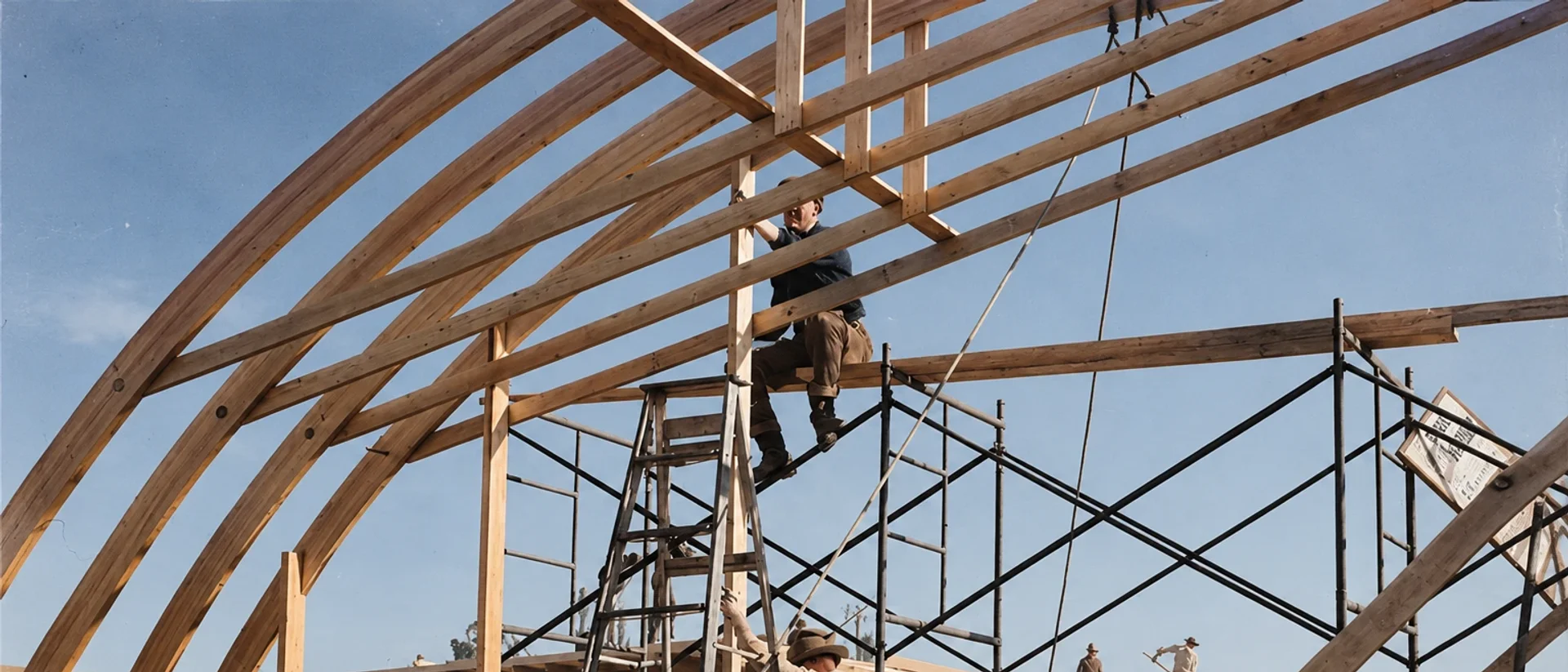
In a single day in 1952, the people of Moses Lake, Washington, built a whole farm for a stranger. From one minute past midnight, more than 50 tradesmen raised a seven-room house by floodlight while about 100 men on 25 tractors leveled and planted 63.5 acres. By day's end it belonged to Donald Dunn, a WWII tank driver whose Kansas farm a flood had wiped out.
They Built a Whole Farm in One Day
At one minute past midnight on May 29, 1952, fireworks lit the sky over a patch of sagebrush north of Moses Lake, Washington. By the end of the day, the patch was a working farm with a seven-room house, and it was about to be handed to a World War II veteran whose Kansas farm a flood had destroyed.
Sagebrush at Midnight
The Farm-in-a-Day was a contest run by the Veterans of Foreign Wars. Thousands of people applied, and 50 finalists were chosen. A national board with officials from the U.S. Department of Agriculture, the American Farm Bureau Federation and the National Grange picked the winner.
The land was 63.5 acres of sagebrush donated by the Northern Pacific Railroad. The build was part of the Columbia Basin Water Festival, which celebrated the first irrigation water from Grand Coulee Dam.
Floodlights and Tractors
When the fireworks went off, more than 50 carpenters, electricians and other contractors began work on the house by floodlight. Eight local contractors directed them.
Out in the fields, about 100 men and 25 tractors worked alongside other heavy equipment, with a dozen civil engineers directing the operation. The sagebrush was leveled, cleared and planted.
A barn, a machine shed and a chicken coop were finished by noon. Planting began at noon too. The people of Moses Lake gave so much of their time and goods that, in the words of the HistoryLink account, nearly everyone living in and around the town was working on the project.
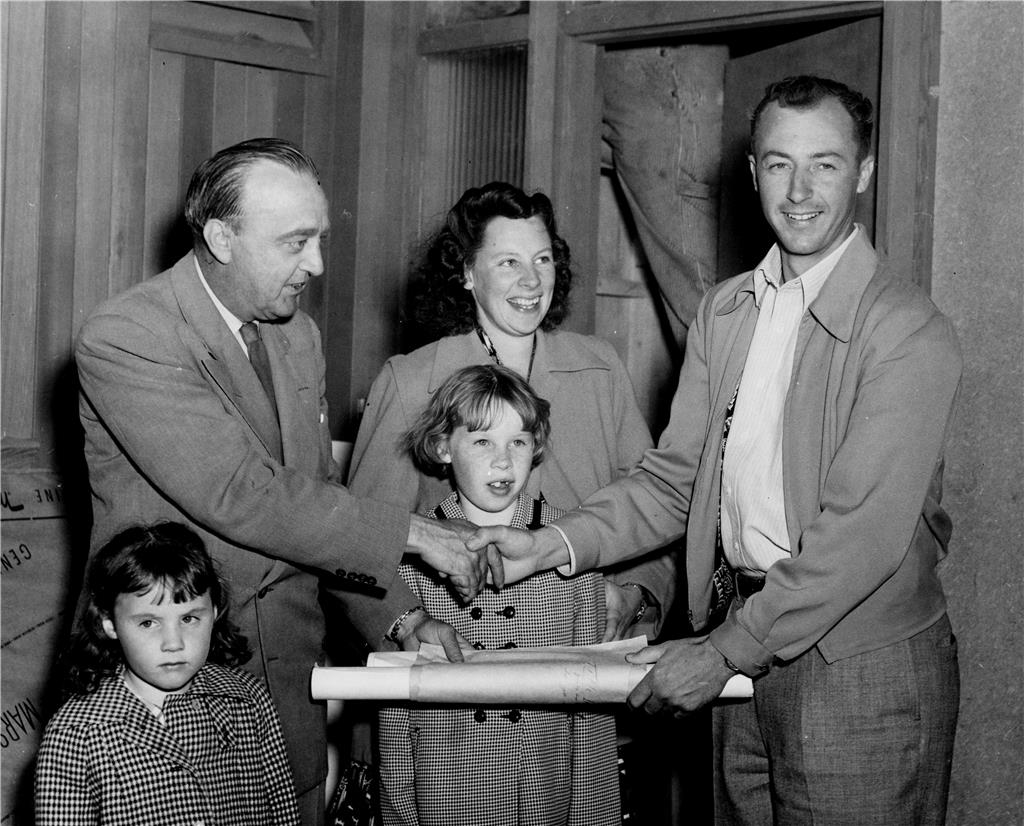
The Man Who Got the Keys
Donald Dunn was 30 and had grown up on a farm near Marion, Kansas. He drove tanks in France and Germany during World War II, earned three battle stars and came home as a sergeant in 1945.
In July 1951, the Cottonwood River flooded east-central Kansas, one of the worst disasters in the state's history. Dunn lost his crops, his home, most of his livestock and his equipment. A $2,000 loan from a friend moved his family to Yakima, where he sold farm equipment.
The ceremonial handing-over of the deed was scheduled for 4 p.m. that day. The whole package of house and farm was valued at about $75,000.
What Happened After
The Dunns' first-year crops were valued at $18,152.30, with a profit of $8,008.39. In March 1955, Dunn sold the house and farm to Edward P. Penhallurick, a Moses Lake native. Dunn said the sale was for the benefit of the whole Columbia basin.
It was also a publicity event, built to show what the new irrigation water could do. The people who raised it in a day were real, and so was the farm.
Source:HistoryLink.org
Enjoyed this fact?
Be the first to love this
Get a new fact every morning.
A fascinating fact in your inbox every morning. Free. Unsubscribe anytime.
Frequently Asked Questions
What was the Farm-in-a-Day in Moses Lake?
Who won the Farm-in-a-Day farm?
How many people built the farm in a day?
What happened to the Farm-in-a-Day farm?
Verified Fact
Verified Oct 20, 2026 · 3 sources checked
Source: HistoryLink.orgShow verification details
Claims checked
- Moses Lake volunteers built a seven-room house and farm buildings in one day on May 29, 1952
- More than 50 tradesmen, about 100 men and 25 tractors worked on 63.5 acres
- Donald Dunn was a WWII tank driver who lost his Kansas farm in the July 1951 flood
- Time of the first tractors in the fields corrected to 4 a.m. (not at midnight)
Sources: HistoryLink, The Spokesman-Review (via HistoryLink), Spokane Chronicle (via HistoryLink)
Related Topics
More from History & Culture
View all History & Culture →